
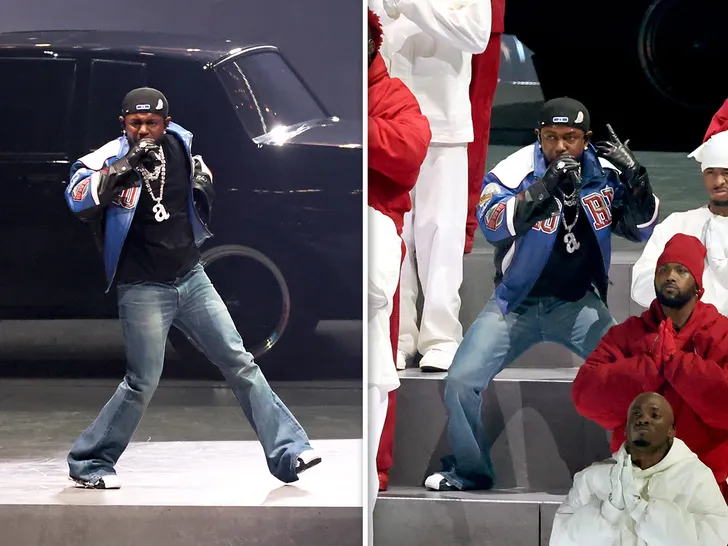

A Political Statement on the World’s Biggest Stage
What was supposed to be a seamless performance by Kendrick Lamar during the Super Bowl halftime show turned into a flashpoint moment when a hired performer waved a flag bearing messages supporting Gaza and Sudan. The incident unfolded in front of millions of viewers inside New Orleans’ Superdome and across the globe. Lamar had just begun his performance of “tv off” when the disruption took place, shifting attention away from the music and directly onto the bold act of protest.
Louisiana State Police identified the individual as 41-year-old Zul-Qarnain Kwame Nantambu, who turned himself in this week. Officials say Nantambu was officially contracted by the NFL to participate in the halftime event but was never authorized to carry out any form of political demonstration. Despite this, he unfurled a flag with the words “Sudan and Free Gaza” while onstage, a move law enforcement claims constituted resisting an officer and disturbing the peace by interrupting a lawful assembly.
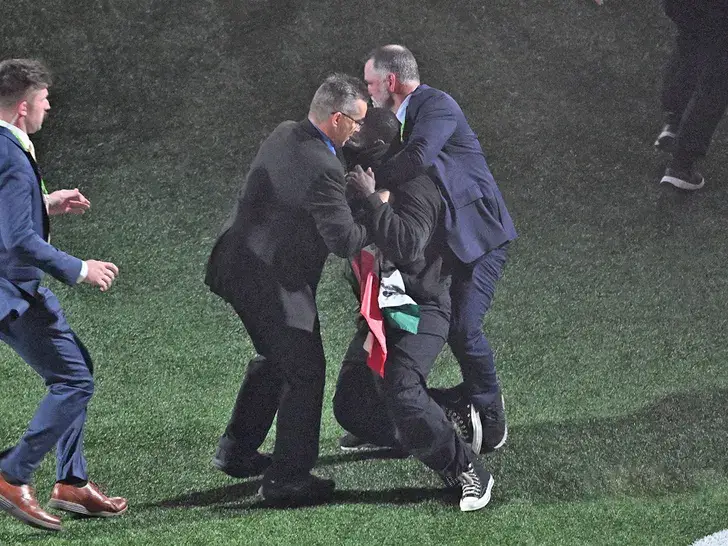
The NFL wasted no time in responding. In a statement issued to TMZ Sports, the league said it takes such disruptions seriously and commended local authorities for their swift action. The NFL confirmed Nantambu is now banned from all future games and league events. The message was clear: political stunts during tightly controlled productions will not be tolerated, no matter the intent behind them.
A Tangle of Protest and Performance
This isn’t the first time Zul-Qarnain Kwame Nantambu has made headlines. Just weeks before the Super Bowl incident, Nantambu was allegedly involved in a violent altercation with former NFL wide receiver Antonio Brown. The two men reportedly clashed during a celebrity boxing event in Miami, with Brown accused of attempting to shoot Nantambu following a heated dispute. Though separate, both events have placed Nantambu at the center of escalating controversies involving celebrities and high-profile events.
In the case of the Super Bowl, authorities believe Nantambu exploited his access to the field as a contracted performer to carry out a planned protest. It remains unclear whether anyone in Lamar’s camp was aware of his intentions before the show. For his part, Kendrick Lamar has remained silent on the matter, neither addressing the protest publicly nor issuing any comment through his representatives.
Witnesses described the moment as confusing and chaotic. Some viewers assumed it was a part of the performance until the flag’s message became legible. The interruption only lasted seconds, but in an event built on precision and control, that was more than enough to send shockwaves across sports and entertainment media.
NFL Locks Down as Public Debate Reignites
Following the arrest, the NFL has drawn both praise and criticism for its response. Supporters of the league’s decision argue that allowing political demonstrations during major broadcasts could create dangerous precedents. Detractors claim the swift punishment is another example of silencing dissent and downplaying humanitarian crises in favor of entertainment optics.
While the charges Nantambu faces are limited to resisting arrest and disturbing the peace, legal analysts suggest further consequences could be explored. The NFL’s private ban may also have broader implications, especially if other major event organizers follow suit. Meanwhile, free speech advocates and pro-Palestinian and Sudanese groups have begun to voice support for Nantambu, calling him brave for risking everything to raise awareness during one of the most-watched broadcasts of the year.
As the fallout continues, the debate surrounding protest in entertainment venues is once again front and center. Whether this incident remains an isolated disruption or sparks a broader movement remains to be seen. But one thing is clear: the NFL halftime show, designed to be a polished celebration of music and spectacle, has now become part of a much more urgent global conversation.