
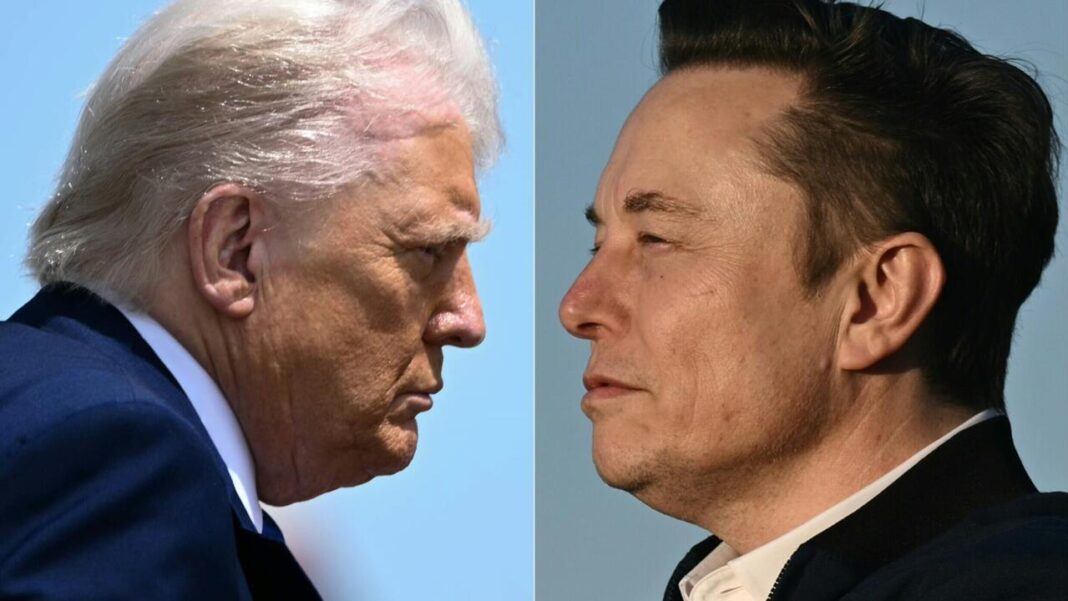

A Question Turns Explosive on the National Stage
What began as a routine press gaggle outside the White House on Tuesday turned into one of the most surreal moments in modern political memory. When a reporter asked President Donald Trump whether he planned to deport Elon Musk, the room froze. Then came the president’s chilling answer.
“I don’t know,” Trump said flatly, before adding, “We’ll have to take a look.” It was the kind of vague threat that sent a ripple through Washington and Wall Street alike. But the president didn’t stop there. He referenced the Department of Government Efficiency, known by its acronym DOGE, a department Musk once led in an advisory role, and hinted it might be weaponized. “We might have to put DOGE on Elon. You know what DOGE is? The DOGE is the monster that might have to go back and eat Elon. Wouldn’t that be terrible?”
The jab was both theatrical and personal. The implications weren’t just legal or political. They were symbolic. The president had crossed a line from policy criticism to veiled personal retaliation, dragging a former ally into the national spotlight under threat of deportation.
From Allies to Enemies in a Matter of Days
The rupture between Trump and Musk didn’t happen overnight, but its escalation came at lightning speed. The tension had been simmering since Musk publicly trashed the president’s sweeping “One Big Beautiful Bill,” a signature legislative package that slashes tax credits for electric vehicles and imposes new burdens on the clean energy sector.
Musk, whose companies rely heavily on government support, saw the bill as a direct attack. He didn’t hold back. In a series of pointed remarks online and during interviews, Musk warned that if the bill passed, he would consider forming a third political party. It was a threat that rattled Republicans and infuriated the president.
Trump’s counterattack came swiftly. On his Truth Social account, he accused Musk of being “the most subsidized human in history.” He claimed that without federal backing, Musk would be forced to “head back home to South Africa” and shut down his space and automotive ventures. It was a stinging rebuke that invoked the very nativist undertones Trump’s critics have long feared.
Markets Shudder as Musk Fires Back
The fallout reached the markets almost immediately. Tesla’s stock tumbled nearly seven percent at the open Tuesday, as investors digested the full weight of the political storm. The idea that the sitting president might target the CEO of one of America’s largest companies, and a naturalized citizen no less, was too volatile to ignore.
Musk, known for his unpredictable and often incendiary responses, held back. But just barely. “So tempting to escalate this,” he wrote on X, his own social platform. “So, so tempting. But I will refrain for now.” The restraint was noticeable, but the tension was palpable.
Whether Trump’s words were an idle threat or a calculated move to destabilize his former ally remains to be seen. What’s clear is that the president is willing to test political norms in pursuit of loyalty and control. And for Musk, a man who built his empire on innovation and disruption, the battle ahead may be one of survival—political, financial, and personal.