
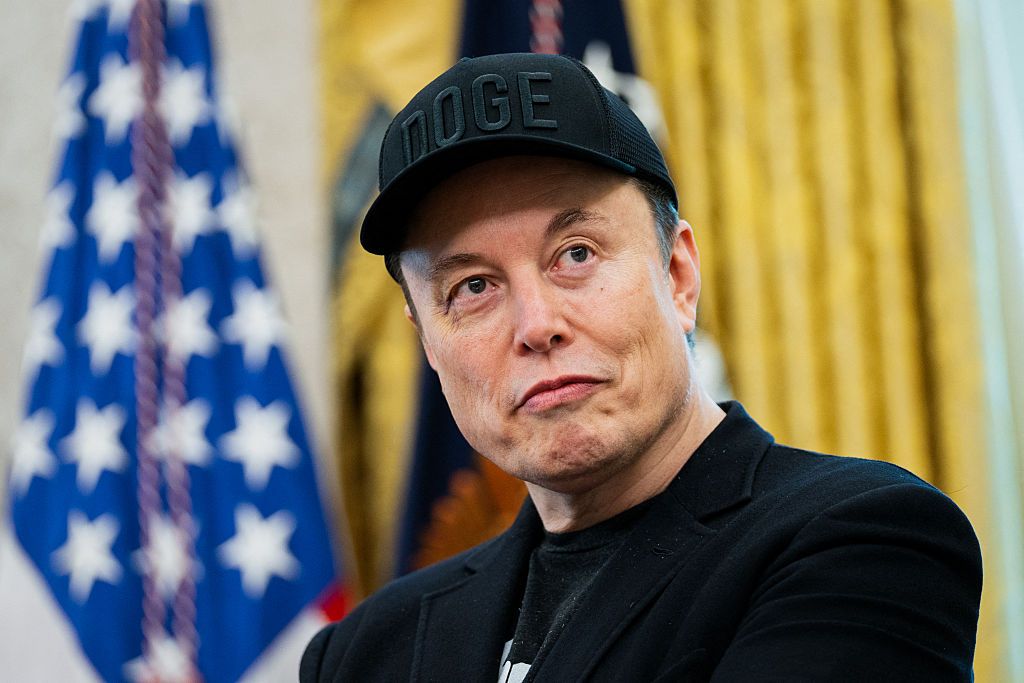

Elon Musk has added his voice to growing concerns about the future of human labor, stating that artificial intelligence will eventually outperform people in every profession, including his own. The statement was made in a reply on X, formerly Twitter, where Musk responded to a post discussing how AI helped a cancer survivor challenge medical advice and make better treatment decisions.
“AI is already better than most doctors,” Musk wrote in the reply. “That’s the honest truth. And it will become far better. Same for all jobs tbh, including mine.” The comment sparked widespread attention as one of the few public acknowledgments by a major tech executive that their own role could be rendered obsolete by the technology they are helping to build.
The exchange highlights ongoing tension over how AI will affect employment across sectors. While warnings about job displacement have become more common, few industry leaders have directly linked that disruption to their own positions. Musk’s remarks, in that context, mark a rare moment of self-reflection in Silicon Valley’s broader conversation about automation and the future of work.
INDUSTRY LEADERS REACT AS PUBLIC VOICES CONCERN
Musk’s comments prompted a wide range of responses on social media. Some users praised his candor and vision, while others expressed unease over what an AI-dominated future could mean for society. One user responded, “I can’t even imagine anyone being better than Elon at how to do their job,” while another asked, “Is there a solution? Or will all of us get paid to do nothing while AI does all the heavy lifting for us?”
While Musk did not elaborate further, his statement came at a time when public discourse around AI’s role in labor markets is intensifying. The World Economic Forum’s Future of Jobs 2025 report estimates that 41% of global employers expect to reduce headcount due to AI and automation, with the number rising to 48% in the U.S. At the same time, 77% of companies plan to invest in upskilling workers to adapt to AI-integrated workflows.
Some experts, including investors like Mark Cuban, have offered a more pragmatic take. Cuban has encouraged people to develop soft skills and take advantage of reskilling opportunities in areas where human oversight is still essential. According to this view, while AI may replace certain tasks, new roles will emerge in managing, interpreting, and training these systems.
GPT-5 RELEASE UNDERSCORES MUSK’S WARNING
Musk’s remarks coincided with the release of GPT-5, the latest version of OpenAI’s large language model. According to the company, GPT-5 represents a significant advancement in generative AI capabilities, emphasizing proactive assistance and higher contextual awareness. OpenAI claims the model can act as a “thought partner,” identifying potential issues, asking clarifying questions, and providing more nuanced answers, particularly in fields like healthcare, where precision is critical.
OpenAI also says GPT-5 has been designed with improved safeguards to ensure reliability and reduce harmful outputs. While earlier models were primarily reactive tools, GPT-5 is positioned as an AI capable of anticipating user needs in complex environments. The model’s launch has further fueled debate about whether AI systems are approaching or surpassing the skill level of human professionals.
As a co-founder of OpenAI, Musk has maintained a complicated relationship with the company, voicing both support and criticism. His latest remarks about AI’s trajectory, especially when paired with GPT-5’s debut, point to a broader acceptance among tech leaders that general-purpose AI may not only supplement but fully replace many roles once thought secure from automation.
THE BROADER IMPLICATIONS FOR WORK AND SOCIETY
Musk’s statement adds urgency to ongoing discussions about the societal impacts of automation. If even roles held by executives and engineers are vulnerable to replacement, the implications for workers in more routine or narrowly defined jobs could be even more far-reaching. The conversation is shifting from whether AI will disrupt the labor market to how society should respond when it inevitably does.
One unresolved question is how economic structures will adapt if large portions of the workforce are displaced. Some have proposed universal basic income or other financial safety nets as potential solutions. Others argue that governments and private sector leaders must collaborate on long-term workforce transformation strategies, prioritizing education, digital literacy, and equitable access to technology.
As AI capabilities continue to advance, the gap between what machines can do and what humans are needed for will likely become narrower. Musk’s recognition that AI may eventually outperform even those at the top of the tech world invites a deeper examination of what roles will remain and whether the definition of work itself will need to evolve.