
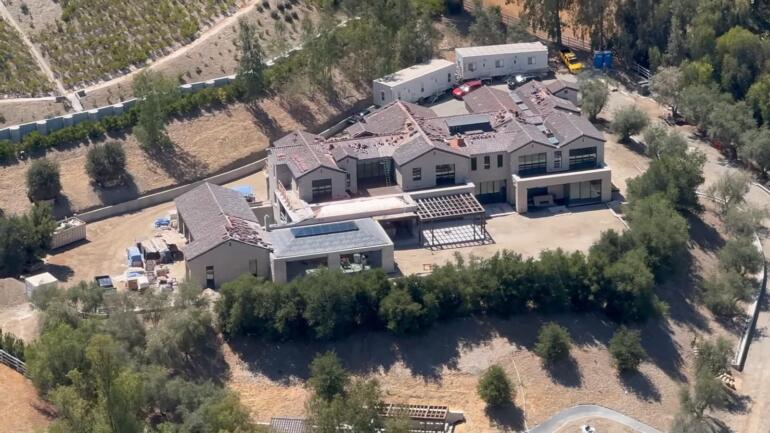

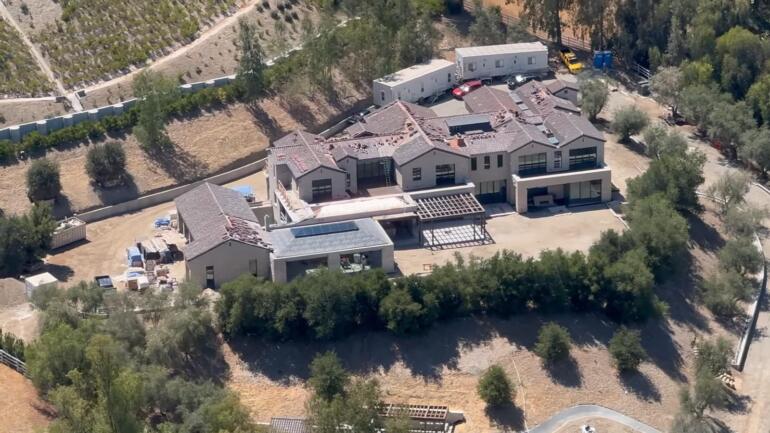
A FORTRESS OF FOLIAGE IN THE HILLS
Tucked into the gated folds of Hidden Hills, California, Kylie Jenner’s sprawling new estate stands as a physical expression of curated luxury: sprawling, sleek, and meticulously concealed. But amid the expected symbols of affluence (15 bedrooms, a subterranean garage, a vineyard) it’s not the architecture that has captured the most attention. It’s the trees. Specifically, a line of mature, century-old Mediterranean olive trees valued at an estimated $500,000, installed to enclose her home in living sculpture.
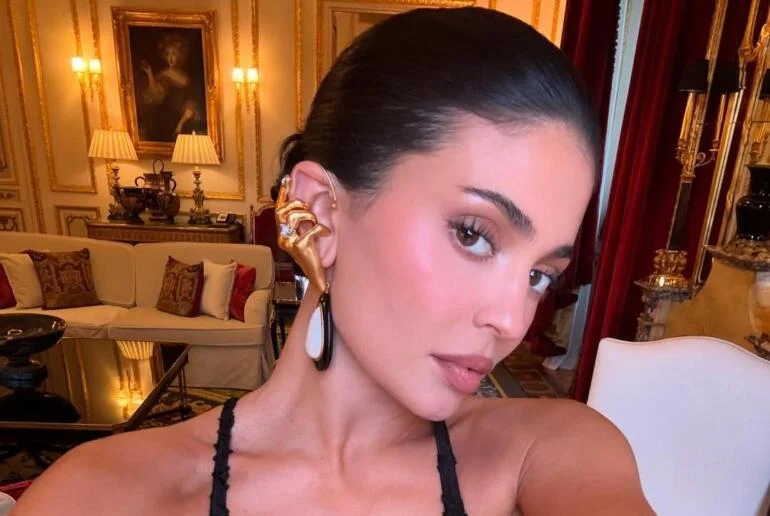
These are no saplings. Carefully craned into place, each olive tree was selected for both scale and character, their knotted trunks and dense canopies adding a layer of timelessness to a modern compound. The trees range between 60 and 100 years old, imported and preserved with precision to look as though they’ve always belonged. Their placement transforms the perimeter into something far more deliberate than landscaping: it becomes a veil of privacy, a botanical boundary that shields while signaling wealth in quiet, organic form.
While traditional hedges or walls might serve the same purpose, Jenner’s olive grove delivers more than separation. It delivers symbolism. In cultures spanning the Mediterranean and Middle East, olive trees are considered emblems of peace, prosperity, and longevity: an evergreen halo of ancient calm. For a public figure raised in the glare of cameras, this green curtain offers an illusion of seclusion that even the most fortified gate might not achieve.
THE HIDDEN COST OF GREEN IN A DROUGHT-STRICKEN STATE
Yet as the olive trees settle into their new soil, they bring with them a thornier subject: water. According to estimates, a grove of this magnitude could consume nearly 490,000 gallons of water per year, or around 1,340 gallons per day. That figure stands in stark contrast to the recommended daily indoor water use for an average Californian, which hovers around 50 gallons per person. In a state long plagued by droughts, the optics of such consumption are striking, if not controversial.
The issue here isn’t just irrigation: it’s the broader question of resource visibility in a region where sustainability has become a civic imperative. Olive trees, particularly those transplanted at mature stages, require careful acclimatization, ongoing care, and regulated hydration. While Los Angeles homeowners are incentivized to swap lawns for native landscaping, Jenner’s installation leans into the opposite direction: beauty over balance, aesthetics over austerity.
Still, she is not alone. Other celebrities (including Ellen DeGeneres and Drake) have embraced the olive tree as a marker of cultivated taste, importing them by the dozen to create estates that resemble Provençal villas or Tuscan retreats. In this world of rarefied landscaping, the trees are less about agriculture and more about architectural impact. They function as silent status symbols: rooted, sculptural, and unapologetically lush.
CULTIVATED PRIVACY AND CURATED NATURE
Jenner’s Hidden Hills property, which has been under construction for five years and was purchased for $15 million from singer Miley Cyrus, is poised to eclipse even the most extravagant neighboring estates (including that of her sister, Kim Kardashian). Twice the size of Kim’s minimalist home, Kylie’s estate features a long private drive, sports courts, a vineyard, and an underground garage designed to house up to 12 vehicles. In this context, the olive trees act not just as décor but as a soft barrier against the outside world.
Beyond the olive grove, Jenner has embraced a broader, cultivated lifestyle centered around earth-toned elegance. Past social media posts have shown her flaunting homegrown pomegranates in glass vessels and showcasing fruits and vegetables harvested from her own garden (though she has since admitted that her lush produce is maintained by staff, affectionately described as “some nice ladies” who supply her kitchens with whatever is in season).
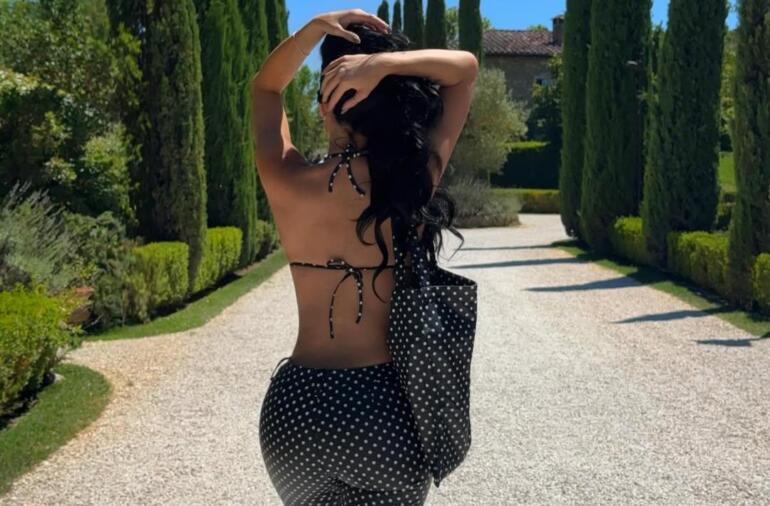
The installation of the olive trees adds yet another chapter to this curated image of luxury softened by nature. It’s a statement that balances visual tranquility with immense logistical effort: a paradox at the heart of many modern celebrity estates. Here, the greenery is less about living off the land and more about insulating oneself from the world beyond the gates. The olive tree, in this sense, becomes both shield and symbol: growing ever slowly, ever silently, in service of a lifestyle designed to look effortless.