
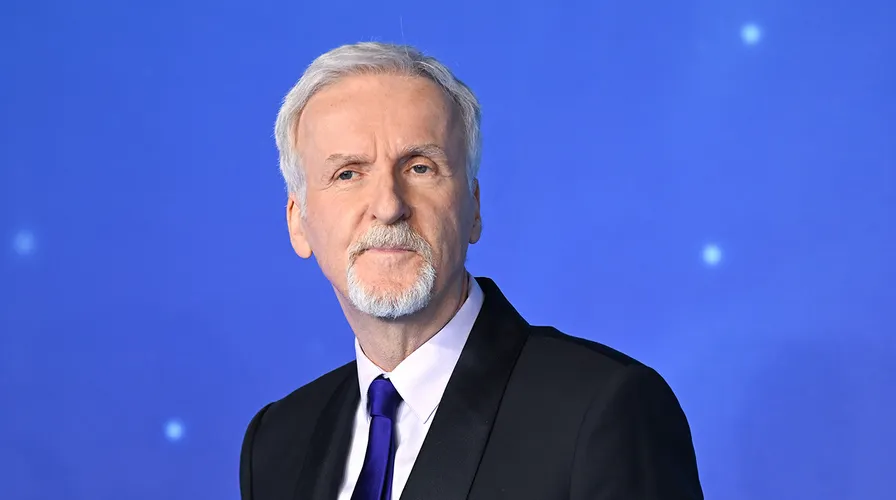

Cameron Calls for Urgent Action on Generative AI in Filmmaking
James Cameron is warning that Hollywood cannot afford to delay in addressing the challenges posed by generative AI, a technology he believes could permanently reshape the creative foundation of filmmaking. Speaking to Screendaily from New Zealand, where he is continuing work on future Avatar installments, Cameron said the entertainment industry is at a turning point. “I can’t think of anything coming up that is bigger and more important to us right now than confronting this generative AI issue,” he said. “It is critical that we master it and control it so that it remains an artistic tool and it doesn’t replace artists.” For Cameron, the stakes are not just about new production techniques but the very survival of the craft and the livelihoods of those who bring stories to life.
The filmmaker, who has spent more than four decades directing large-scale, visually ambitious productions, said the idea of AI replicating actors’ performances is deeply troubling. “The idea that this technology could potentially replace actors and the unique lens that every artist brings is horrifying,” Cameron stated. He cautioned that generative AI could also be used to digitally synthesize actors who are no longer alive, raising profound ethical questions about consent, artistic ownership, and the limits of posthumous representation. For an industry built on human interpretation, subtlety, and emotion, he sees such possibilities as both creatively hollow and potentially damaging to audience trust.
While Cameron is not calling for the outright elimination of AI tools, he is clear that their role must be carefully defined. He believes these technologies should function as supportive instruments to enhance human creativity rather than substitutes for it. The challenge, he said, is ensuring that studios and creators act now to establish boundaries before the technology’s adoption becomes widespread and irreversible. If left unmanaged, he warns, the industry risks normalizing a form of filmmaking where the authenticity of performance and the diversity of creative voices are lost.
Linking AI Concerns to Broader Global Threats
Cameron’s warnings about generative AI do not exist in isolation. He has repeatedly connected the issue to other technological and environmental risks, often drawing parallels to the cautionary themes of his Terminator films. In an interview with Rolling Stone, he underscored the dangers of pairing AI with advanced weapons systems, particularly those tied to nuclear capabilities. “I do think there’s still a danger of a Terminator-style apocalypse where you put AI together with weapons systems, even up to the level of nuclear weapon systems, nuclear defense counterstrike, all that stuff,” he said. For Cameron, AI is part of a triad of global threats that includes climate change and nuclear proliferation, three forces he believes are “manifesting and peaking at the same time.”
Although he acknowledges the potential of AI to help address some of these challenges, Cameron remains cautious about assuming that superintelligence will naturally align with human interests. “Maybe the superintelligence is the answer. I don’t know. I’m not predicting that, but it might be,” he said. This measured view reflects his recognition that while AI could offer problem-solving capabilities beyond current human reach, its application must be guided by strong safeguards, ethical frameworks, and public accountability. Without these, he warns, its integration into critical systems could have destabilizing consequences.
Cameron’s broader perspective places the debate over AI in filmmaking within a global context of technological acceleration. In his view, the same mindset that rushes to adopt AI without oversight in creative industries could also drive its unchecked deployment in more dangerous domains. The entertainment industry, he argues, has a responsibility not only to protect its own creative ecosystem but also to contribute to a culture of careful, deliberate decision-making about technology on a global scale.
Open to Using AI But Not Yet
Despite his concerns, Cameron has not closed the door on incorporating AI into his work. In fact, he has already taken steps to understand it from the inside, joining the executive board of Stability AI last year to explore how AI-generated imagery might interact with visual effects workflows. His interest, he says, is in mastering the technology for himself so that he can make informed decisions about how and when to apply it. “I want to learn it, I want to master it for myself, then use my own best judgment about how I apply it to my personal art,” he told Screendaily. For a filmmaker whose projects can take four years or more to complete, the possibility of shortening that timeline without sacrificing quality is appealing but not at the expense of creative integrity.
Cameron has already made a clear statement about his current stance. His upcoming film, Avatar: Fire and Ash, is expected to open with a title card informing audiences that no generative AI was used in its creation. This deliberate choice reflects his belief that, in its present state, generative AI is not yet fit for integration into his creative process. While some studios may be tempted to use AI for cost savings or to speed up production, Cameron remains committed to traditional performance-driven filmmaking for now.
Beyond the AI debate, Cameron is also concerned about the broader trajectory of the film industry. “Movies are very, very expensive now, and it seems to me that the cinema is becoming less important to the world at large,” he said. He worries that fewer large-scale, visually ambitious films are being greenlit, which could narrow the scope of stories told on the big screen. For him, the task ahead is twofold: to preserve the cultural and artistic value of cinema while navigating the opportunities and risks that emerging technologies like generative AI present.