
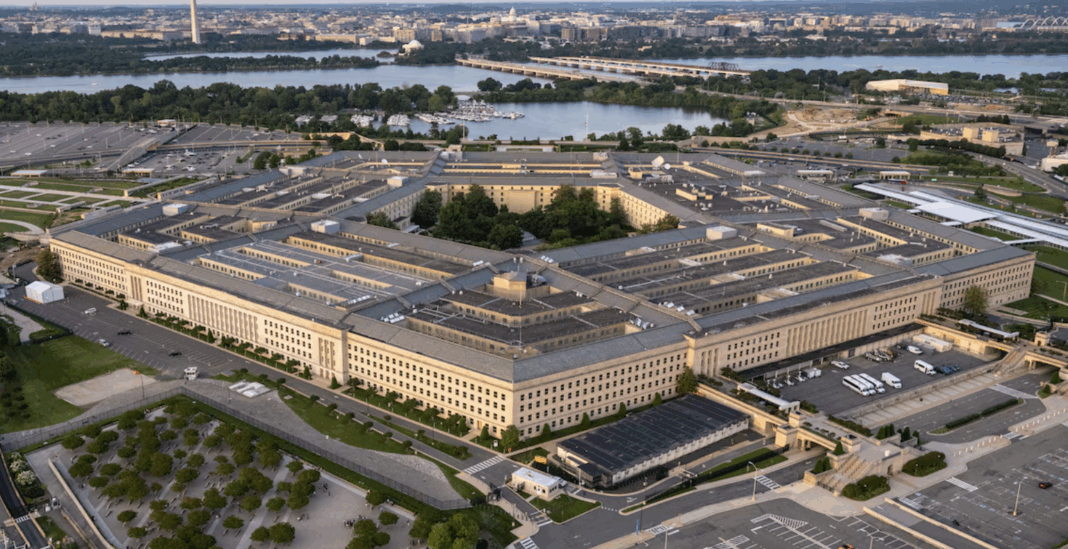

The U.S. Department of Defense (DoD) has asked its civilian workforce to consider volunteering for assignments with Immigration and Customs Enforcement (ICE) and Customs and Border Protection (CBP). An email circulated Wednesday to DoD civilian employees outlined the opportunity to join a “volunteer force” that would support immigration enforcement operations, including activities tied to President Donald Trump’s deportation campaign. The request marks a rare instance of the Pentagon redirecting civilian personnel into roles supporting domestic law enforcement agencies.
Details of the Volunteer Program
The email, obtained by 404 Media, stated that the Secretary of Defense had authorized the detail of civilian employees to the Department of Homeland Security (DHS) to contribute to immigration enforcement efforts. According to the message, selected employees would “offer critical support” to ICE and CBP in carrying out the administration’s goals for a “safe and orderly immigration system.” The Department of Defense employs approximately 950,000 civilians, making the potential pool of applicants sizable.
Applications are being routed through the USA Jobs platform. The listing explains that volunteers may be placed at ICE or CBP facilities located along the southern border and throughout the U.S. interior. It also emphasizes that some postings may involve “austere conditions” and that assignments will be determined based on operational need rather than personal preference. The posting clarifies that deployment locations will not be negotiable.
The scope of work includes support roles rather than frontline enforcement. Duties may include data entry, operational planning support, logistics coordination, and managing the flow of detainees from arrest through deportation. The job description also lists responsibilities such as planning the movement of personnel and equipment, helping design campaign operations, and assisting with documentation and throughput processes. These assignments are intended to bolster ICE and CBP capacity as they prepare for expanded enforcement.
Context and Recent Developments
The email references a June memorandum issued by Defense Secretary Pete Hegseth to senior Pentagon leadership. The memo authorized the detail of DoD civilian employees to DHS “in support of the President’s priority of securing our borders.” It formally opened the pathway for civilians to be assigned to immigration-related duties and provided the legal framework for the current recruitment push.
The move comes as ICE and CBP face expanded responsibilities under the administration’s immigration agenda. Both agencies have received increased funding to support large-scale hiring and operational expansion. Recruitment of civilian DoD employees represents an additional measure to ensure they can meet staffing demands. It also underscores DHS’s challenges in onboarding enough full-time personnel to meet the administration’s stated goals.
This is not the first time military resources have been linked to immigration enforcement operations, though recent examples involved uniformed service members rather than civilians. In recent weeks, the Trump administration deployed Marines and National Guard personnel to Los Angeles and Washington, D.C., in response to protests against ICE raids. However, those troops were not directly involved in enforcement but served in a support capacity, primarily focused on maintaining public order around demonstrations.
Reactions and Implications
The decision to recruit from the Pentagon’s civilian ranks highlights the broad scale of the current immigration initiative. It suggests that traditional hiring channels at DHS alone may be insufficient to meet demand, prompting coordination with other federal agencies. By framing the initiative as voluntary, the Department of Defense avoids mandating participation while still making personnel available for reassignment.
The language of the job posting makes clear that civilian detailees will not operate independently but will serve under ICE and CBP direction. Their tasks will focus on administrative and logistical support, freeing up law enforcement officers to concentrate on arrests and border patrols. While these roles are secondary to enforcement itself, they are nonetheless central to the functioning of large-scale deportation efforts.
Critics are likely to raise concerns about the precedent of using civilian DoD employees in domestic law enforcement contexts. While the Department of Defense has historically provided logistical and technological support to DHS, the expansion of that role through direct personnel assignments represents a notable shift. The coming months will show how many employees volunteer for the program and how their deployment affects both the operations of DHS and the ongoing responsibilities of the Pentagon’s civilian workforce.