

A Fortune Woven Into the Family Legacy
Hermès, the storied French maison synonymous with timeless luxury, has once again rewarded its descendants with extraordinary wealth. In August, roughly one hundred heirs of the Hermès dynasty collectively received nearly $950 million in dividends, a record windfall that underscores both the company’s financial strength and its enduring cultural cachet. For each heir, the payout averaged around $8 to $9 million, an amount that reflects not only decades of careful stewardship but also the insatiable demand for the house’s most coveted creations.
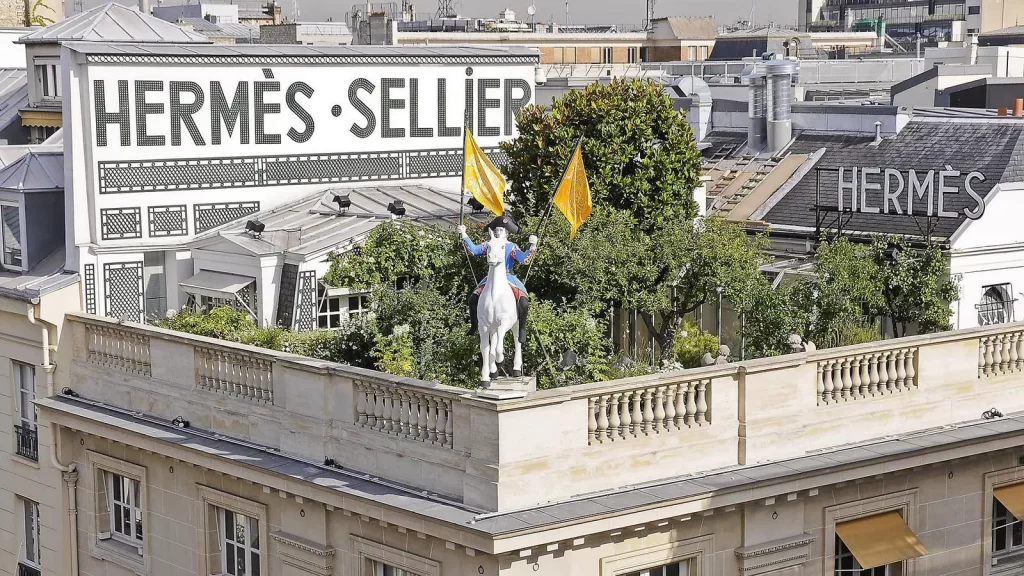
At the center of this prosperity lies H51, the tightly knit family holding that controls 54 percent of Hermès International. Comprising the descendants of founder Thierry Hermès, who established the Parisian workshop in 1837, the group has preserved both majority ownership and the family’s vision for nearly two centuries. Their agreement to lock the stake until 2041 ensures continuity of control as well as a guarantee that future dividends remain sheltered within the family circle.
The scale of the payout is even more striking considering that the company set aside additional reserves, with $465 million earmarked for financial stability and $250 million for dividend top-ups. Yet even after these allocations, the heirs’ distribution reflects the remarkable trajectory of a house that has transformed artisanal craftsmanship into one of the world’s most lucrative family fortunes.
The Birkin Phenomenon and Unrelenting Demand
Few objects in the luxury world command the same allure as the Birkin bag. Conceived in 1984 and originally priced at around $2,000, the bag has since ascended to become a global symbol of status, wealth, and exclusivity. By 2004, the price had doubled to $4,000, and today, a standard Birkin in classic leather surpasses $12,000. The Birkin 30 in Togo leather alone climbed from $10,900 in 2019 to $13,300 in 2025, illustrating both the steady escalation of prices and the undiminished fervor of collectors.
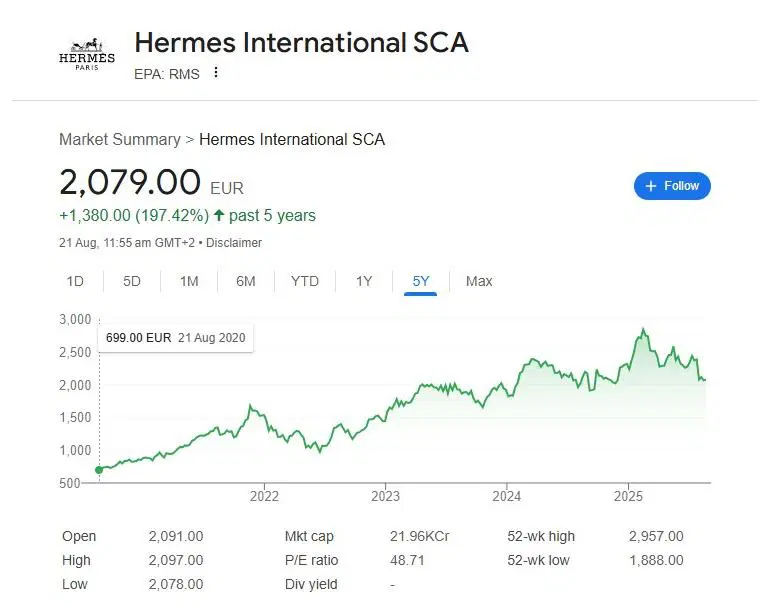
Demand has far outpaced supply, with waitlists stretching months or even years, reinforcing the aura of rarity that has become central to the brand’s mythology. Hermès, keenly aware of this dynamic, raised prices globally by about 7 percent in 2023, a move that further positioned its handbags not merely as accessories but as investment-grade assets. For clients, the acquisition of a Birkin is less a purchase than an initiation into a rarified world where patience and privilege intersect.
The house’s strategy of controlled scarcity has only magnified the Birkin’s cultural resonance. Celebrities, royalty, and collectors alike have transformed the handbag into a modern grail, one that is flaunted on red carpets as much as it is secured in private vaults. In this way, Hermès has mastered the delicate balance between heritage and desire, sustaining a phenomenon that shows no sign of waning.
Beyond Luxury: The Bag as Cultural and Financial Icon
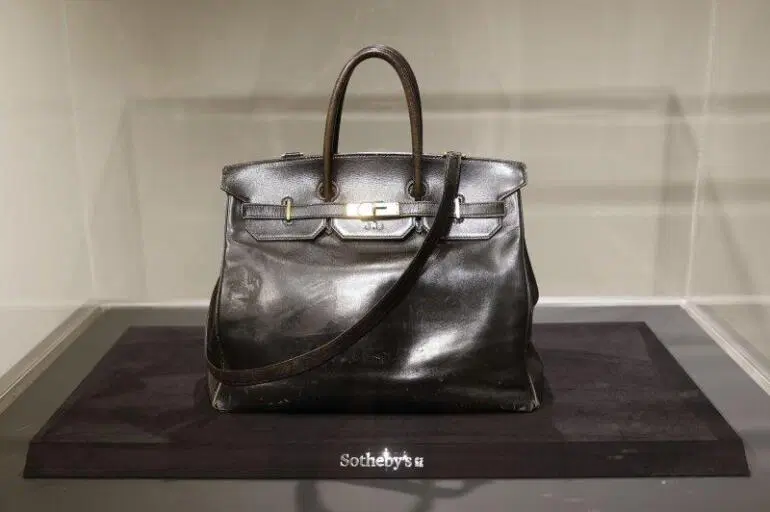
The Birkin has long transcended its role as a fashion accessory, cementing its status as a cultural artifact. This evolution was perhaps most dramatically underscored when Jane Birkin’s own well-worn handbag fetched nearly $10 million at auction. The sale confirmed what collectors and connoisseurs have long understood: Hermès handbags occupy a unique space where artistry, rarity, and financial appreciation converge.
For the Hermès heirs, this cultural power translates directly into financial security. The record dividend is not only a reflection of robust sales but also of the brand’s ability to define and dominate the conversation around luxury. Unlike competitors that lean on seasonal trends, Hermès thrives on timelessness. Each bag is not just an object of beauty but a vessel of value, one that grows more coveted with time.
In a broader sense, the Birkin has become a symbol of aspiration, both attainable and elusive. Its enduring appeal ensures that the heirs of Thierry Hermès remain among the most privileged families in Europe, their fortune tied not just to leather and craftsmanship, but to the very idea of luxury itself. As the brand continues its steady ascent, it becomes clear that Hermès is no longer merely a fashion house. It is an empire of elegance, where heritage and wealth intertwine in ways that are as enduring as the bags themselves.