

A Detective in a World of Billionaires
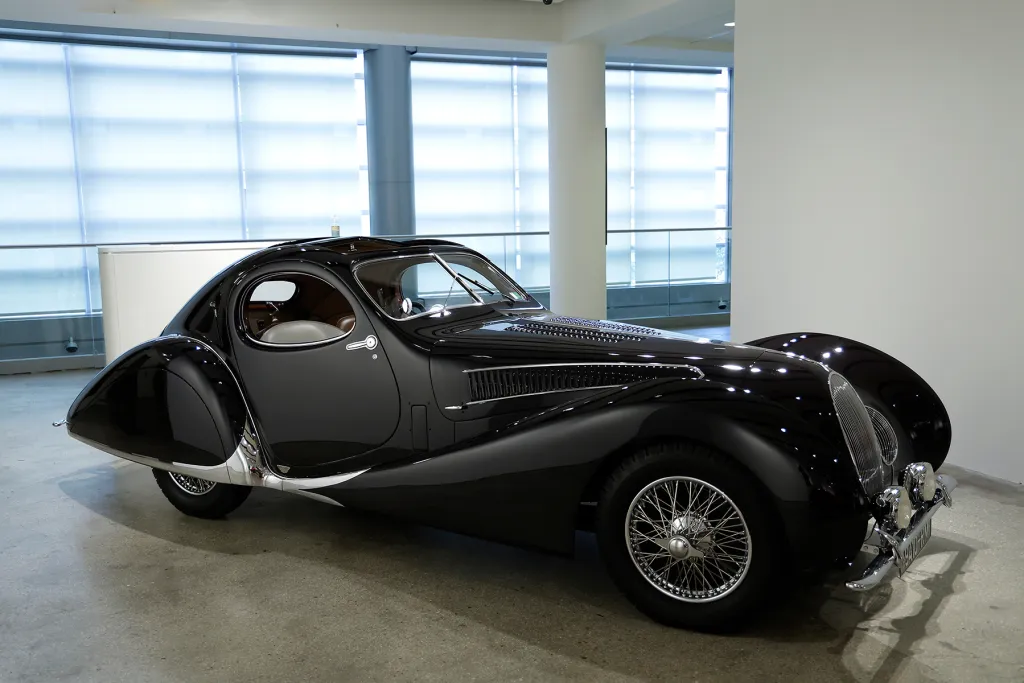
At a seaside bar in Palm Beach, Joe Ford nursed a Bloody Mary and scanned the crowd. To anyone else, it was just another afternoon at the Breakers resort, a place where the wealthy gathered to sip caviar-infused martinis beneath chandeliers and saltwater aquariums. But Ford, tall, trim, and sun-burnished, wasn’t there for cocktails or conversation. He was waiting for a suspect tied to one of the most audacious car thefts in history: the disappearance of a 1938 Talbot-Lago T150C-SS Teardrop Coupe, a car valued at $7 million and long regarded as one of the most beautiful machines ever built.
Ford is no ordinary private eye. A former car dealer turned specialist investigator, he occupies what he calls “a niche of a niche of a niche,” tracking down stolen rare automobiles across the globe. His work often places him in rarefied company, rubbing shoulders with billionaires, collectors, and even undercover FBI agents. For Ford, however, this job is not simply about prestige. It is about the chase, the risk, and at times the possibility of securing a life-changing payout.
Behind the tan polos and island demeanor lies a man motivated by personal stakes as much as professional drive. Ford’s daughter, Julia, suffers from a degenerative eye disease that is steadily stealing her vision. The recovery of the Talbot-Lago, and the financial reward it promised, carried for him the weight of both legacy and love. It was a father’s desire to secure a future for his child, even as her world narrows to darkness.
The Legend of the Talbot-Lago Teardrop
The Talbot-Lago T150C-SS Teardrop, chassis number 90108, was no ordinary car. Crafted in Paris by coachbuilders Figoni and Falaschi, its sweeping lines embodied Art Deco elegance, earning it the title “the most beautiful car in the world” from critics decades later. Beneath its sculpted body lay the heart of a race car: a 140-horsepower engine that made it one of only two Teardrops ever built with true competition pedigree. It was rolling sculpture and roaring machine, a creation that once inspired its owners to commission couture gowns in matching shades for society balls in prewar Europe.
Imported into the United States in 1939 by Luigi Chinetti, a famed Le Mans driver turned Ferrari dealer, the Teardrop passed through illustrious hands. Among its owners was Tommy Lee, son of a Los Angeles Cadillac magnate, who lived fast, raced across desert flats, and died young, leaving behind both fortune and legendary automobiles. The Talbot-Lago later fell into the possession of Roy Leiske, a Milwaukee plastics entrepreneur who bought the car for just $100 in 1967. What began as a restoration project grew into an obsession. After the deaths of his wife and son, Leiske withdrew from the world, pouring decades into tinkering with the Teardrop inside his factory.
Then, one night in 2001, the car vanished. Thieves dressed in white overalls cut phone lines, drilled locks, and used an industrial crane to load the partially disassembled coupe and its scattered parts into a waiting truck. By morning, everything was gone: the chassis, the paperwork, the history. Nothing else in the building was touched. For Leiske, it was a heartbreak from which he never recovered. He died four years later, never having seen the car again.
A Global Chase Through Shadows and Secrets
Enter Joe Ford, hired by Leiske’s heirs to recover what was lost. His search quickly grew beyond the boundaries of Milwaukee and into the rarefied world of concours d’elegance, where billionaires parade multimillion-dollar cars before white-gloved judges. For Ford, these gatherings were both playground and battlefield: events where whispers of provenance could expose fraud, and where stolen masterpieces sometimes reemerged under fresh coats of paint and dubious paperwork.
Working alongside the FBI and Interpol, Ford pieced together leads that spanned continents and decades. He discovered trails of ownership that pointed toward prominent collectors, transactions carried out in hushed tones, and middlemen who once were allies but had since become suspects. At one concours, Ford found himself eyeing a former associate now tied to the Talbot-Lago’s disappearance, a man whose betrayal was as personal as it was professional. The FBI had given Ford a number to call if he spotted him. The stakes were no longer theoretical; they were sitting across the room, laughing in tailored suits.
What Ford confronted was not just a stolen car, but the machinery of an international black market where beauty, history, and greed intersect. The Teardrop was more than missing property; it was a cultural artifact caught in the undertow of secrecy and power. For Ford, chasing it meant navigating a poker game played with fortunes, reputations, and loyalties. Each move brought him closer to answers, but also deeper into a world where passion for cars collided with criminal enterprise. And as the hunt for the Talbot-Lago unfolded, it became clear that this was not just the story of a car lost and found, but of a man determined to reclaim what was stolen for history and for his daughter’s future.