
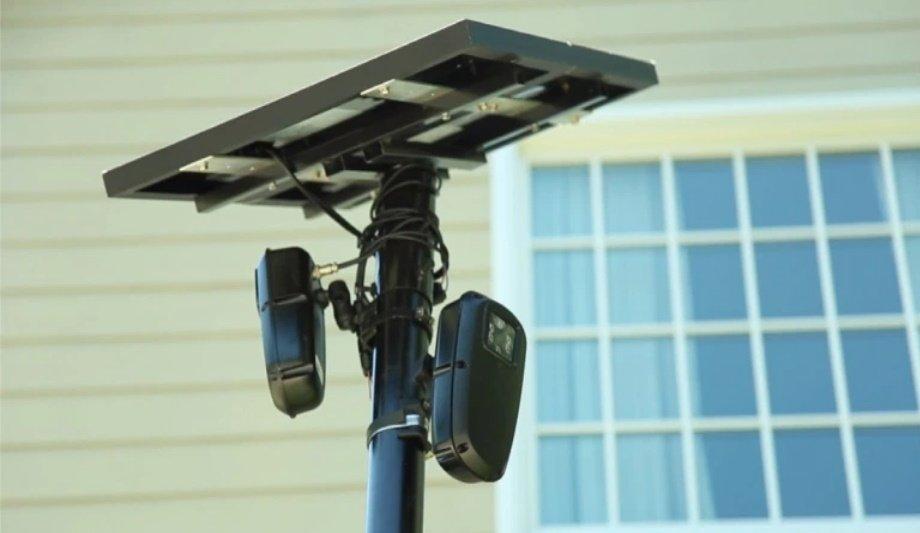

Newly released records show that U.S. Customs and Border Protection (CBP) has accessed more than 80,000 automated license plate reader (ALPR) cameras operated by Flock Safety, giving the agency one of the largest known entry points into the company’s national surveillance network. The scale of access, revealed through public records requests and local reporting, goes well beyond what had previously been disclosed. In response, Flock announced it has paused all federal pilot programs with CBP and other Homeland Security divisions.
Expanding Access Through One-to-One Agreements
Flock’s ALPR technology is widely deployed by police departments across the country, capturing the license plate, make, and color of vehicles as they pass by. These records are stored and can be searched by participating agencies. While originally marketed as a way for local law enforcement to solve crimes such as auto theft, the system has grown into a vast national network. Agencies can typically share data by opting into state or nationwide lookup features. In addition, Flock allows one-to-one agreements, where individual police departments share data directly with another agency.
Local reporting in Colorado last week revealed that the Loveland Police Department had entered into such an agreement with CBP. According to 9 News, CBP was able to send invitations to police departments nationwide to connect their camera networks. Flock confirmed that this access existed through a previously undisclosed pilot program. While the company initially described the arrangement as limited, the new records show CBP had access to far more cameras than a typical police department.
Public records obtained by 404 Media and independent researchers illustrate the scope. In one month alone, CBP ran at least 118 network searches through the Boulder Police Department’s Flock system, encompassing over 6,000 local networks and 82,000 individual cameras. Data from Washington state police departments in Prosser and Chehalis further showed CBP’s searches regularly spanned thousands of devices, placing the agency among the largest users of Flock’s system.
Police Departments Express Concern
The scale of access has surprised some local departments. The Boulder Police Department told 404 Media it was not aware that CBP had performed specific searches through its cameras. A department spokesperson explained that, until June 2025, Boulder had enabled Flock’s national lookup tool, which permitted other agencies with contracts to conduct searches if they cited a law enforcement purpose. In June, Boulder deactivated the feature “to maintain tighter control over data access” and to ensure compliance with state law. Colorado law prohibits sharing ALPR data with federal immigration enforcement agencies.
Other departments have echoed concerns about how Flock’s sharing settings work. Records show that CBP could search more cameras on average than most police departments. Independent analysis by researcher William Freeman confirmed that CBP’s searches often returned larger datasets than those available to local agencies. He suggested that CBP’s pilot program may have effectively defaulted to nationwide access rather than limited, opt-in agreements.
Flock has since sent an email to customers clarifying the different sharing options available within its platform. Agencies can choose to share only within their state, with a specific radius, or directly with named partners. They can also opt into or out of the national network. However, the new findings indicate that in practice, the distinctions between these levels of sharing have been difficult to enforce.
Flock Responds With Federal Pause
In a blog post published Monday, Flock CEO Garrett Langley said the company had paused all federal pilots with CBP and Homeland Security Investigations (HSI). He wrote that the intent of these pilots was to assist with investigations into human trafficking and fentanyl distribution, but acknowledged that the company had not clearly communicated how federal access was managed. Langley added that Flock would create a new “Federal” user category, giving local agencies more visibility into when federal users are requesting access.
An employee at Flock who disagreed with the company’s data sharing practices told 404 Media that the company maintains it follows the law and that customers are responsible for setting appropriate sharing limits. However, the employee raised concerns that laws governing data use are changing and questioned whether Flock’s policies adequately prevent unintended sharing with federal agencies.
The broader concern among critics is that CBP’s access effectively mirrors the nationwide network that Flock has built with local police. The audit logs obtained by journalists show that CBP is not reliant on requesting searches through intermediaries, as Immigration and Customs Enforcement (ICE) has done in the past, but can instead perform its own queries. This level of access blurs the line between local crime-fighting tools and federal surveillance, raising questions about oversight, transparency, and compliance with state laws that limit data sharing for immigration enforcement.
CBP has not publicly commented on the extent of its access to Flock’s systems.