
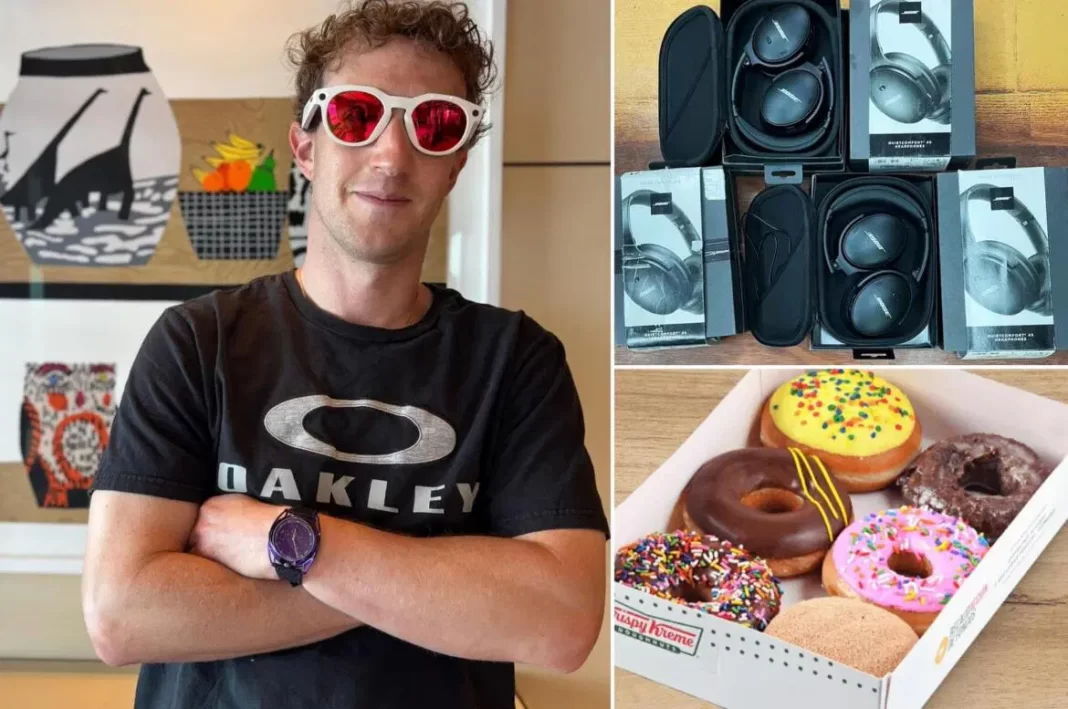

Gifts Amid the Noise
In Palo Alto’s Crescent Park, a neighborhood accustomed to quiet streets and discreet affluence, the soundscape has changed dramatically. Since 2011, Mark Zuckerberg has been steadily acquiring homes in the enclave. He now owns more than eleven properties at a cost exceeding $110 million. With each new addition has come waves of construction, deliveries, and disruption that have tested the patience of his wealthy neighbors, many of whom are professors, lawyers, and business executives seeking refuge from Silicon Valley’s relentless pace.
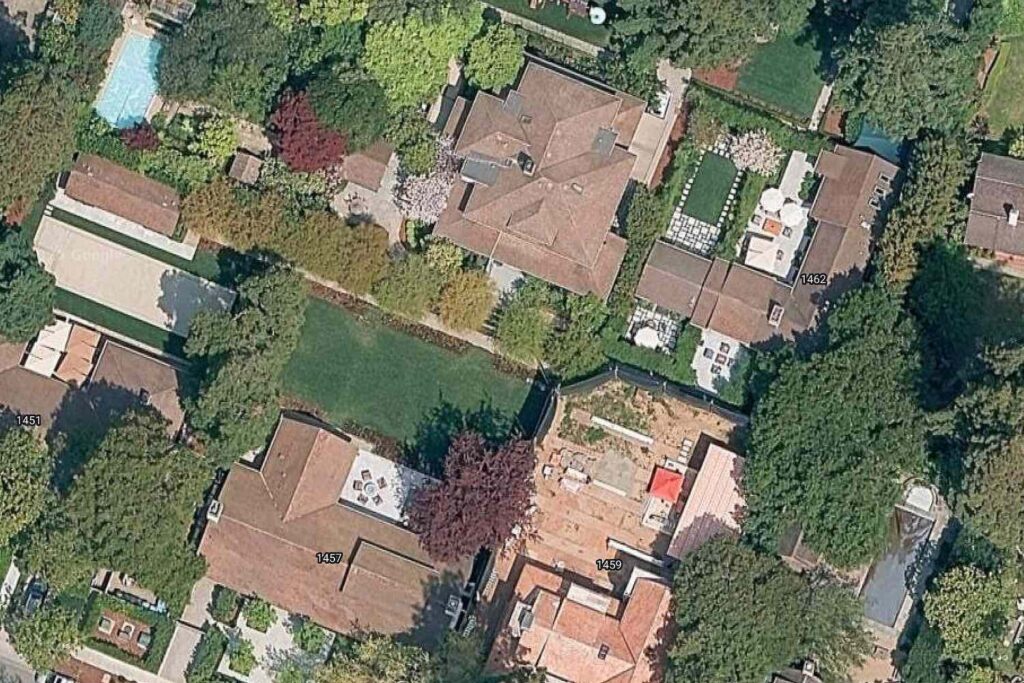
To soften the strain, Zuckerberg’s staff has distributed peace offerings that included boxes of Krispy Kreme doughnuts, bottles of sparkling wine, fine chocolates, and most memorably, noise canceling headphones. What might have been intended as gestures of goodwill quickly became symbols of imbalance. Some neighbors accepted the treats with humor, amused at the incongruity of billion dollar ambition paired with sugary pastries. Others bristled at the implication that relentless drilling, rumbling trucks, and late night gatherings could be offset by snacks or technology.
The headphones in particular struck a nerve, embodying the awkwardness of living beside a billionaire intent on reshaping his environment even at the cost of communal harmony. In a neighborhood where homes average over $6 million, many residents felt that such gifts trivialized the real frustration of years long disruption. What was once a quiet enclave has, in the eyes of some, become an occupied zone managed by staffers rather than a shared community.
A Fortress Rising
The scale of Zuckerberg’s compound has only magnified tensions. Five houses have been combined into a gated estate that includes guest houses, manicured gardens, a pickleball court, and a hydrofloor swimming pool designed to vanish beneath a retractable floor. At the center stands a seven foot statue of Priscilla Chan, robed in silver, a strikingly personal monument within the carefully constructed grounds. Beneath it all lies more than 7,000 square feet of underground space, referred to by neighbors as bunkers, a hidden expansion that fuels speculation about the compound’s true dimensions.
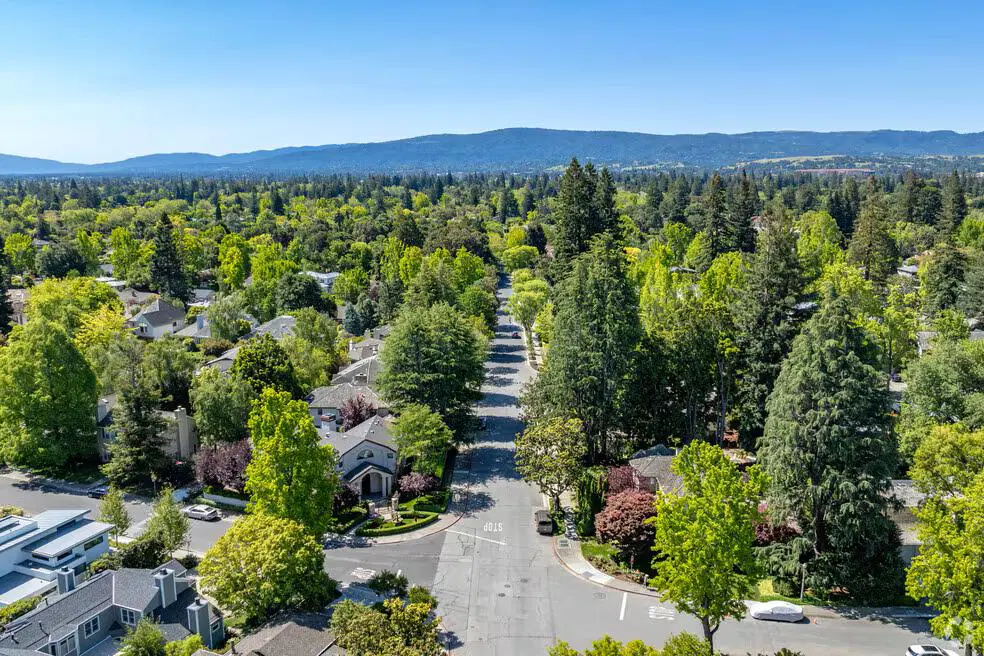
One house has been converted into a private school for the couple’s children, staffed by four teachers and aides. Yet such a transformation has raised concerns, as local zoning codes do not permit schools within the neighborhood. To residents, the compound represents not just physical disruption but also a rewriting of rules to suit one man’s vision. The result is a space that looks less like a home and more like an enclave within an enclave, its private scale overshadowing the communal fabric.
Efforts at neighborly outreach have continued, but their impact has been limited. Staff members have dispatched ice cream carts to block parties, sent notices before major events, and even shifted to electric security vehicles to reduce noise. Drivers are reimbursed for ride shares to keep staff cars out of local driveways. These measures, while cosmetic improvements, fail to erase the more enduring realities: flattened tires from debris, blocked access from deliveries, and a street culture slowly eroded by construction and control.
A City on Edge
The compound has also drawn scrutiny beyond Crescent Park, raising questions about Palo Alto’s ability to manage the presence of one of the world’s richest men. Reports of police installing temporary tow away signs on public streets for Zuckerberg’s private gatherings, assisted by the city’s dignitary unit, have fueled a perception of unequal treatment. For many, the image of public trees bearing parking restrictions so a backyard barbecue could proceed safely crystallized the imbalance between civic norms and private power.
City leaders have begun to take notice. Councilmember Greer Stone has criticized Zuckerberg’s reliance on zoning loopholes, warning that Palo Alto risks becoming a “gilded city on a hill” where even affluent residents feel powerless to shape their neighborhood. Proposed legislation aims to prevent similar consolidations in the future, underscoring the unease that arises when private vision collides with public governance.
Despite the gestures, the policies, and the attempts at compromise, the mood in Crescent Park remains strained. Longtime residents speak of diminished block parties, reduced neighborly interactions, and an atmosphere of quiet surveillance. In a setting once known for openness and civic pride, the Zuckerberg compound stands as both a feat of ambition and a cautionary tale. Doughnuts and headphones may sweeten a morning, but they cannot muffle the sound of a community reshaped by force of wealth.