
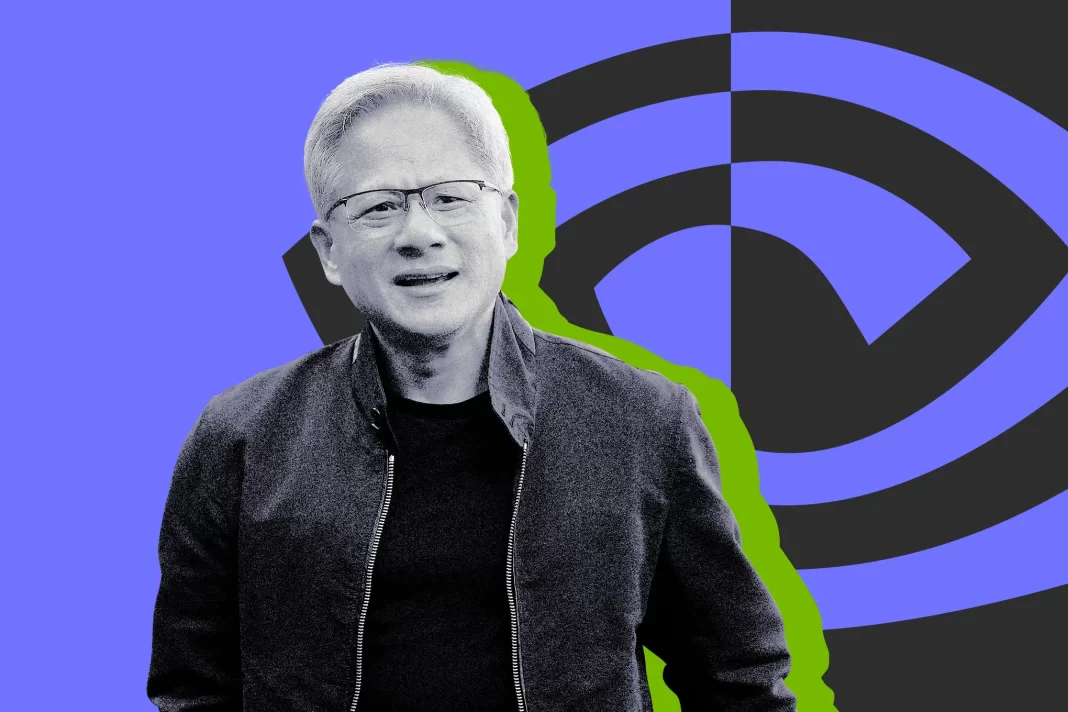

Nvidia CEO Jensen Huang says artificial intelligence and robotics will not free people from work but instead create more opportunities and responsibilities. Speaking in an interview with Fox Business, Huang predicted that while productivity will rise, people will likely find themselves with even more to do in the years ahead.
Robots and Automation in Everyday Life
Huang discussed the future of robotics, emphasizing that machines will become a part of nearly every industry. “Everything that moves will be robotic,” he said, describing how humanoid robots, industrial machines, and specialized systems will increasingly support sectors ranging from healthcare to agriculture. He pointed to robotic surgery, automated manufacturing, and farming as examples of where these technologies are already gaining traction.
He highlighted Nvidia’s role in this transition, explaining that the company will provide the computing tools necessary to enable robotic systems. Nvidia has recently introduced Jetson Thor, a platform designed to serve as a “robot brain,” capable of powering a wide range of autonomous systems. According to Huang, the expansion of robotics will reshape industrial production worldwide.
Asked whether this would translate into more leisure time for people, Huang acknowledged the possibility of changes in work structure but argued that new tools often create more opportunities rather than reducing the need for human effort. He described the future as both technologically advanced and filled with fresh challenges that demand human involvement.
Busier Futures Despite Productivity Gains
The question of whether automation could lead to shorter workweeks, such as four-day schedules, has gained renewed attention from public figures including Elon Musk. Huang’s view contrasts sharply with the idea that robots and AI will give people more time off. Instead, he said that faster processes and expanded possibilities mean people will continuously seek to pursue new ideas.
“I have to admit that I’m afraid to say that we are going to be busier in the future than now,” Huang said. He explained that while automation speeds up many tasks, it also creates demand for pursuing additional projects and innovations. Companies and countries, he argued, will continue to generate more ideas than they can fully execute, which will keep people engaged rather than idle.
At the same time, Huang expressed optimism that greater productivity could allow for some social shifts. He said he is hopeful that shorter workweeks might eventually become common, enabling more time with family, reading, and travel. In his view, increased efficiency could provide a balance between professional demands and personal enrichment.
Historical Context and Market Impact
Huang placed his predictions within a historical framework, noting that industrial revolutions have always reshaped labor. He pointed out that society moved from seven-day workweeks in earlier eras to the five-day standard today, suggesting that social structures adapt alongside technological progress. While some jobs will disappear, he expects many new roles to be created, with every job influenced in some way by AI.
He emphasized that quality of life will likely improve as automation expands, even though work itself will evolve. “I expect the economy to be doing very well because of AI and automation,” Huang said, underscoring his belief that growth and innovation will expand opportunities across industries. His comments reflect a broader view that AI is not a replacement for human effort but a catalyst for change.
Nvidia itself remains at the center of the AI industry. The company recently reported quarterly sales of $46.7 billion, roughly in line with analyst expectations. However, revenue from its data-center business fell short of forecasts, prompting a dip in Nvidia’s stock price. The report sparked fresh debate about whether the AI sector could face a slowdown, though Huang maintained that the long-term trajectory for AI remains strong.