
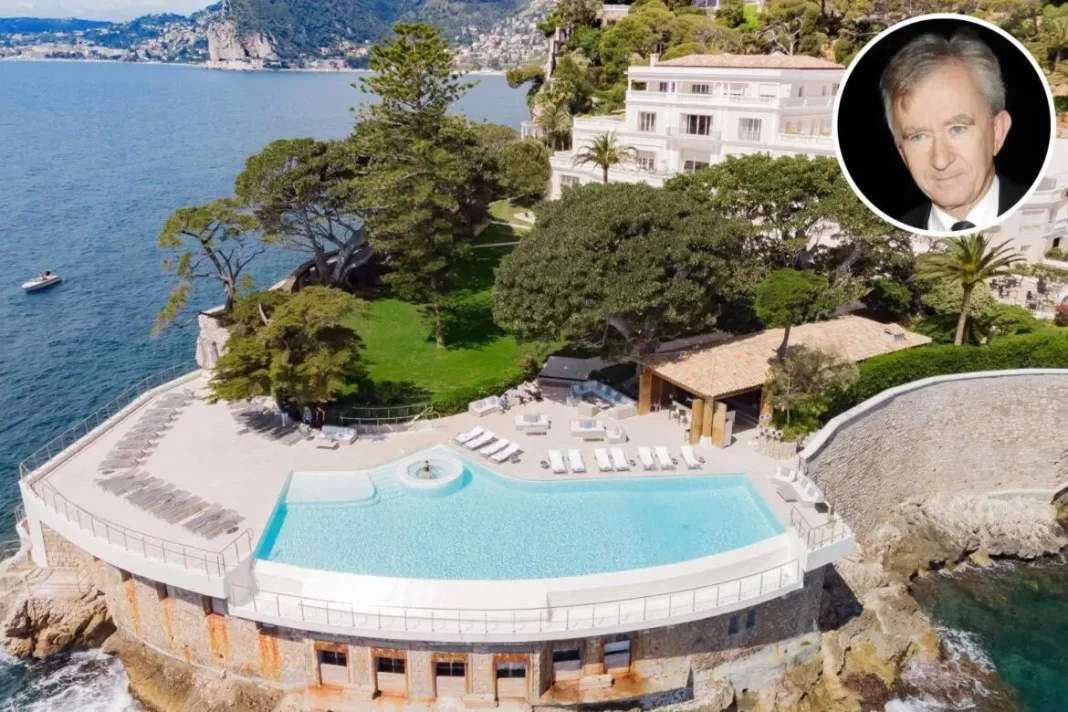

A Riviera Jewel with a Storied Past
For more than a century, Cap Estel has stood as one of the Côte d’Azur’s most discreet enclaves of luxury. Set on a private two-hectare peninsula in Èze, between Nice and Monaco, the property was originally built in the 19th century and later transformed into an exclusive retreat. Unlike the glittering resorts of Cannes or Saint-Tropez, it developed a reputation for privacy and refinement, offering its guests something the Riviera rarely affords: seclusion. Its history is steeped in cultural resonance, with Greta Garbo seeking solace in its gardens, The Beatles finding inspiration within its walls, and U2 adding their names to the property’s artistic legacy.
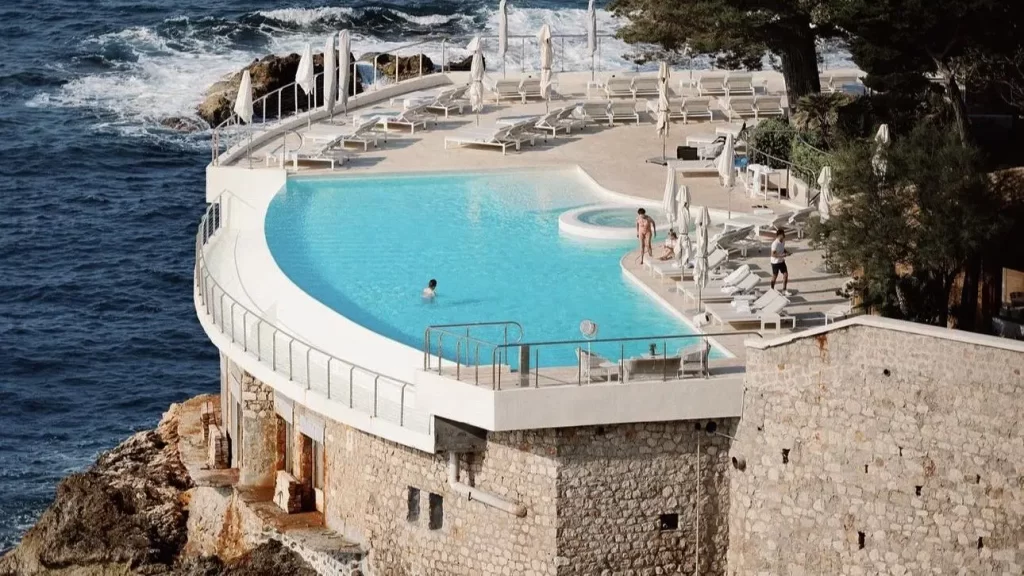
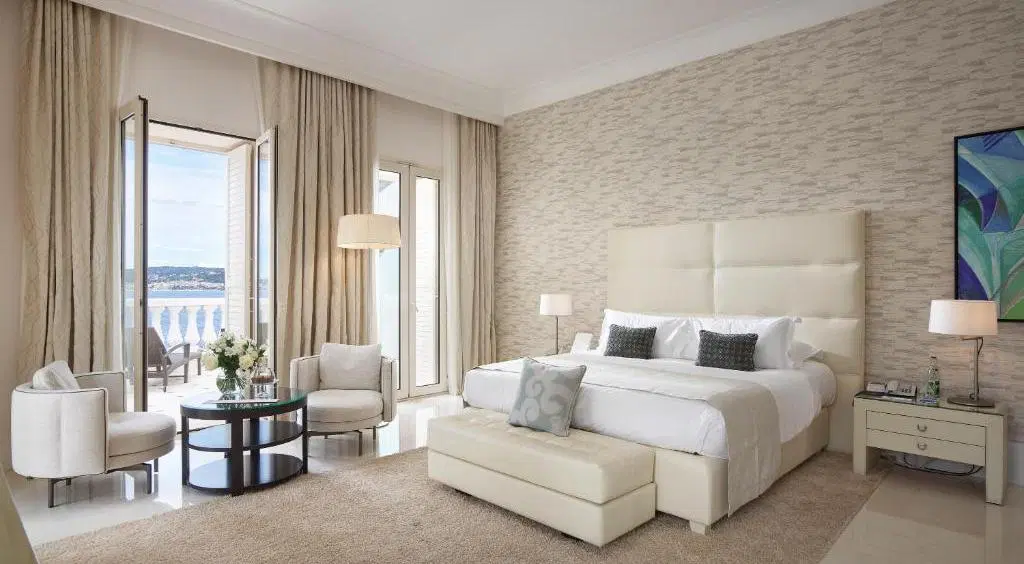
The estate itself comprises just 20 rooms and suites, but its scale belies its grandeur. Each space opens onto sweeping views of the Mediterranean, designed more like a private villa than a conventional hotel. Guests move between manicured gardens, cliffside terraces, and panoramic balconies, all curated to create an environment of harmony between land and sea. Interiors balance heritage with modernity, with traditional detailing preserved alongside contemporary sophistication, creating an atmosphere that feels both timeless and alive.
Cap Estel’s enduring reputation has always been defined by discretion. Shielded from the seasonal crowds that overwhelm much of the Riviera, it offers the most elusive of luxuries: silence. With its infinity pool appearing to spill into the sea, Michelin-level dining on terraces framed by bougainvillea, and views uninterrupted by the world beyond, the property has remained less a commercial destination than an ideal. For generations of travelers and cultural figures, it has been a retreat where privacy and indulgence could coexist, sheltered from the spectacle of celebrity that defines much of the region.
Arnault’s $234 Million Statement
In July 2025, Bernard Arnault, chairman and CEO of LVMH and the world’s richest man, acquired Cap Estel through his family holding company, Financière Agache. The €200 million purchase, equivalent to $234 million, set a record valuation for European luxury hospitality, averaging $12 million per key. Such a figure reflects both the scarcity of independent Riviera estates and the intensity of global competition for trophy properties. For Arnault, this was not simply an acquisition but a symbolic gesture of permanence and influence along France’s most storied coastline.
Although Arnault has built LVMH into the largest luxury conglomerate in the world, with holdings in fashion, jewelry, wine, and hospitality, Cap Estel stands apart. His empire includes Belmond hotels and the Cheval Blanc collection, but Cap Estel was not acquired under the corporate umbrella. Instead, it was purchased privately, suggesting that this peninsula is more than a business venture. By keeping it outside LVMH’s portfolio, Arnault preserves its independence, ensuring that the estate reflects his individual tastes and legacy rather than the strategies of a global brand.
At 76, Arnault has often spoken of his role as a custodian of French heritage, describing his acquisitions as emblematic of culture and refinement. Cap Estel aligns perfectly with this philosophy. In an era where billionaires display wealth through skyscrapers, jets, and art collections, Arnault has chosen a quieter and more enduring statement. By securing this cliffside retreat, he anchors his presence not in the transience of spectacle but in the permanence of stone, sea, and history, creating a legacy not only for himself but also for French luxury culture.
A Legacy Anchored Between Sea and Shore
The symbolism of Arnault’s acquisition becomes even more striking when considered alongside his lifestyle. He frequently sails Symphony, his 333-foot Feadship superyacht, along the very stretch of Riviera coast that frames Cap Estel. Now, within minutes of stepping ashore, he can retreat to a property that matches the grandeur of his floating palace. In this interplay of yacht and villa, with mobility on one side and permanence on the other, Arnault represents a new archetype of billionaire living that seamlessly blends maritime freedom with terrestrial rootedness.
Cap Estel itself is a natural extension of this duality. Its amenities are designed less for spectacle and more for intimacy. The estate includes a spa secluded among gardens, a dramatic infinity pool merging with the horizon, and interiors tailored to feel like a private residence rather than a resort. The scale of just 20 rooms ensures a level of personalization that borders on bespoke. Guests are treated with discretion, their experiences curated with precision, reflecting an approach to service that resonates with Arnault’s ideals of understated luxury.
For the Riviera, this purchase establishes a new benchmark in exclusivity. It is at once a private sanctuary, a cultural landmark, and a record-breaking transaction. More than a statement of wealth, Cap Estel under Arnault’s ownership embodies the convergence of heritage and hedonism, refinement and retreat. In acquiring this estate, Arnault does not simply join the lineage of icons who once graced its halls. He extends it, ensuring that the peninsula’s story continues as part of his own enduring legacy along the French Riviera.