
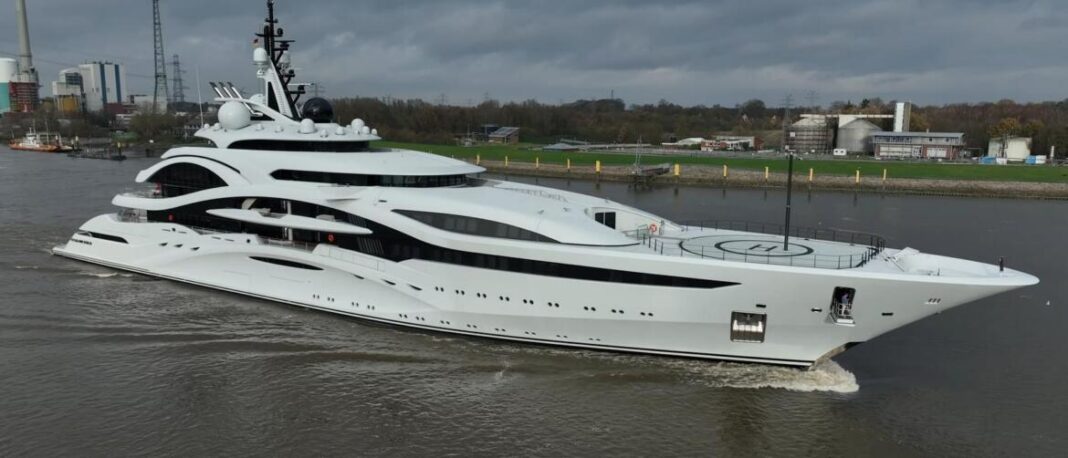

When a 404-foot royal icon quietly slips “back home,” superyacht insiders immediately start whispering
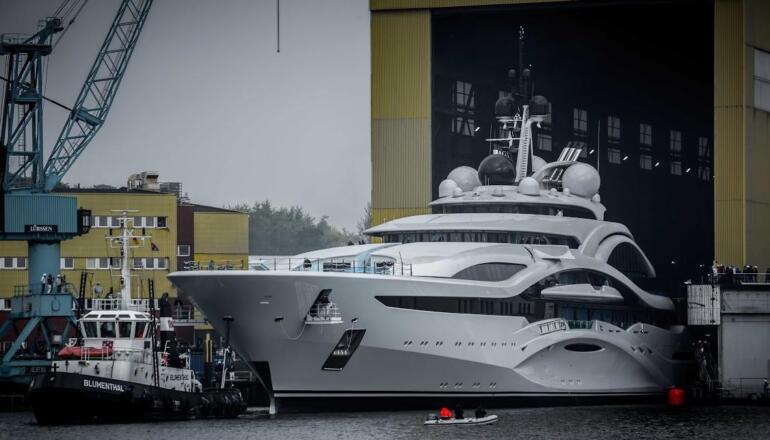
The moment ship-spotter DrDuu posted late-November footage of Al Lusail gliding back into Lürssen’s German yard, seasoned yacht watchers collectively leaned in. A yacht does not casually return to the birthplace of her construction without intent, especially not one stretching 404 feet from bow to stern and carrying a valuation reportedly hovering around $500 million. According to industry insiders, that understated caption, “back at home,” was the loudest possible signal that something serious was underway. After all, at eight years old, Al Lusail has reached the age where preventative perfection matters more than flashy upgrades.
The timing alone raises eyebrows in the best possible way. Her last known major yard period was in October 2021 at Blohm+Voss Hamburg’s Dock 16, where cosmetic and technical tweaks kept her immaculate. Fast forward to late 2025, and the yacht sits squarely in the window for a mid-cycle service that borders on a full wellness retreat for steel hulls and aluminum superstructures. For yachts of this scale, maintenance is not an expense. It is a philosophy.
And let’s be honest, there’s a delicious irony here. While most of us flinch at a four-figure car service bill, the Emir of Qatar is reportedly preparing to authorize an eight-figure yard invoice without breaking stride. Is it extravagant? Of course. But for a vessel that operates closer to a compact cruise ship than a leisure toy, this level of attention is simply the cost of doing things properly.
The unglamorous but eye-wateringly expensive mechanics behind a $40 million service bill
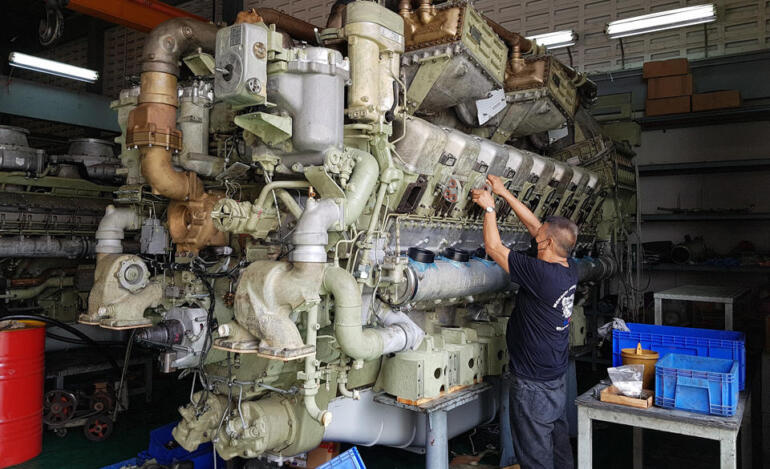
Strip away the glossy Instagram shots and you’ll find that the real drama unfolds deep inside Al Lusail’s technical spaces. Kept in Lloyd’s Register class and sailing under the Qatari flag, the yacht must undergo rigorous intermediate surveys covering hull integrity, safety systems, and machinery performance. Her twin MTU 20V 1163 M84 engines, along with an array of massive generators, are said to be due for extensive inspections, fluid analysis, recalibration, and parts replacement. This is the yachting equivalent of heart surgery, performed with German precision.
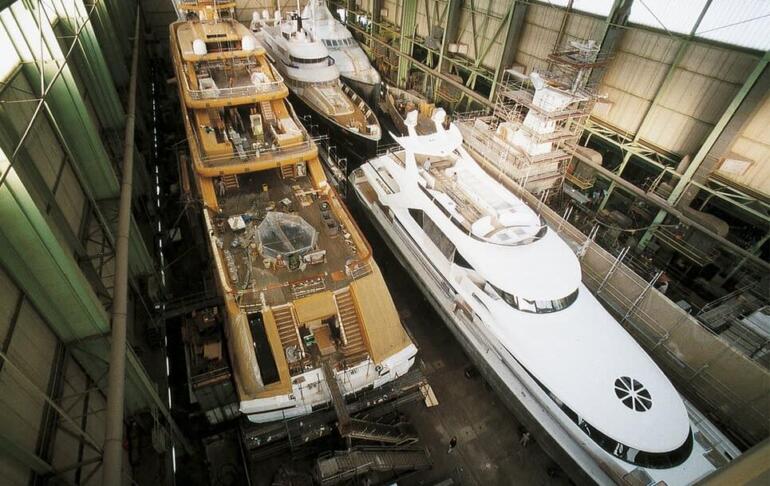
Stabilizers, bow thrusters, steering gear, and propulsion systems typically join the checklist during visits like this. According to shipyard veterans, servicing these components on a 120-meter-class yacht can take weeks, not days. Earlier references to “overhauls and beauty treatments” during her Blohm+Voss stays fit neatly into this pattern, suggesting that Lürssen’s craftsmen are once again tasked with ensuring near-silent, vibration-free operation. Royal guests, after all, do not tolerate rattles.
Then there’s the technological side of things, where costs quietly balloon. Navigation suites, satellite communications, cybersecurity systems, and AV backbones evolve rapidly, and yachts launched in 2017 now sit on the cusp of obsolescence. Reportedly, owners at this level rarely hesitate to greenlight upgrades, preferring seamless connectivity and airtight security over nostalgia. Add in partial hull resprays, underwater coatings, boot-top refinishing, and the almost inevitable teak deck refurbishment, and suddenly a $20 million to $40 million estimate sounds less shocking and more inevitable.
Inside the floating palace that makes a nine-figure refit feel perfectly reasonable
What makes Al Lusail particularly fascinating is how her scale reframes the concept of “routine.” With roughly 8,489 gross tons and fuel tanks capable of holding around 500,000 liters, she is engineered for long-range cruising at up to 19 knots. Built by Lürssen with a steel hull and aluminum superstructure, and styled externally by H2 Yacht Design, she blends muscular engineering with a sleek, modern silhouette. Her interiors by March & White remain famously secretive, which only adds to the mystique.
Behind those tinted glass expanses lies a world of controlled indulgence. Multiple pools, including a private one framed by sweeping glazing, require constant attention to filtration and water-treatment systems. The beach club, wellness areas, gym, cinema, and expansive guest zones all rely on HVAC systems tuned to near-silent perfection. Even unseen elements like sealants and structural glazing demand periodic renewal to preserve that razor-sharp aesthetic that made Al Lusail instantly recognizable at launch.
And then there’s the human factor. Designed to host up to 36 guests with a crew of 56, the yacht functions as a mobile royal residence complete with limousine tenders, a D-RIB, and a helipad for discreet arrivals. Interior refreshes, soft-goods updates, lighting refinements, and subtle layout tweaks often occur quietly during yard periods like this. None of it is confirmed, of course, but the seven-to-ten-year mark is precisely when such refinements typically happen on yachts of this caliber.
For Sheikh Tamim bin Hamad Al Thani, Emir of Qatar since 2013, this level of care is entirely on brand. The British-educated ruler, whose lifestyle reportedly includes a $247 million London mansion and a $200 million Boeing 747 flying palace, understands that symbols of state require immaculate upkeep. Al Lusail is more than a yacht. It is a floating extension of national prestige. Seen through that lens, a $40 million service visit is not indulgence. It is maintenance of the highest order, quietly executed back where it all began.