
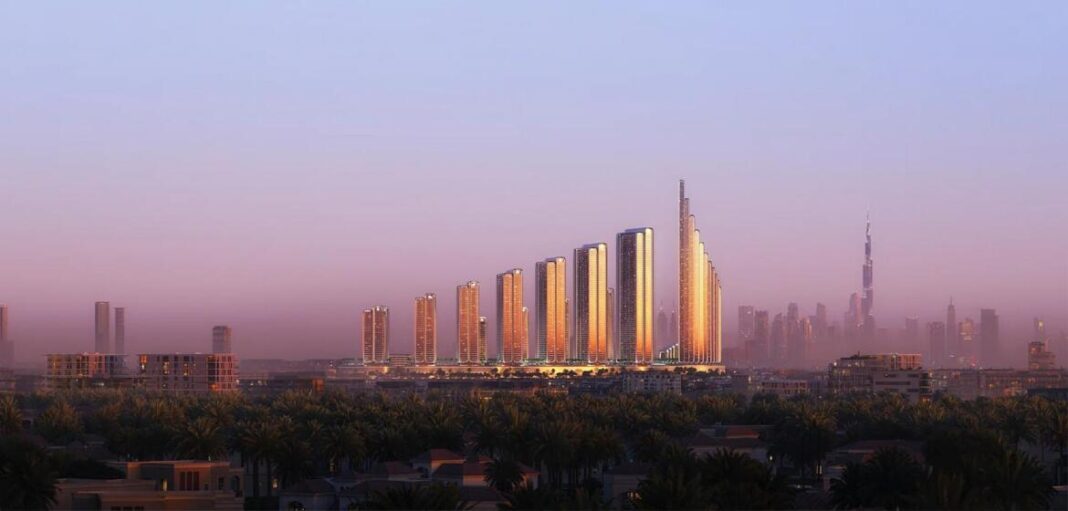

From a single 65-storey statement tower to a fully engineered Mercedes-Benz metropolis
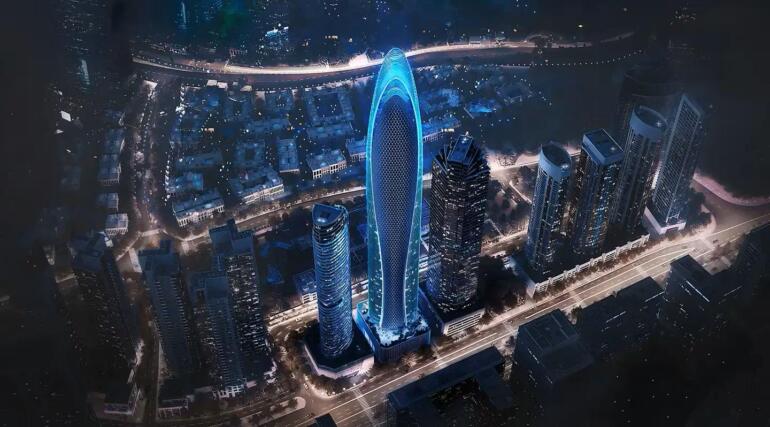
It began, as many extravagant Dubai stories do, with a single audacious tower that seemed excessive even by the city’s standards. Last year’s 65-storey Mercedes-Benz Places tower downtown was meant to be the ultimate flex, blending automotive minimalism with high-rise opulence, glass façades, and interiors inspired by German precision. Apartments reportedly started around $2.4 million for two-bedroom homes and climbed steeply past $21.5 million for penthouses that floated somewhere between sky and fantasy. Most observers assumed that was the end of the road. After all, how much farther could branded residences really go?
According to insiders close to the project, Mercedes-Benz and Binghatti were already thinking several gears ahead. The tower was never meant to stand alone but to serve as a prototype, a vertical proof of concept for something far larger. That something has now revealed itself as Mercedes-Benz Places – Binghatti City, a sprawling residential district extending across nearly 10 million square feet in Meydan, west of Downtown Dubai. To put that into perspective, the footprint equals roughly 156 football fields stitched together with luxury.
What’s striking is not just the scale but the audacity of the ambition. This is the first time a luxury automotive brand has translated its identity not into a building, but into an entire city ecosystem. Streets, boulevards, parks, and plazas are said to echo Mercedes’ design language, from fluid forms to disciplined geometry. Is this real estate, or is it brand immersion taken to its logical extreme? In Dubai, the answer is often both.
Inside Mercedes-Benz Places, Binghatti City, a self-contained luxury ecosystem engineered like a flagship vehicle
Step inside the masterplan and the development reads less like a housing project and more like a meticulously engineered machine. Mercedes-Benz Places – Binghatti City is designed as a self-sufficient urban district where residents can live, shop, dine, exercise, and unwind without ever needing to leave the neighborhood. Retail boulevards, cultural venues, wellness centers, dining destinations, and entertainment spaces are woven between residential clusters. Everything is reportedly planned within walking distance, a rarity in a city built around highways and horsepower.
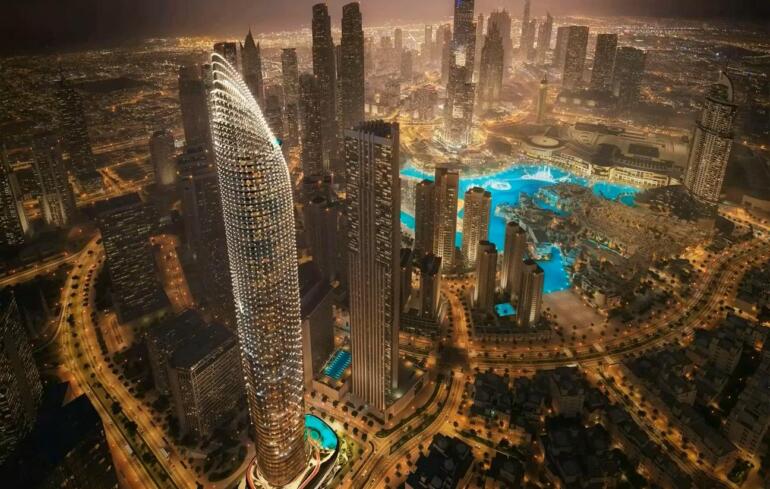
Architecturally, the project is said to translate Mercedes’ design ethos into built form. Think clean lines, aerodynamic silhouettes, and a balance between form and function that feels unmistakably automotive. Materials, lighting strategies, and spatial layouts are expected to mirror the brand’s luxury cabins rather than traditional residential interiors. Even the public spaces are rumored to borrow cues from Mercedes showrooms and concept cars. It’s branding, yes, but branding executed with almost obsessive consistency.
This evolution reflects a broader shift in buyer priorities. According to market analysts, today’s ultra-wealthy are no longer satisfied with trophy apartments alone. They want community, wellness, green space, and curated experiences layered on top of location and prestige. Mercedes-Benz Places – Binghatti City positions itself squarely at that intersection. It is no longer just about owning a home with a logo on the door. It is about living inside a lifestyle ecosystem engineered by a century-old luxury marque.
Why Dubai’s billionaire magnetism makes Mercedes’ $8 billion city a sign of where global wealth is headed
While official pricing for the city-wide development remains under wraps, comparisons are inevitable. The earlier Downtown Dubai tower set the benchmark with $2.4 million to $9.5 million residences and penthouses exceeding $21.5 million. Given the vastly expanded scale and amenities, industry whispers suggest entry-level units could start around $2.7 million to $3.3 million. For buyers accustomed to Dubai’s luxury market, that premium is hardly a deterrent. In fact, it is often the point.
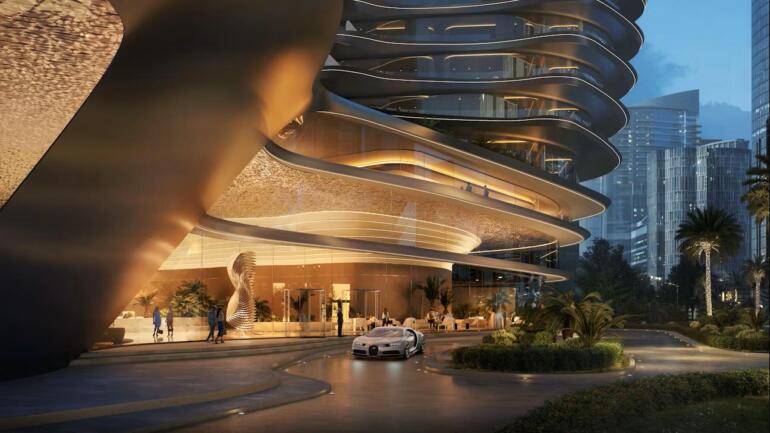
Branded residences have become shorthand for identity among the ultra-wealthy. Buyers are not just acquiring square footage. They are buying into a narrative, a lifestyle, and a globally recognized badge of prestige. Dubai currently leads the world with over 140 branded residence projects, where homes command significant premiums over non-branded counterparts. A Mercedes-Benz address carries the weight of engineering heritage, design credibility, and cultural capital. And if that does not impress, perhaps only a Bugatti-branded home might.
Zooming out, the project also speaks volumes about global wealth migration. The UAE continues to attract relocating millionaires drawn by tax-free living, political stability, and Golden Visa incentives. These buyers increasingly favor turnkey homes with hotel-grade services and curated environments. Mercedes-Benz Places – Binghatti City positions the German marque not just as a carmaker, but as a lifestyle architect shaping how the wealthy live day to day. Watching an automotive brand build an entire city feels surreal, but then again, this is Dubai, where yesterday’s excess becomes tomorrow’s baseline.