
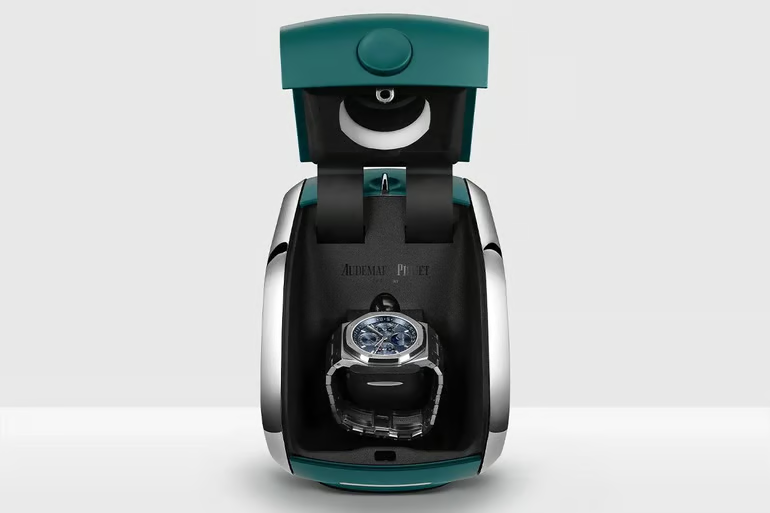

A sculptural object that pretends to be furniture while plotting horological domination
At first glance, the Audemars Piguet Royal Oak intelligent watch box plays the role of a minimalist art object, the kind that would not look out of place on a walnut console in a Mayfair penthouse. Measuring precisely 20 cm long, 12 cm wide, and 15 cm tall, and weighing around two kilograms, it has the proportions of a discreet design sculpture rather than a piece of machinery. According to people familiar with the project, that visual restraint was intentional, because nothing scares a traditional collector faster than visible tech. Yet hidden beneath that calm exterior is a surprisingly ambitious mechanical brain, quietly waiting to take over the most delicate rituals of high watch ownership.
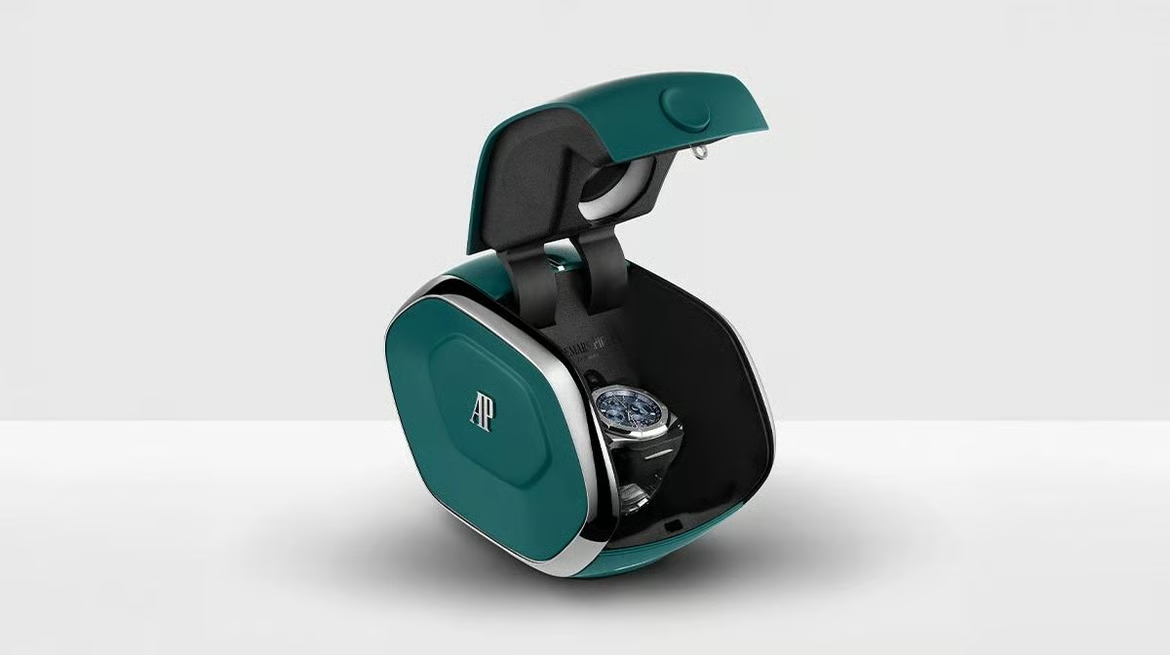
Open the lid, and the tone shifts from gallery-ready minimalism to laboratory-grade precision. A tiny integrated camera stares directly at the dial, feeding real-time images into an AI-driven machine-learning system trained on countless Royal Oak Perpetual Calendar configurations. This is not generic recognition software, but a model developed specifically for the 41 mm Royal Oak Perpetual Calendar family, capable of reading subdials, moon phases, and calendar indications. It reportedly recognizes subtle dial variations that even seasoned collectors sometimes struggle to interpret after a long flight and a short night.
The delicious irony is hard to ignore. A complication once considered too fragile and intimidating for daily life is now being babysat by a robot disguised as décor. For a watch that already costs north of $100,000 on paper and considerably more on the secondary market, the idea of trusting an AI assistant might sound radical. And yet, isn’t that exactly what luxury looks like in 2025, when even your dresser accessories are smarter than most people’s laptops?
A tiny robotic watchmaker that twists the crown like it has done an apprenticeship in Le Brassus
The real spectacle begins once the lid closes and the electromechanical module wakes up. Rather than relying on pushers or external correction tools, the system engages directly with the Royal Oak’s all-in-one crown, a feature made possible by the new calibers 7138 and 7136. These movements were already a quiet revolution, allowing full perpetual calendar correction via the crown alone. The watch box simply takes that innovation to its logical extreme.

Inside, a robotic mechanism mimics the nuanced gestures of a human watchmaker, rotating, pulling, and adjusting the crown with calibrated force. According to Audemars Piguet insiders, the tolerances are so precise that the system applies less stress than many owners do during manual adjustments. Over the course of roughly five minutes, the device winds the movement, sets the time, aligns the date, synchronizes the month, and even corrects the moon phase. All the owner does is wait for a discreet confirmation on a connected smartphone app.
There is something faintly theatrical about the entire process. A perpetual calendar, long treated like a museum piece that demands reverence and caution, is suddenly being handled by a silent robot on a dresser. It raises an uncomfortable question for purists: if a machine can do this better and safer, what exactly is left for the human to do? Perhaps, as Audemars Piguet seems to be suggesting, the future of ownership is less about ritual and more about peace of mind.
Swiss heritage meets Dubai futurism in a prototype that hints at the next chapter of haute horlogerie
This intelligent watch box is not just a clever accessory; it is also a strategic signal. Unveiled during Audemars Piguet’s 150th anniversary year, it reflects the brand’s growing partnership with the Dubai Future Foundation, an organization closely associated with Sheikh Mohammed bin Rashid Al Maktoum’s vision of a hyper-advanced city. Reportedly, the collaboration encouraged AP to think beyond traditional horology and explore how AI could serve, rather than threaten, mechanical craftsmanship. The result is a product that feels as much like a concept car as it does a watch box.
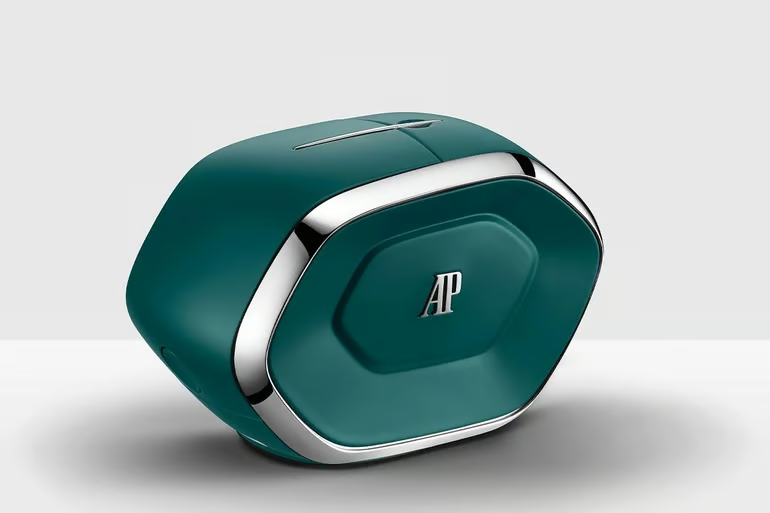
The device is entirely wireless, powered by a rechargeable lithium-ion battery that preserves the clean, cable-free aesthetic collectors expect at this level. Bluetooth connectivity allows the box to identify the exact reference placed inside and adapt to the owner’s chosen time zone. While Audemars Piguet has not officially announced a retail price, industry whispers suggest that if industrialized, the box could command a six-figure sum on its own. In a world where bespoke watch winders already sell for the price of a sports car, that figure does not feel outlandish.
More importantly, this prototype lowers a psychological barrier that has quietly limited perpetual calendar ownership for decades. By removing the fear of incorrect adjustment and accidental damage, Audemars Piguet makes one of haute horlogerie’s most prestigious complications feel unexpectedly approachable. For collectors already accustomed to AI concierges, smart yachts, and algorithm-driven art acquisitions, a robotic watchmaker on the dresser feels less like science fiction and more like inevitability. And once you have tasted that kind of convenience, going back to manual correction suddenly feels very, very old money.