

A Copper Tycoon’s Summer Playground Reemerges From the Gilded Age
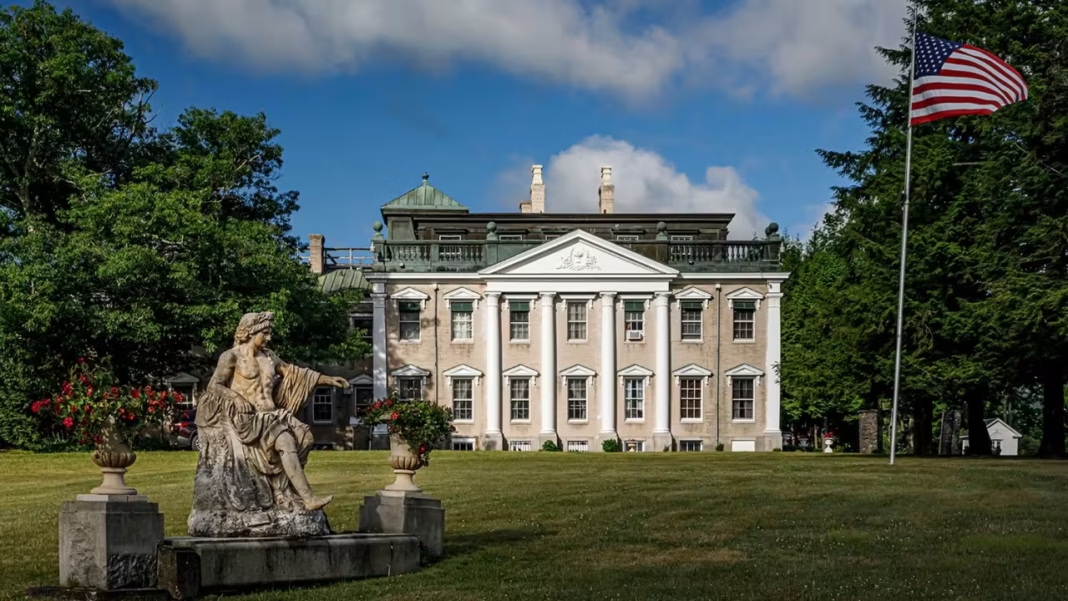
The first glimpse of Belle Terre feels like stepping into a sepia-toned photograph that has somehow sharpened itself for 2025. Nestled in the foothills of New York’s Catskill Mountains, the mansion sits quietly across more than 38 acres, its presence announced not by ostentation but by scale and materiality. Built in 1906 as a summer home and fox hunting retreat for copper baron James McLean, the house was never meant to whisper modesty. According to listing agent Annabel Taylor of Four Seasons Sotheby’s International Realty, the property has been brought back to its original grandeur after a meticulous restoration. And yes, that copper roof alone reportedly could bankrupt a small renovation budget today.

What makes Belle Terre particularly delicious for luxury insiders is the irony baked into its bones. McLean, whose fortune came from copper, crowned his estate with an entirely copper roof, a choice that now feels almost theatrical in hindsight. The patina alone tells a century-long story of weather, wealth, and waiting for the right moment to shine again. Taylor is said to have remarked that replacing such a roof today would cost “as much as the house,” which at just shy of $3 million feels like a line straight out of a Gilded Age satire. How often does the roof rival the real estate in value?
Beyond the headline-grabbing materials, the mansion’s sheer scale is what stops seasoned buyers mid-stride. Spanning roughly 24,600 square feet, the home was designed for entertaining on a scale that modern trophy homes rarely attempt. Massive parlors, dining rooms built for multi-course feasts, and libraries that practically demand leather-bound first editions set the tone. This was not a weekend cottage. It was a statement of industrial-era dominance. And somehow, it still is.
Inside Belle Terre: Grand Rooms, Restored Bones, and Artistic Interventions
Walking through the front doors today reportedly feels less like entering a restored home and more like being let in on a private secret. Initially, the house had been carved up into smaller rooms during its institutional years, a fate many Gilded Age mansions never recover from. Artist and collector Mark Slonem, who later took stewardship of the property, was drawn first by its sheer size. “It’s hard to find large houses,” he said, and anyone who has hunted for historic estates knows exactly what he means. Large, intact houses with good bones are unicorns in today’s market.
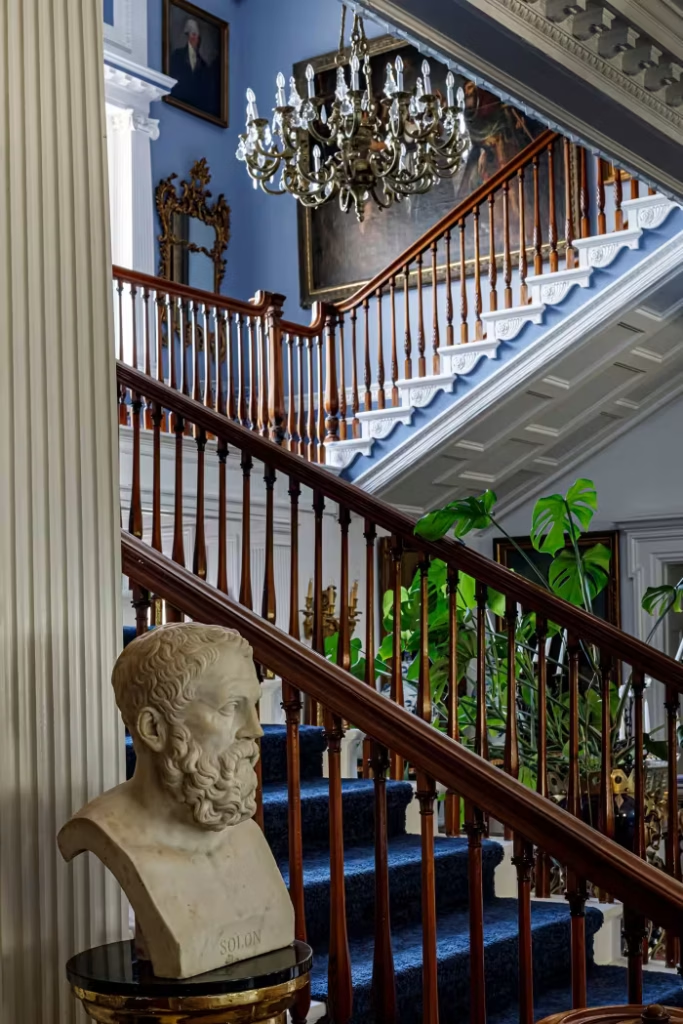
Slonem methodically removed the later additions and dividing walls, restoring the original flow of the main parlor, dining rooms, and libraries. According to Slonem, roughly 99% of the original details, including fireplace mantels, wood carvings, and architectural ornamentation, remained perfectly intact. Where details had been lost, he replaced them with historically sympathetic moldings and finishes. The result is a house that feels authentic rather than updated, a distinction serious buyers care deeply about. Even the long-dormant elevator has been coaxed back into service, a rare luxury in a house of this vintage.
Then there are the numbers, because luxury real estate loves its statistics. Belle Terre boasts 16 bedrooms, 14 full bathrooms, and four half-baths, a ratio that suggests no guest need ever wait their turn. Most of the bathrooms were fully redone, balancing period-appropriate aesthetics with modern plumbing realities. A later addition that once housed a gym was transformed into a gallery-like space for 19th-century aquariums, paintings, and large statues. To connect it seamlessly to the main house, Slonem added an enclosed hallway that doubles as a greenhouse, because why choose between architecture and botany?
Gardens, Greenhouses, and a Price Tag That Feels Like a Time Warp
Step outside, and Belle Terre shifts from mansion to pastoral fantasy with surprising ease. Rolling hills, mature trees, and a private lake define the grounds, creating the kind of landscape that modern estates try desperately to engineer. A picnic pavilion was converted into yet another greenhouse, reinforcing the property’s quiet obsession with light, glass, and cultivated nature. There is also a restored swimming pool, which Slonem filled with fish, because a standard lap pool would have been far too predictable. Gardens planted with a variety of flowers complete the picture, turning the acreage into a living, breathing extension of the house.
Perhaps the most charming twist is Slonem’s unmistakable artistic fingerprint inside the mansion. At least one room has been wallpapered with his signature bunny motifs, a playful contrast to the otherwise stately interiors. His own paintings hang throughout the house, mingling with an extensive collection of antiques amassed specifically for the property. According to Taylor, these pieces were chosen to complement the architecture rather than compete with it, a restraint not always seen in artist-owned homes. It is a reminder that luxury is not just about accumulation. It is about curation.
And then there is the price, which feels almost mischievous in today’s market. Listed for just shy of $3 million, Belle Terre occupies a strange and seductive space where value and grandeur collide. In an era where $3 million might buy a glassy townhouse or a modest Hamptons fixer, here it buys a fully restored Gilded Age mansion with a copper roof worth a fortune. Is it underpriced, or simply waiting for the right buyer who understands what it represents? Either way, Belle Terre is not just a house hitting the market. It is a reminder that sometimes, the most extravagant luxury is history itself, lovingly polished and put back on display.