
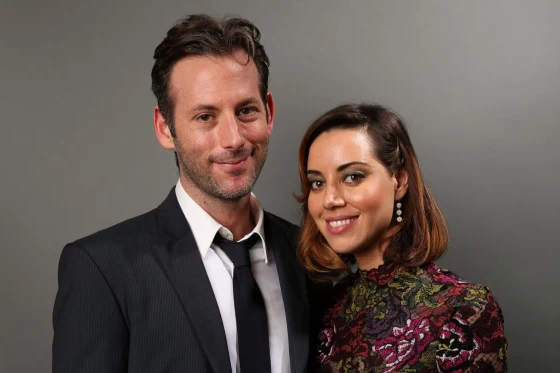

Aubrey Plaza broke her silence in an emotional conversation with longtime friend Amy Poehler. The actress spoke about life after the devastating loss of her husband, filmmaker Jeff Baena, who died by suicide earlier this year. On Poehler’s podcast, Plaza did not hold back when describing the raw reality of grief. She admitted the pain lingers every day. She shared that even in the brightest moments, the weight of loss is always close by. Plaza described herself as functioning but admitted it takes work. Her words painted a picture of resilience and heartbreak in equal measure.
The Pain of Loss
During her appearance on Poehler’s Good Hang podcast, Plaza was asked directly about how she was doing. Poehler reminded listeners that Plaza’s dog, Frankie, had become a source of comfort since Baena’s passing. The host framed the question with compassion, acknowledging the “terrible, terrible, tragic year” Plaza has endured. Plaza responded with candor, revealing that in the moment, sitting with her friend, she felt happiness. Yet she quickly emphasized that overall, living without Baena remains a daily struggle. She said she feels grateful for being able to move through the world. But she also admitted that the grief never fully loosens its grip.
Plaza explained that functioning after such loss requires strength that does not come easily. She described herself as okay but made it clear that her well-being is fragile. She acknowledged the complexity of grief, saying it is both manageable and overwhelming at the same time. Poehler’s question opened the door for her to reflect in real time. Plaza gave listeners a sense of what it means to carry sorrow in public while still trying to live privately. She spoke from a place of honesty without disguising her vulnerability. Each sentence underscored the truth that grief is not linear. Plaza’s openness offered a rare glimpse into mourning under the spotlight.
Listeners could feel the closeness between Plaza and Poehler in the exchange. Poehler carefully balanced the role of friend and interviewer. Plaza’s willingness to answer such a difficult question revealed the trust between them. The weight of the conversation was evident, but so was the support. Plaza leaned into that space, using the platform to share both the good and the unbearable. She reminded audiences that behind her roles and red-carpet appearances, she is enduring private heartbreak. Her words carried the depth of someone who has been changed forever. And yet, she was still showing up and speaking out.
Grief Through a Metaphor
Plaza turned to an unexpected source to describe her grief. She compared the experience to the 2025 film The Gorge, starring Miles Teller and Anya Taylor-Joy. She admitted the analogy started as a joke but evolved into something meaningful. In the film, characters are trapped between cliffs with a gorge below filled with monsters. Plaza said that image felt like grief itself. She described the gorge as a constant presence that is impossible to escape. For her, it represents the ever-present possibility of being pulled into pain. The metaphor captured the scale of loss in a way words alone could not.
She elaborated further, saying grief feels like an ocean of awfulness always within sight. Some days she feels the urge to dive into it completely. Other days she only stares at it, aware of its pull but resisting. There are also times she tries to turn away, though she knows it is still there. Plaza’s explanation made the invisible weight of grief feel tangible. Her honesty resonated because it came without pretense. She was not offering solutions but sharing the truth of survival. The metaphor revealed how closely pain lives beside her day to day.
Her description gave listeners a window into the isolation that grief creates. The gorge is both physical and emotional in her telling. The monsters symbolize the intrusive thoughts and memories that threaten to overwhelm her. The cliffs represent fragile stability on either side. The ocean is vast and inescapable, waiting for her attention at every moment. Plaza’s ability to connect personal tragedy to a cultural reference deepened the conversation. It allowed others to understand her reality through a shared visual. And it highlighted how art sometimes becomes a mirror for the hardest human experiences.
A Life Remembered
Plaza and Baena’s story began more than a decade ago. They started dating in 2011, keeping much of their relationship private. In May 2021, Plaza referred to him as her “darling husband” in an Instagram post. The acknowledgment confirmed that the couple had quietly married. Her representative later confirmed the union publicly. Their marriage was a significant milestone, though they always valued privacy. Fans admired the partnership that blended her acting career with his writing and directing.
The shock of Baena’s death on January 3 left Plaza and their families reeling. He was 47 years old when he died by suicide. The family released a statement at the time calling it an “unimaginable tragedy.” They expressed gratitude for the support they had received. They also asked for privacy as they processed the loss. The statement was brief but powerful in its plea for compassion. It underscored the devastation shared by both family and friends.
Plaza’s choice to speak now adds another layer to that public statement. Months after the tragedy, she has put words to her private suffering. She is balancing grief while continuing her career, with her new film Honey Don’t! in theaters this month. Her decision to address her husband’s death with Poehler shows strength in vulnerability. She reminded fans that even celebrities live with pain too great to ignore. In remembering Baena, she honored both their life together and the reality of loss. Plaza’s voice ensured that her husband’s memory is not just marked by tragedy but by the love they shared.