
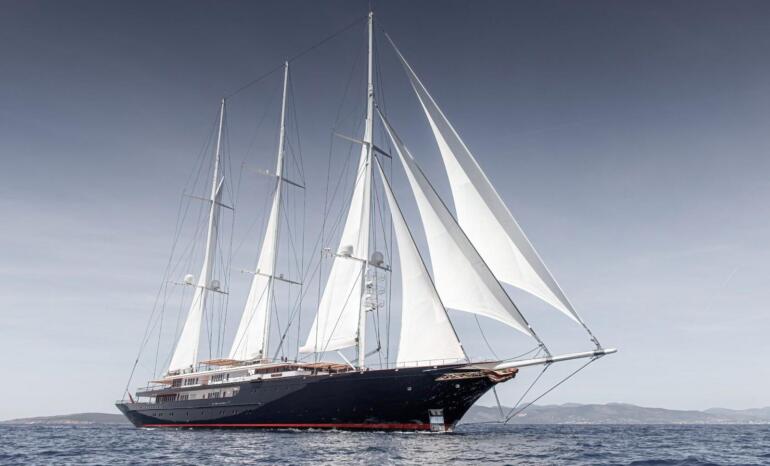

With three 230 foot, 70 meter masts towering as high as London’s Big Ben, Jeff Bezos’s 417 foot Koru, worth around $500 million, is said to sail so efficiently that Mark Zuckerberg’s smaller 387 foot, $300 million Feadship Launchpad reportedly produced about 600 more tons of CO2 over the same 8,500 nautical mile run, turning a size advantage into a carbon surprise.
Big Ben tall canvas, billionaire bravado, and a schooner that drinks wind instead of diesel
Picture the Koru arriving like a myth made real, her midnight blue hull gliding into a Mediterranean anchorage while three needle like masts spike the horizon. At 417 feet, the Oceanco built schooner is not merely large, it is operatic in scale, and the price tag of roughly $500 million buys far more than bragging rights. The sail plan is the headline act, with a rig so vast it can push the yacht at meaningful cruising speeds without constantly calling on the engines. This is old world sailing theater translated into modern giga yacht engineering, and you can almost hear the shipyard designers smiling when the wind fills in. Who would not want a yacht that can look like a billionaire’s fantasy and still behave like a serious ocean machine?
The efficiency story is where the gossip gets good. Reportedly, after covering about 8,500 nautical miles in 2025, Koru’s emissions landed around 1,000 tons of CO2, a figure that feels downright restrained in this stratospheric category. The reason is not virtue signaling, it is architecture, because a true three masted schooner can keep propulsion loads low for long stretches. Every hour under sail is an hour of reduced fuel burn, and over thousands of miles that advantage compounds into something you can actually measure. Hybrid support from diesel and onboard power systems stays in the background, while the rig does the heavy lifting whenever conditions allow. It is the kind of technical flex that makes a monohull feel like a climate loophole, even when you are still living inside a floating palace.
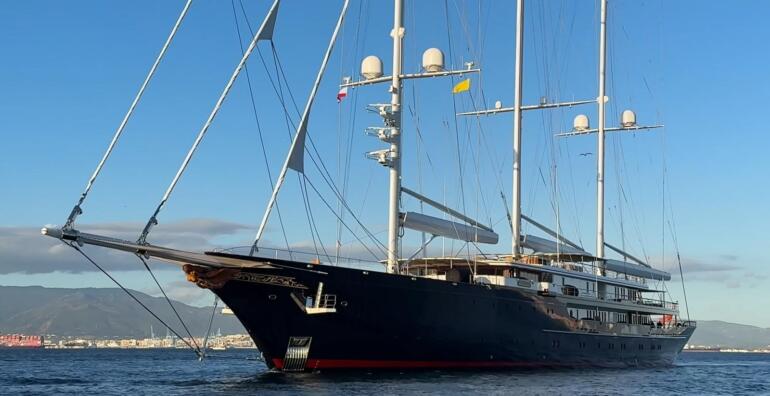
What makes Koru so intriguing is the way she flips the usual superyacht math. Bigger normally means more consumption, more noise, and more fuel, but here bigger sails mean less engine time, and that is the quiet trick. Bezos gets to cruise as a slow grand voyager, less sprinting between hotspots and more letting the sea set the pace. The yacht’s efficiency is not a marketing afterthought, it is baked into the hull form, rig geometry, and operating style. In a world where wealthy owners are starting to care about their carbon headlines as much as their helipads, Koru feels like a preview of what prestige could look like next. Will more billionaires decide that wind is the new status symbol?
Launchpad’s diesel electric muscle, fast itineraries, and why a smaller yacht can still pollute harder
Now shift the scene to Launchpad, Zuckerberg’s 387 foot Feadship built statement of privacy that somehow became a loud environmental data point. She is sleek in that signature Dutch way, with a disciplined profile, acres of glass, and the subtle confidence of a 5,500 gross ton vessel. Underneath, though, she is all muscle, reportedly running a diesel electric setup with four large MTU engines pushing north of 20,000 horsepower. That kind of output is ideal for high speed legs, silky stabilisation, and powering the enormous hotel load of a yacht that functions like a five star resort. It is also the reason the fuel curve rises so sharply when you use her like a moving command center. Luxury does not just weigh a lot, it eats a lot.
Her first full season at sea tells the rest of the story. Reportedly, Launchpad logged around 13,700 nautical miles in 2025, bouncing between Scotland, the Caribbean, the Greek islands, and the Western Med before slipping into La Ciotat for maintenance. That itinerary reads like a billionaire’s mood board, but it is also a worst case pattern for fuel economy, because frequent repositioning at pace is brutally inefficient. By some calculations, the yacht had already emitted close to 1,600 tons of CO2 by the time she hit her first 8,500 nautical miles, and the longer season only widened the gap. Even at moderate speeds, a vessel this size burns hard because you are pushing a massive displacement hull while running a small city’s worth of onboard systems. There is no sail plan to rescue you, only horsepower, and horsepower always sends the bill.
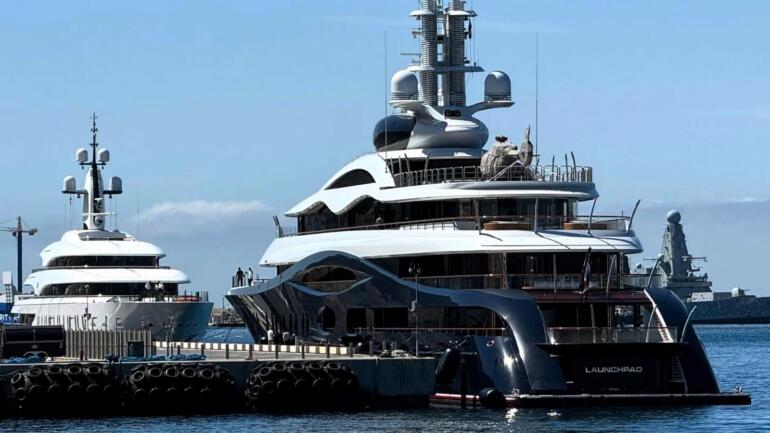
The irony is that Launchpad’s strengths are exactly what make her emissions headline worthy. She is built for quick dashes and multi stop hopping, the maritime equivalent of private aviation, and that suits an owner whose life runs on efficiency and control. But the more you sprint, the more you pay, especially with diesel electric propulsion prioritizing power and comfort over thrift. Environmental groups pushing for transparency around superyacht emissions are watching patterns like this, because idle time at anchor still means engines humming to keep the bubble perfect. So the yacht meant to signal a quieter life ends up broadcasting a louder footprint. Will the tech elite ever trade speed for sail, or is the thrill of instant mobility too addictive?
The upside down carbon paradox, what it reveals about tech era luxury, and the next wave of yacht one upmanship
Put Koru and Launchpad in the same frame and the paradox practically winks at you. Bezos owns the larger yacht, with taller masts, longer waterline, and a higher price tag, yet the smaller Feadship reportedly produced about 600 more tons of CO2 over comparable mileage. It is a reminder that length is a blunt instrument for judging impact, and propulsion philosophy matters more. Koru is optimized to let wind shoulder a real share of the work, while Launchpad is optimized to move like a luxury express train with a spa attached. One yacht is a slow exhale, the other is a series of sprints stitched into a season. Which one feels more in tune with where wealth wants to go next?
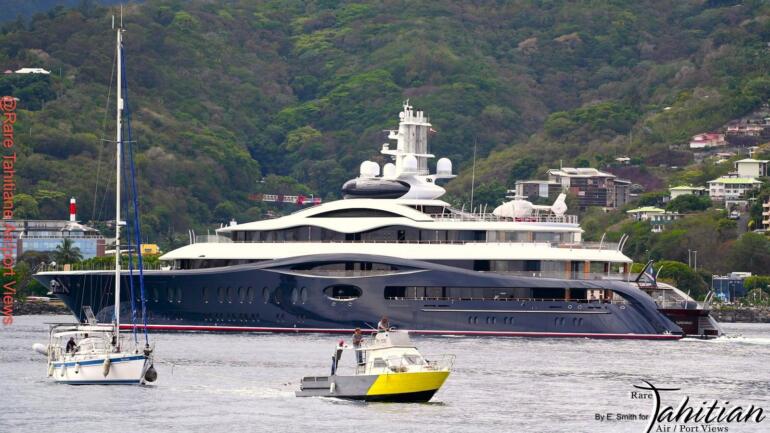
Translated into everyday terms, the contrast lands harder than any glossy brochure. Koru’s roughly 1,000 tons of CO2 equates to about one million kilograms of emissions, while Launchpad’s 1,600 tons becomes about 1.6 million kilograms. That delta is not trivia, it is a whole extra layer of atmospheric consequence tied to how a yacht is designed and used. The lesson is simple but uncomfortable: a cleaner story is not about being smaller, it is about being smarter, and sometimes about being slower. If you are a billionaire and you want to keep your indulgence while minimizing the scandal, engineering becomes your best publicist. The sea does not care about your net worth, only your burn rate.
The bigger industry takeaway is already brewing in shipyards and boardrooms. More builders are leaning into hybrid systems, regenerative tech, and wind assistance, because clients want their grandeur with a side of plausible responsibility. Nobody wants to be the poster child for excess when sustainability is the new social currency among the ultra rich. Yet a design shift only works if owners embrace an operating shift too, because a wind friendly yacht still needs patience to reap the benefits. Koru versus Launchpad makes that crystal clear, and it turns emissions into a new form of status competition. So the real question is this: will the next billionaire yacht race be about who is biggest, or who can cross an ocean with the quietest footprint while still living like royalty?