
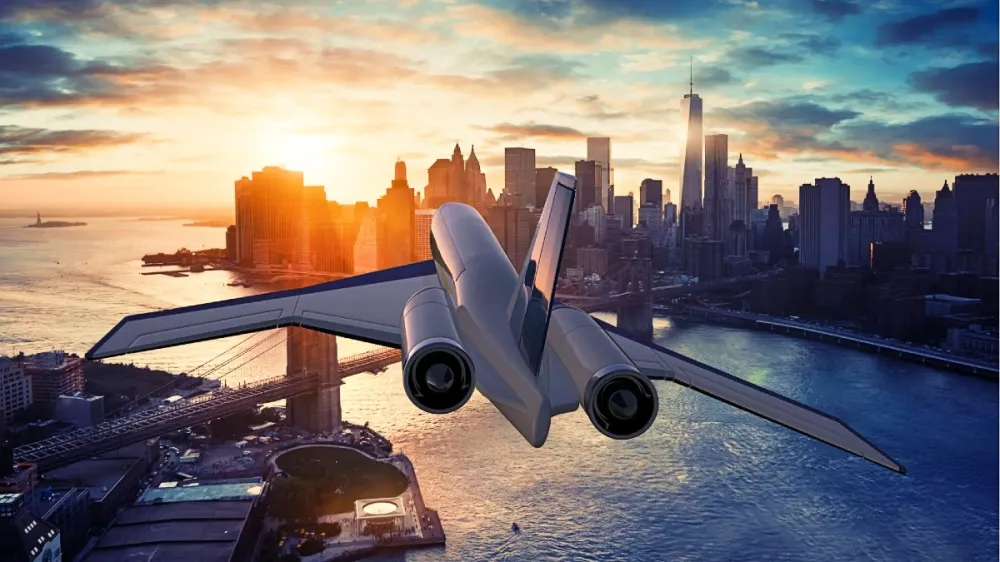

A New Era in Aviation
The promise of supersonic passenger travel, once thought lost with the retirement of the Concorde in 2003, is resurfacing with renewed vigor. Spike Aerospace, a Boston-based startup, has unveiled bold progress with its S-512 Diplomat, a supersonic jet designed to cut the journey between New York and Paris to less than four hours. Capable of reaching Mach 1.6, or about 1,100 miles per hour, the aircraft is engineered to halve the travel time of conventional transatlantic flights while reimagining what high-speed aviation can look like in the twenty-first century.
What sets the Diplomat apart is not just speed but silence. Supersonic travel in the past was hampered by the disruptive sonic boom, a thunderclap so intense that regulators banned overland supersonic flights in the United States. Spike’s innovation lies in aerodynamics and sound-mitigation technology designed to reduce the boom to what passengers on the ground would hear only as a faint clap. This quietness is a breakthrough that could make supersonic journeys not only possible but sustainable over heavily populated areas.
The timing of this innovation feels almost strategic. Earlier this year, the White House issued directives encouraging a revival of American leadership in high-speed aviation, instructing the FAA to reevaluate restrictions on supersonic overland flight. The Diplomat, then, arrives at a moment when both policy and technology are aligning, signaling that the era of boom-free supersonic travel may be closer than ever.
Designing for Speed, Silence, and Prestige
Spike Aerospace’s Diplomat is aimed squarely at a rarefied clientele: senior government officials, heads of industry, and ultra-high-net-worth travelers. Seating just 18 passengers, the jet blends the performance of a high-speed aircraft with the intimacy of a private cabin. It is as much a diplomatic tool as a luxury mode of transport, designed to connect global capitals in record time while enveloping passengers in comfort and discretion.
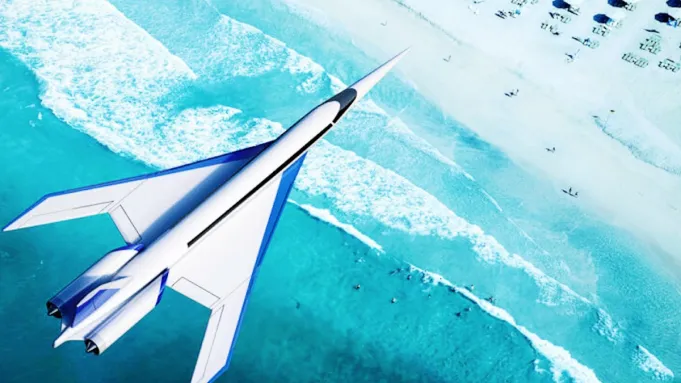
Inside the cabin, the concept of windows has been abandoned in favor of digital display screens lining the fuselage. Using external cameras, these panels can project real-time views of the sky or transform into cinematic displays, giving passengers the choice between gazing at the clouds or watching films while traveling faster than sound. Combined with noise levels inside the cabin designed to hover around 60 decibels, about the same as a quiet dishwasher or office, the Diplomat promises a travel experience that is both futuristic and serene.
Underpinning this design is an emphasis on sustainability and efficiency. The Diplomat’s airframe and aerodynamics are currently undergoing redefinition, with a focus on fuel efficiency, minimal environmental impact, and long-term performance. Spike has emphasized that supersonic travel cannot afford to repeat the environmental missteps of the Concorde. Instead, the Diplomat aspires to balance power with responsibility, ensuring its sonic boom and emissions meet twenty-first-century expectations.
From Concorde’s Legacy to Tomorrow’s Horizons
The memory of the Concorde looms large in any discussion of supersonic travel. Between 1976 and 2003, more than 2.5 million passengers experienced its needle-nosed glamour, soaring across the Atlantic in just over three hours. Yet the thunderous sonic booms, fuel inefficiency, and mounting costs proved insurmountable. When the final Concorde was retired, it seemed that commercial supersonic flight had been relegated to nostalgia.
Spike Aerospace’s Diplomat seeks to correct those missteps with a new philosophy. Its design prioritizes quietness and efficiency without sacrificing speed. Testing with scaled demonstrator aircraft, beginning with the SX1.2 in 2017, has validated its aerodynamics, and plans for further high-speed test flights are expected to bring the Diplomat closer to certification. Each step underscores the long and complex journey of building an aircraft that meets modern demands for safety, sustainability, and passenger experience.
Patience remains essential. Despite its promise, the S-512 Diplomat is not expected to enter service until 2031, a timeline that reflects both the complexity of aviation engineering and the regulatory hurdles that remain. Yet in this long wait lies anticipation: the knowledge that supersonic flight may once again become a lived experience for travelers. If successful, the Diplomat will not only shrink oceans but also redefine what it means to move through the world with speed, silence, and an elegance that Concorde never quite achieved.