
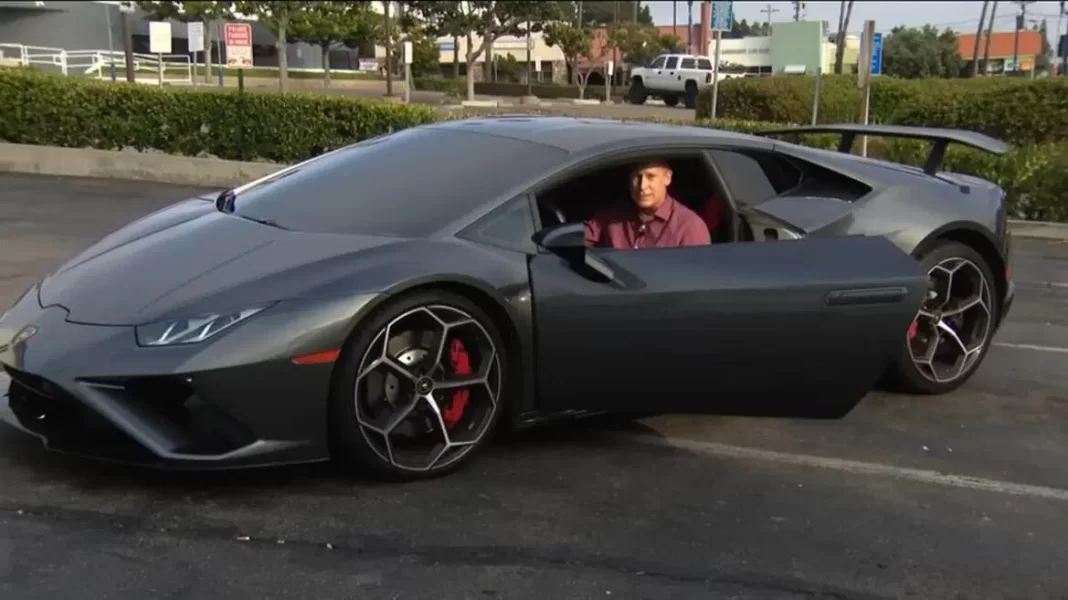

A Supercar Lost to a High-Stakes Theft
When Andrew Garcia’s prized Lamborghini Huracán Evo vanished from Orange County in December 2023, it seemed destined to join the ranks of exotic cars swallowed by sophisticated theft rings. Thieves had posed as renters, secured access to nearly 20 luxury vehicles, and simply never returned them, later stripping titles and reselling the cars through fraudulent channels. For Garcia, the loss was not just financial. It was deeply personal. The Huracán, valued around $250,000, represented both an engineering marvel and a dream realized, its disappearance leaving a void not easily filled.
Law enforcement made progress in recovering some of the stolen fleet, but Garcia’s Italian masterpiece remained absent from the tally. The passage of time did little to soften the sting. Each month that passed without a lead chipped away at hope, leaving Garcia resigned to the possibility that his car had been broken down or disappeared permanently into underground markets.
Then, nearly two years later, a stranger’s Instagram message would revive the trail. The photos attached showed Garcia’s Huracán alive and well, though far from home. Alongside the images came an odd request: the sender claimed to have found Garcia’s business card inside the car and inquired whether he could help them source additional supercars. It was a suspicious proposition, but for Garcia, it was also a sliver of opportunity.
Turning to Artificial Intelligence for Answers
Instead of dismissing the unsolicited message, Garcia decided to pursue a strategy that was both unconventional and inspired. He uploaded the photos of his Lamborghini into ChatGPT, instructing the AI not to focus on the bright orange Huracán itself but on the blurred vehicles and scenery in the background. By analyzing the shapes, signage, and environmental cues within those images, the system generated potential matches and directional insights that narrowed the scope of where the photos could have been taken.
Garcia then combined this AI-assisted analysis with Google’s mapping tools, cross-referencing coordinates and geographic details. Piece by piece, the puzzle began to reveal itself. The blurred cars and subtle identifiers in the background pointed toward a location far from Orange County: Denver, Colorado, nearly a thousand miles from where the theft had first occurred.
The discovery was as much a testament to persistence as it was to technology. AI did not solve the case singlehandedly, but it provided a new way of seeing, a tool that expanded the investigative possibilities beyond what Garcia could have achieved on his own. In bypassing traditional reliance on the stolen car itself, he leveraged artificial intelligence to unlock context and perspective. It was proof that sometimes the most valuable clues are hiding in plain sight.
The Recovery and the Larger Implications
Armed with digital coordinates and new conviction, Garcia flew to Denver to reclaim what he had thought lost forever. With the assistance of local law enforcement, the Lamborghini was recovered intact, marking the triumphant conclusion of a two-year ordeal. For Garcia, the reunion was more than material. It was a reminder that ingenuity and perseverance could outpace even the most calculated criminal operations.
The Lamborghini Huracán Evo, with its naturally aspirated 5.2-liter V10 producing 630 horsepower, remains one of the most celebrated machines of modern Italian automotive design. Capable of accelerating from 0 to 60 mph in just 3.3 seconds and topping out near 202 mph, it embodies precision and passion in equal measure. That such a car was tracked not by satellites or advanced surveillance but through artificial intelligence on a laptop underscores the evolving intersections between technology, crime, and recovery.
Officials like Cale Gould of the Colorado Auto Theft Prevention Authority have acknowledged that AI is emerging as a valuable ally in combating vehicle theft, particularly as criminal schemes become more sophisticated. Garcia’s case suggests that artificial intelligence could become part of standard investigative practice in the years to come. What began as a personal quest to find a missing supercar may ultimately stand as a turning point in how stolen property is pursued, proving that the future of detective work might not wear a badge but run on code.