
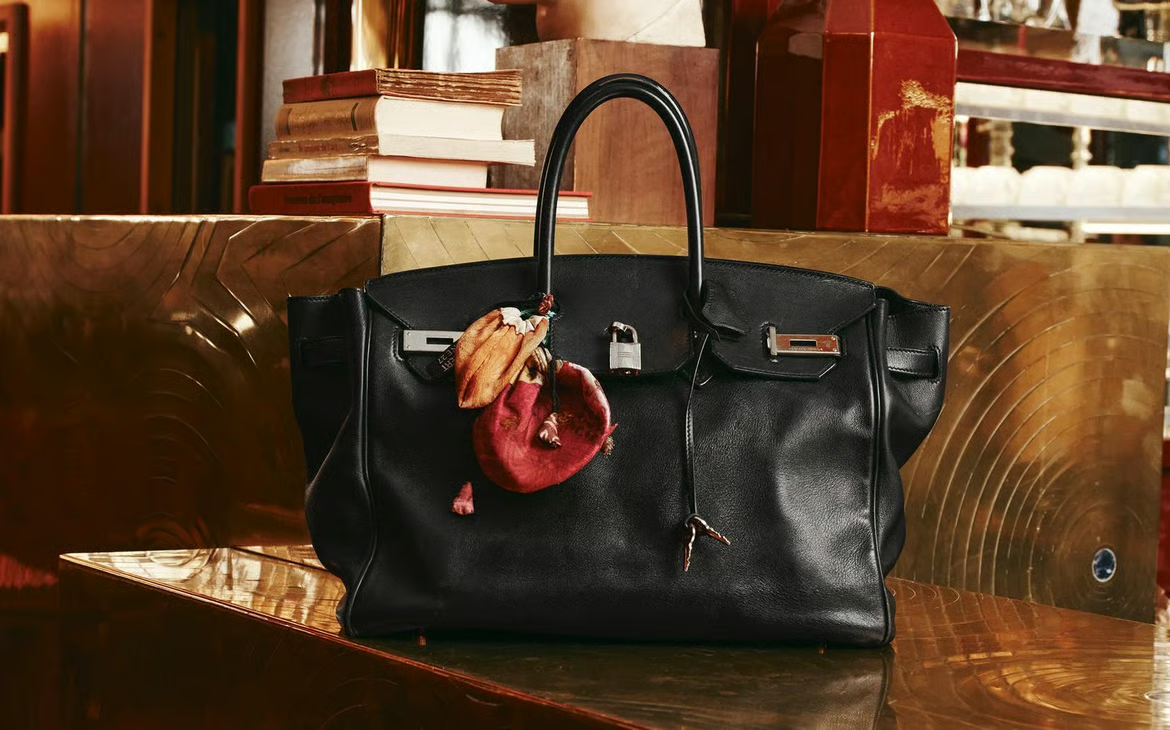

When Jane Birkin’s handbags ruled the room and then suddenly didn’t
The luxury world still remembers where it was when Jane Birkin’s first Hermès Birkin hammered down for a surreal $10 million on July 10, 2025. The atmosphere was electric, the bidding aggressive, and the symbolism almost too rich, as if history itself were up for sale. According to auction insiders, collectors weren’t just buying leather and hardware, they were buying provenance, mythology, and bragging rights rolled into one 35-centimeter icon. That prototype bag wasn’t merely rare; it was singular, a once-in-a-lifetime artifact that transcended the usual handbag hierarchy. In moments like these, luxury stops being rational and becomes pure spectacle.
That momentum seemed unstoppable when her second personal bag, the so-called “Le Birkin Voyageur,” fetched a still-staggering $2.9 million at Sotheby’s Abu Dhabi on December 5, 2025. Reportedly, bidders saw it as the perfect compromise between legend and usability, less museum relic and more lived-in luxury. With its travel-worn character and unmistakable Jane Birkin nonchalance, it slotted neatly into the collector psyche. Worth around the price of a Gulfstream jet’s interior refit, it reaffirmed the Birkin as the ultimate talisman of wealth. At that point, who would dare bet against a third triumph?
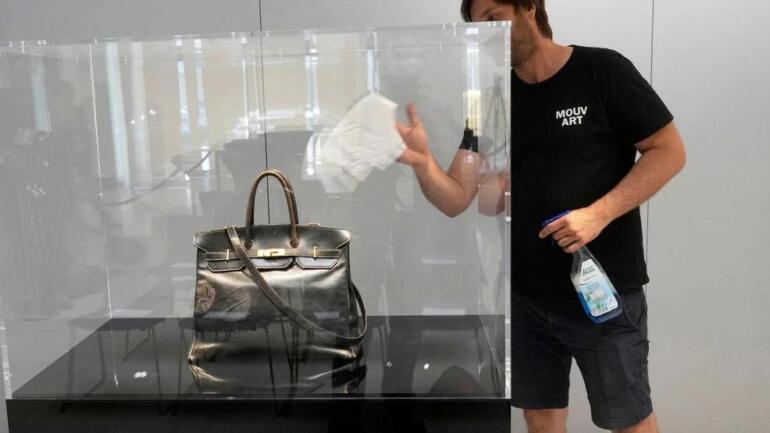
And yet, the third act arrived with none of the drama anyone expected. When the black Hermès Birkin 35 opened with a modest $140,000 estimate at Hôtel Drouot in Paris on December 15, 2025, the room stayed eerily calm. No bidding war erupted, no last-minute phone buyers jumped in, and no hands went up. In an industry fueled by hype cycles and fear of missing out, the silence felt deafening. Was this collector fatigue, or simply a reminder that even icons have limits?
A headline lot at Hôtel Drouot that couldn’t headline the bidding
Offered as the star of the “Icon(s)” sale, this later personal Birkin arrived with impeccable storytelling but without the once-in-history aura of the original prototype. According to Ouest France, that distinction mattered more than many anticipated. The bag, while undeniably authentic and emotionally rich, was not the bag that started it all. In luxury auction circles, that difference can mean millions. Provenance may open doors, but singularity kicks them wide open.
The setting itself was classic Parisian auction theater, with Hôtel Drouot lending its ornate gravitas to the proceedings. Auctioneer Patrice Biget of Orne Enchères reportedly expected interest based on the bag’s backstory alone. After all, Hermès waiting lists stretch for years, and resale premiums remain ferocious in secondary markets. Yet, when the moment came, the Birkin sat untouched, almost defiant in its stillness. For seasoned observers, it was a reminder that narrative must be paired with rarity to ignite bidding frenzy.
Even more surprising was the behind-the-scenes interest that never materialized in the room. Billionaire Japanese collector Shinsuke Sakimoto, who famously snapped up Birkin’s original bag for $10 million, is said to have made inquiries through his financial director just a week prior. According to those close to the sale, that alone fueled speculation of another headline moment. But sale day arrived, and Sakimoto did not. In the end, the most talked-about handbag in the room went home unsold.
A black Box calf Birkin 35 that may have chosen its own fate
This particular Birkin, a 35-centimeter model in black Box calf leather with gold-tone hardware, was never meant to be pristine. Gifted by Hermès and later given to Birkin’s best friend of sixty years, photographer Gabrielle Crawford, it lived a full, unapologetic life. Charms from across the world dangled from its handles, from Japanese lucky tokens to small bells that jingled with every step. The bag was heavy, reportedly weighed down by memories as much as metal. It was, in every sense, a companion.
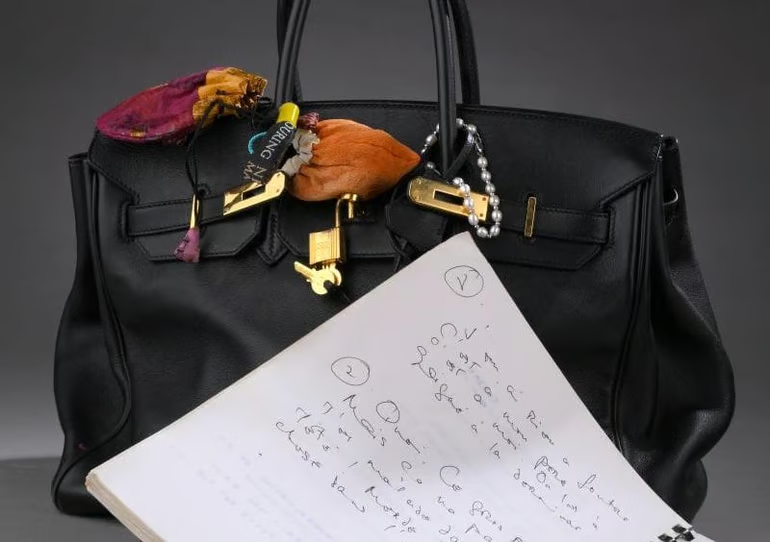
According to Vanity Fair, Birkin herself received five Hermès bags over her lifetime, most of which she eventually sold to support charitable causes. This one, consigned by Crawford, was expected to fund the Jane Birkin Foundation, adding yet another emotional layer to its story. Auctioneer Biget even remarked on Crawford’s exceptional trust and grace throughout the process. For now, the bag remains with Orne Enchères, quietly waiting for the right context. Sometimes luxury doesn’t need a gavel to validate it.
And perhaps that is the real intrigue here. In a market obsessed with escalation and record-breaking numbers, this Birkin’s refusal to sell feels almost poetic. Is it possible that after $10 million headlines and $2.9 million follow-ups, restraint became the ultimate luxury? Or maybe, just maybe, the bag itself is said to be holding out for someone who understands it wasn’t meant to be flipped, but lived with. In the rarefied air of Hermès lore, that kind of resistance might be the most Jane Birkin thing of all.