

Four Counts Decided, One Still Dividing the Jury
After seven weeks of testimony, emotional witness accounts, and grueling cross-examinations, the jury in Sean “Diddy” Combs’ federal sex trafficking trial delivered a partial verdict on Tuesday. Four out of five charges were decided, but the jury remained deadlocked on the most serious count: racketeering conspiracy. Judge Arun Subramanian instructed the twelve-member panel to return for further deliberation, emphasizing that it was too early to abandon hope of a full consensus.
The panel had spent two days behind closed doors, working through the weight of the charges. While they found agreement on the two sex trafficking counts and two charges related to transporting individuals across state lines for prostitution, they could not reach a unanimous decision on whether Combs engaged in organized criminal conduct. The charge of racketeering carries a maximum penalty of life in prison.
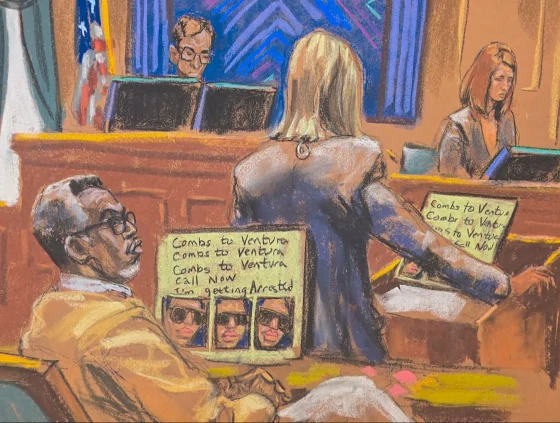
The courtroom was tense as Judge Subramanian read the partial verdict aloud. Combs, seated quietly with his legal team, did not testify during the trial. When the jury exited, he remained still for a moment, then slowly rose, faced his family, and blew a kiss before telling his mother, “Love you. I’ll be alright.” Marshals then escorted him from the room without further comment.
Grim Testimonies and Unsettling Evidence
The trial gripped national attention with graphic testimony from two women: singer Casandra “Cassie” Ventura and another accuser identified only as “Jane.” Both testified that Combs coerced them into drug-fueled sex acts with paid male escorts, using threats, violence, and blackmail to maintain control. Their accounts painted a picture of private abuse hidden behind the public glamour of a hip-hop empire.
In one chilling moment revisited by the jury, Ventura described a 2016 incident at a Los Angeles hotel. Surveillance footage captured Combs kicking and dragging her through a hallway as she tried to flee what he called a “freak-off” — an orchestrated sex marathon where he allegedly watched, filmed, and sometimes joined in. Prosecutors argued this was a pattern of predatory behavior designed to exploit women for his gratification and dominance.
Defense attorneys admitted Combs had a history of domestic violence but insisted all sexual encounters were consensual. They submitted text messages from both women in an effort to paint a more nuanced picture. However, prosecutors countered that consent could not exist in a system built on fear, manipulation, and financial dependency.
The Final Count and What Comes Next
The unresolved charge of racketeering conspiracy looms large over the trial’s conclusion. Prosecutors allege that Combs operated a criminal enterprise with the help of others, facilitating trafficking, violence, and cover-ups. To convict, the jury must find not just guilt in isolated actions but in a coordinated effort to break the law repeatedly as part of a larger operation.
Judge Subramanian has urged the jurors to push forward. He may consider issuing an Allen charge, commonly known as a “dynamite instruction,” to encourage consensus. While controversial, such guidance is sometimes used to break deadlocks in high-profile cases. The jury is scheduled to reconvene on Wednesday and may continue deliberations into the July 4 holiday if necessary.
If Combs is found guilty on all charges, he faces a minimum of 15 years and up to life in prison. His fall from grace — from music mogul to courtroom defendant — is nearly complete. All that remains is the decision of twelve jurors still locked in deliberation over whether his influence was merely personal or criminally orchestrated.