
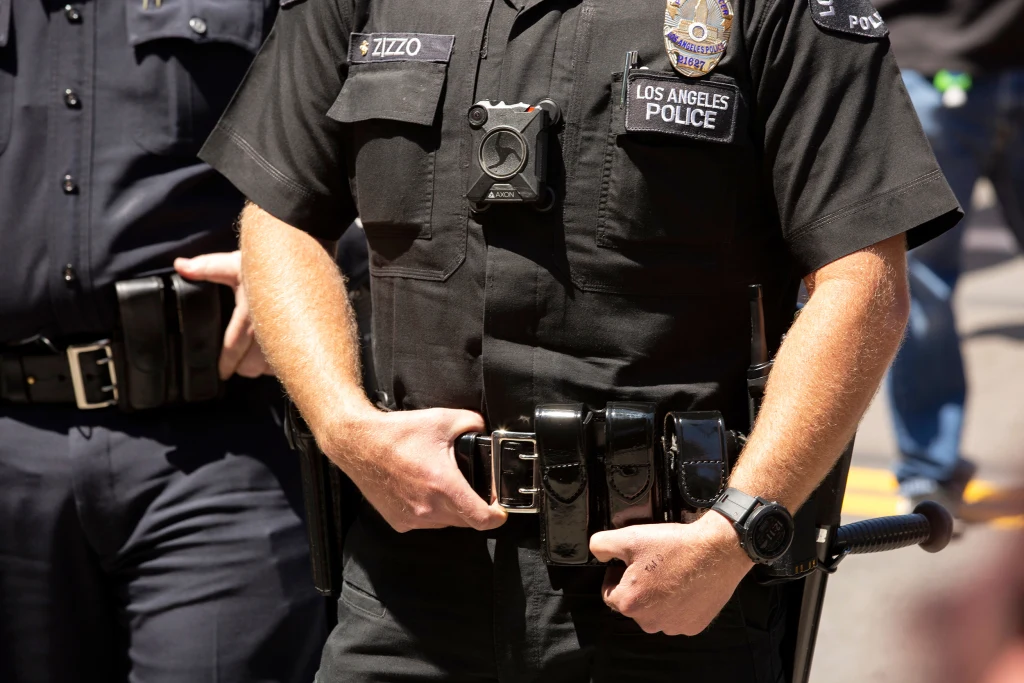

Internal emails obtained through a public records request reveal that the Los Angeles Police Department (LAPD) expressed direct interest in GeoSpy, an artificial intelligence system designed to identify the precise location of photographs within seconds. Developed by Graylark Technologies, the tool uses advanced computer vision models to analyze subtle visual details in images, including soil composition, architectural styles, vegetation patterns, and other identifiable markers, to determine where a picture was taken. In some cases, GeoSpy is able to narrow results down to an exact property address, even if the photograph was taken indoors without visible windows or street views. The tool’s capabilities have prompted strong reactions from both law enforcement and privacy advocates, especially after its founder publicly demonstrated scenarios involving undocumented immigrants in sanctuary cities, including Los Angeles.
LAPD Inquiries and Early Discussions
The correspondence shows that in October 2024, the LAPD’s Robbery-Homicide division contacted Graylark Technologies with a request for more information about GeoSpy’s “PRO” version. In one email, an LAPD official wrote, “Let’s start with one seat/license (me),” indicating interest in acquiring a single-user license for testing. Founder Dan Heinen responded by outlining the pricing structure, stating that the annual subscription cost was $5,000 per user and included 350 searches. The LAPD official added that any purchase would likely not occur for at least a year, suggesting the inquiry was part of an exploratory phase rather than an immediate procurement plan.
The exchange began after GeoSpy’s team confirmed it had received an inquiry from the department. The follow-up emails appear to answer specific LAPD questions about how soon the product would be available and what technical capabilities it offered. While the documents do not confirm whether the LAPD ultimately purchased or tested GeoSpy, they represent the first publicly documented instance of a United States law enforcement agency being directly linked to discussions about using the technology.
GeoSpy’s potential to pinpoint exact locations from photographs, even when taken indoors, has become a focal point of debate. This level of precision, combined with the ability to run large numbers of searches, presents operational advantages for law enforcement while raising significant concerns for civil liberties. Privacy experts warn that without strong oversight, the technology could be misused in ways that threaten personal privacy rights.
Demonstrations and Potential Uses
In a demonstration video posted to GeoSpy’s Discord server, Heinen showcased the tool’s functionality using footage from a Ring security camera in Los Angeles. The clip began with commentary referencing the February murder of Juan Miguel Sanchez, then focused on one home visible in the background. The GeoSpy interface cropped that section of the image, uploaded it to the platform, and began processing with an on-screen message that read, “Analyzing image features to determine precise location.” Within seconds, the tool produced latitude and longitude coordinates, a property address, and a Google Street View interface for on-the-ground verification.
Heinen has shared other demonstrations highlighting GeoSpy’s reach, including a video that showed a dropdown menu of preloaded city models such as Las Vegas, Memphis, and Miami-Dade County. While agencies in those jurisdictions did not respond to requests for comment, the inclusion of these locations indicates that the company intends to scale the technology beyond individual cities. Despite media inquiries, Heinen and other representatives from GeoSpy did not respond to follow-up questions about current contracts or collaborations with law enforcement.
In an interview with the technology publication Indicator, Heinen defended his approach, saying his role was to build the tools that customers requested rather than make ethical judgments about their use. He stated that he trusted elected officials to decide how such tools should be regulated and expressed confidence that the American public would make informed decisions about policy and oversight. His comments have fueled ongoing debate about the responsibilities of AI developers, particularly when their products are designed for surveillance and marketed directly to government agencies.
Privacy Concerns and Wider Adoption
Civil liberties organizations have warned that the LAPD’s interest in GeoSpy underscores the growing risks of mass location-tracking tools. Cooper Quintin, a senior technologist at the Electronic Frontier Foundation, said that what people share online is not private when combined with capabilities like GeoSpy’s. He cautioned that the tool’s lack of consistent accuracy, based on his testing, could result in false identifications, wrongful targeting, or harassment. Quintin also stressed the need for transparency, community oversight, and accountability to guard against potential abuse.
According to marketing materials, GeoSpy is trained on hundreds of millions of geotagged images sourced from licensed datasets, partnerships, and purchased data. The company claims its AI models can detect and match unique geographic markers to deliver meter-level accuracy. On its website, under a section aimed at enterprise and law enforcement customers, GeoSpy promotes the tool as an advanced, easy-to-use platform for city or country-level deployment. The company has cited case studies in which it claims law enforcement was able to locate fugitives using photos posted on social media that contained no GPS metadata and were taken in areas with minimal public map data.
Publicly available information suggests that GeoSpy has engaged with multiple agencies beyond the LAPD. In one image shared online, Heinen is seen presenting the technology inside a law enforcement facility, later confirmed by the United States Secret Service to be its Miami field office. While the Secret Service stated that the demonstration was conducted for local law enforcement and not for its own use, no local agencies have commented. GeoSpy was first covered by 404 Media in January, when the platform still allowed public access. Following reports of misuse, including attempts to locate specific individuals, the company restricted access to vetted customers. More recently, GeoSpy has showcased its ability to geolocate indoor photographs, further expanding the scope and controversy of its surveillance capabilities.