
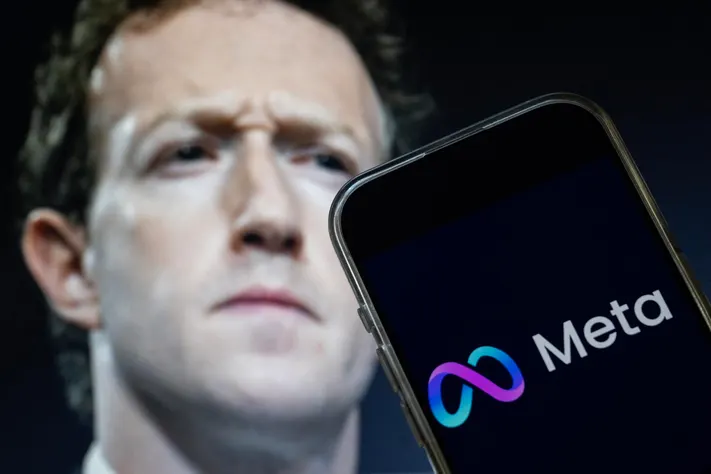

Nearly six months after its launch, Meta’s standalone artificial intelligence app is struggling to gain traction among consumers. Despite billions of dollars invested and CEO Mark Zuckerberg’s pledge to make AI a cornerstone of the company’s future, the app has been plagued by glitches, inconsistent performance, and widespread complaints from users and shareholders alike. The rollout was intended to demonstrate Meta’s progress in artificial intelligence after years of lagging behind rivals, but so far the app has delivered more disappointment than innovation. As pressure mounts, both the public and investors are questioning whether Meta can transform its ambitious research spending into a product that justifies the hype.
A Late Start in a Crowded Field
Meta introduced its consumer-facing AI app in April 2025, more than two years after OpenAI’s ChatGPT reshaped the public conversation around artificial intelligence. By the time of its release, competitors such as OpenAI, Anthropic, and Google had already built strong user bases, making Meta a late entrant in an increasingly competitive space. The company’s goal was to differentiate itself with an all-in-one product that combined a chatbot, image generation, and a content feed, but critics argue this bundling has diluted its focus. Rather than offering a single standout feature, the app has struggled to perform reliably across all three areas, giving the impression of an experiment rather than a finished tool.
Zuckerberg has described AI as a defining element of Meta’s future, and he has committed billions of dollars annually to ensure the company catches up to its rivals. Alongside the app, Meta has released Llama, its open-source large language model, which has been widely adopted by researchers. However, consumer-facing products are what shareholders and the broader public are paying closest attention to, and in that regard Meta’s flagship AI app has not impressed. The app’s underwhelming performance has created a gap between Meta’s achievements in research and its ability to deliver products that everyday users find useful or trustworthy.
For Meta, this gap has significant strategic implications. Its main business, digital advertising, is maturing, and AI is seen as the next frontier for growth and relevance. Yet by arriving late to the consumer AI market and stumbling in its first major release, Meta risks being overshadowed by companies that are moving faster and executing more effectively. The challenge is not only to match competitors in technical capability but also to restore confidence among users and shareholders who expect Meta’s scale and resources to translate into reliable results.
User Backlash and Product Shortcomings
From the start, users have voiced frustration with the app’s performance. Reports of glitches, inconsistent responses, and awkward interactions circulate widely on social media, with many describing the app as unfinished or unreliable. The lack of personalization has been a particular point of concern, as the AI struggles to adapt to individual users’ habits and preferences. For people accustomed to polished products from Meta’s core platforms like Facebook and Instagram, the AI app has felt like an outlier, closer to a prototype than a ready-for-market product.
Meta has acknowledged these shortcomings but emphasized that development is still in its early stages. “This is just the first of many steps,” a spokesperson told Bloomberg, noting that the company is investing heavily in expanding its infrastructure and hiring top AI researchers. The company has argued that its long-term strategy, which involves embedding AI into all of its apps and services, will eventually demonstrate the value of its investment. Still, with billions already spent and little to show for it on the consumer side, patience among users and shareholders is running thin.
Another major concern is the app’s reliability in providing accurate information. Like many large language models, Meta’s AI has been prone to hallucination, a term used to describe when AI systems generate false or misleading details. Users have also flagged inappropriate or bizarre outputs in the app’s content feed, raising questions about moderation and oversight. These incidents undermine the trust that Meta needs to build if it wants its AI to become a tool people rely on daily, rather than a novelty that draws criticism and skepticism.
Ambition Versus Reality
Zuckerberg’s vision for AI extends far beyond chatbots or digital novelties. He has described his goal as creating a “personal superintelligence” that can enhance productivity, creativity, and communication across Meta’s platforms. The company has outlined plans to integrate AI into Facebook, Instagram, Messenger, and its hardware products, suggesting that the standalone app is only one piece of a much larger strategy. However, the poor reception of the app underscores the gap between that vision and the reality of its current consumer offerings.
The limitations of the app highlight the technical and organizational challenges Meta faces. Conversations with the AI are siloed, meaning it cannot carry memory or context across apps, which severely restricts personalization. Without the ability to recall past interactions, the AI falls short of the intuitive, adaptive assistant Zuckerberg has promised. Additionally, the balance between automation and moderation remains unresolved, as the company struggles to prevent inappropriate content from circulating while still encouraging user creativity.
For investors, the stakes are high. Meta has committed unprecedented sums to AI research and infrastructure, betting its future on becoming a leader in the field. While its Llama model and research initiatives have strengthened its reputation in technical circles, its consumer-facing AI remains underwhelming. If Meta cannot bridge the gap between research and consumer usability, its flagship app risks becoming a cautionary tale of overinvestment and underdelivery. For now, the company faces the challenge of turning lofty promises into a reliable product that can win over both everyday users and skeptical shareholders.