
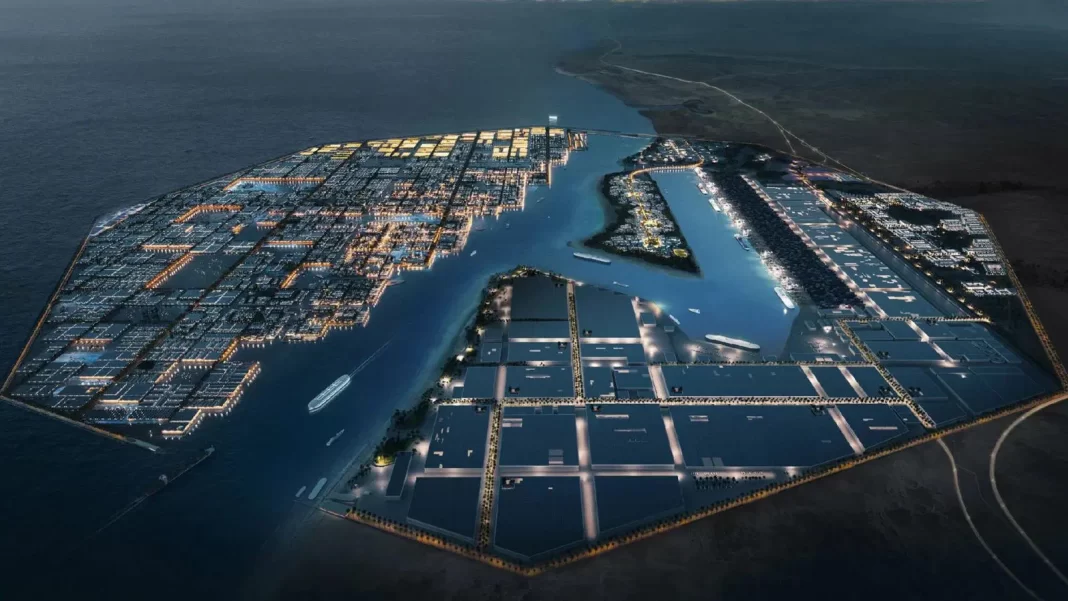

From Vision to Construction: Oxagon’s Next Chapter
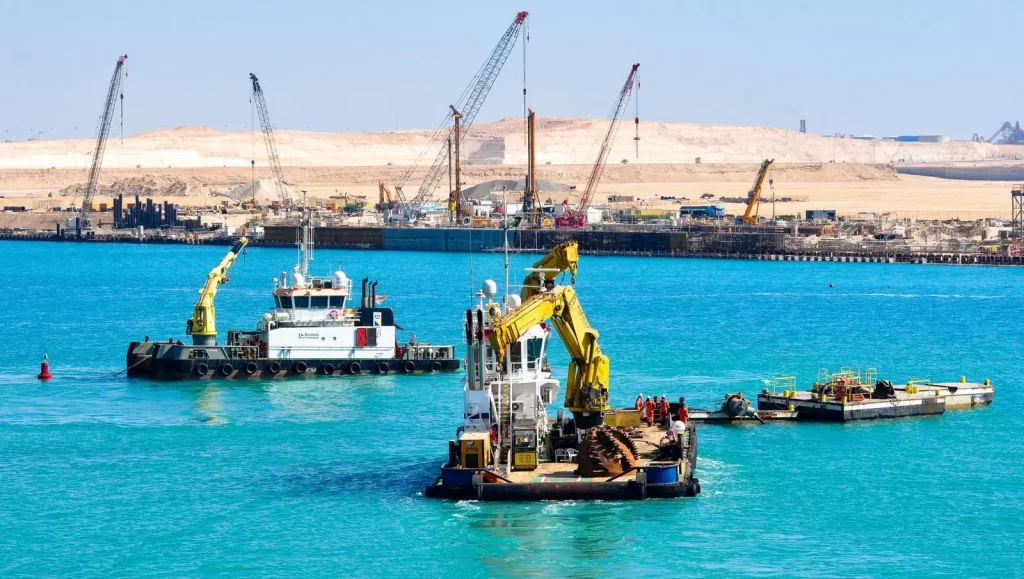
Saudi Arabia’s Oxagon has entered Phase Two, a critical stage in the kingdom’s most ambitious maritime development. Situated along the Red Sea as part of the $500 billion Neom mega-project, the port city is no longer just a rendering of futuristic ambition. Belgian marine engineering firm DEME confirmed that earthworks are underway, with dredging preparations set to begin later this year. These early steps mark the transition from groundwork on the shore to shaping a city that is planned to extend into the sea as the world’s largest floating structure.
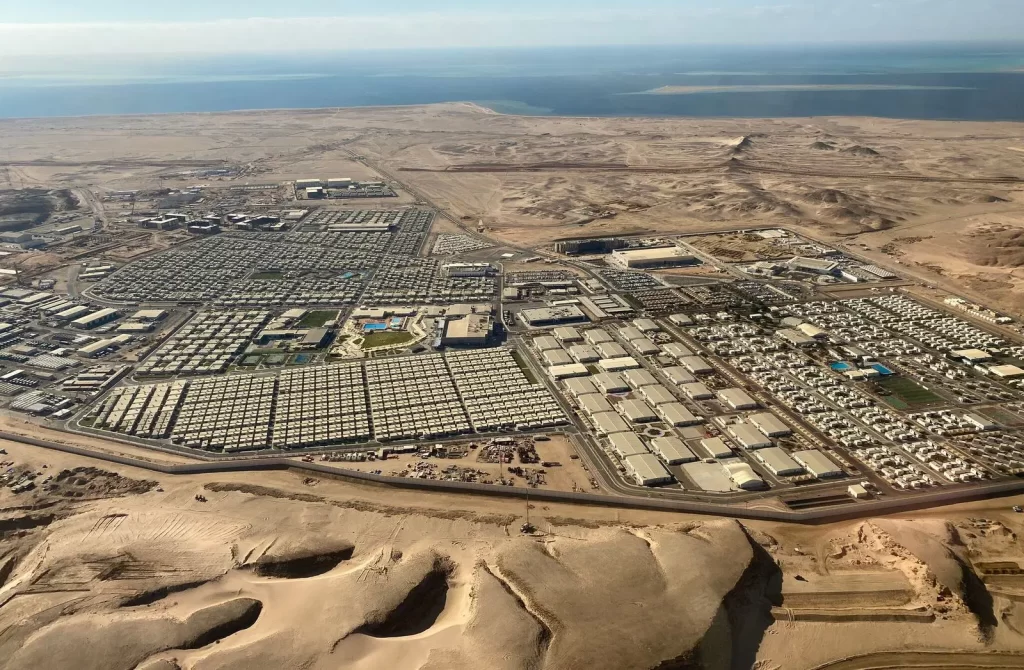
Unlike conventional port expansions, Oxagon is being envisioned as an entirely new model of industrial development. It is both an economic engine and an architectural statement, designed to integrate automated logistics with clean technology and high-end infrastructure. Where most ports grow incrementally, Oxagon is being planned as a ready-made hub for the 21st century, intended to rival the most advanced facilities in Europe and Asia.
The physical scale of the project underscores its ambition. Once complete, the offshore section of Oxagon will be fourteen times the size of New York’s Central Park, positioning it not only as a maritime feat but as a global landmark of engineering. For Saudi Arabia, this is more than construction; it is a symbolic act of economic diversification, intended to shift the kingdom’s global image from oil exporter to industrial innovator.
Redefining the Modern Port
At the heart of Oxagon lies a reimagined idea of what a port can be. Traditional shipping hubs focus on moving goods efficiently, while Oxagon expands that definition by embedding the latest in automation, digitization, and sustainability. Cargo will flow seamlessly into purpose-built logistics centers, tracked in real time by a modern Port Community System. From there, goods will connect directly to high-speed rail and inland networks designed to maximize efficiency and minimize environmental impact.
This digital-first design approach positions Oxagon at the cutting edge of maritime logistics. Automation promises streamlined customs processes, intelligent scheduling, and reduced idle times for vessels. Unlike ports that have retrofitted digital systems into legacy infrastructure, Oxagon has the advantage of building such capabilities into its foundations from the beginning.
The industrial city surrounding the port will house advanced manufacturing facilities and clean-technology industries. Saudi planners intend for Oxagon to be more than a waypoint in global shipping. It will function as a fully integrated ecosystem where production, trade, and innovation coexist. By combining port logistics with industrial capacity, the project positions itself as a complete economic zone that aligns with Saudi Arabia’s Vision 2030 ambitions of creating new sectors beyond oil.
Strategic Weight on the Red Sea
Oxagon’s importance extends beyond architectural spectacle. Positioned along the Red Sea corridor, the city is strategically located where nearly 13 percent of global trade passes. This corridor connects Asia, Europe, and Africa, making it one of the most vital arteries in the global economy. By anchoring itself here, Oxagon is designed to insert Saudi Arabia into the heart of international commerce, capturing flows of goods that previously bypassed the kingdom.
While Neom’s other components, like The Line, have captured headlines for their futuristic urban vision, Oxagon is intended as the project’s economic backbone. It is designed to be the practical, revenue-generating hub that ensures Neom’s long-term viability. By attracting manufacturers, logistics firms, and technology companies, the port city could become the first major element of Neom to prove its functional worth on the global stage.
The coming months will be pivotal. As dredgers move into place and offshore foundations begin to take shape, Oxagon will evolve from a concept into a living, working infrastructure project. For Saudi Arabia, its success would not only signal the kingdom’s ability to execute at scale but also announce its arrival as a player in the global logistics arena. If it delivers on its promise, Oxagon could stand alongside the world’s great ports, not only as a hub of trade but as a symbol of how ambition, design, and geography can be fused into a single transformative project.