
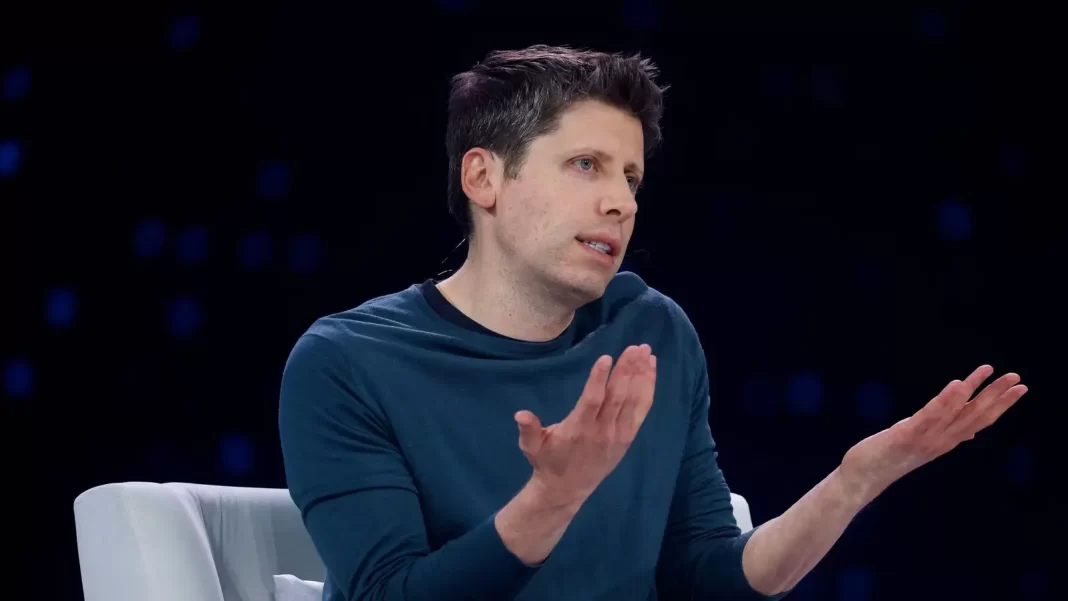

The Age of the Politically Homeless Tech Titan
Sam Altman, CEO of OpenAI and one of the most prominent architects of Silicon Valley’s AI revolution, recently took to X to articulate a sentiment that’s becoming increasingly familiar in the tech elite: a profound sense of political homelessness. In a long, introspective post, Altman expressed disaffection with both the Democratic and Republican parties, stating plainly that neither reflects the values he has held since his early twenties. “So now I am politically homeless,” he wrote. “But that’s fine; I care much, much more about being American than any political party.”
Altman’s political philosophy, as laid out in his post, blends conventional techno-libertarian ideas with the soft optimism of Silicon Valley utopianism. He reasserted his belief that free markets are more efficient than government, that science and innovation should lift everyone collectively, and that education is vital to national competitiveness. Though framed in personal terms, his message echoed a broader discontent within the technology class—one that has grown wary of ideological extremes but remains tethered to wealth-friendly, market-centric ideals.
What distinguishes Altman’s version of this sentiment is how it marries an appreciation for capitalism with a vague commitment to redistribution. “We should encourage people to make tons of money,” he wrote, “and then also find ways to widely distribute wealth.” In theory, it’s an appealing vision—growth without greed, success without exclusion. But in practice, it raises a deeper question: can those who’ve benefited most from the system be trusted to rewire it for the collective good?
Third-Party Fantasies and Technocratic Ideals
While Altman’s musings read more like a personal reflection, his former OpenAI co-founder Elon Musk has taken a louder, more theatrical route toward political reinvention. Musk, who now finds himself locked in a public rivalry with Altman, recently revived the idea of forming a third party. Dubbed the “America Party,” the concept is loosely defined but ambitiously framed as a home for the elusive “80 percent in the middle” who, Musk believes, are disenchanted with both major parties.
The idea is not entirely new—Musk has floated similar notions in the past, and this latest iteration coincides with his ongoing critiques of existing political leadership. His recent jab at Donald Trump’s proposed spending plan, which he claimed would inflate the deficit, added fuel to speculation that Musk wants a platform that reflects his particular brand of fiscal conservatism and social independence. In true Musk fashion, the proposal was announced via tweet: “Should we create the America Party?”
The numbers, however, complicate the narrative. While Musk cites a mythical “80 percent” of Americans ready to defect from the two-party system, national surveys suggest a more fragmented reality. A Pew Research poll found that 25 percent of Americans feel unrepresented by either party, and 37 percent wish for more choices—but that’s a far cry from consensus. The appeal of a third party may be strong among a tech elite eager to reshape politics in its own image, but turning that vision into a viable coalition remains another matter entirely.
Technocrats Without a Blueprint
If there is one trait that defines the political aspirations of today’s tech leaders, it is the conviction that they can fix systems by redesigning them—like platforms, like code. Altman’s desire to see a world where “everyone has the stuff billionaires have,” and Musk’s yearning to launch a third party without articulating any foundational policies, reflect this enduring belief in technocratic problem-solving. But politics, unlike platforms, resists optimization.
In many ways, the political ideologies espoused by Altman and Musk fall into a familiar pattern among ultra-wealthy entrepreneurs. Libertarian instincts around markets and innovation, paired with selective social liberalism and an aversion to regulation, are wrapped in the rhetoric of common sense. It’s a vision that appeals within their peer circles, where wealth is viewed as proof of wisdom and governance is seen as a bug, not a feature.
Yet for all their influence, both Altman and Musk face a shared dilemma: they lack a coherent political base. Their brands remain powerful, their platforms vast, but their politics are deeply personal—more ethos than policy, more performance than principle. If they truly wish to shape the future of governance, they may have to do something neither has often done in public: negotiate, compromise, and build not just with code, but with people who think differently.