


A Chance Meeting and a Bag That Changed Fashion History
The Hermès Birkin may today be the ultimate symbol of luxury, but its origins are rooted in pure practicality. Jane Birkin, known for her effortless style and habit of carrying straw baskets, found herself seated next to Hermès chief executive Jean-Louis Dumas on a flight in the early 1980s. She lamented the lack of a chic yet functional bag big enough to carry both scripts and the detritus of daily life. That conversation sparked the creation of a handbag that would become one of the most coveted in the world, a union of Parisian craftsmanship and the casual elegance Birkin embodied.
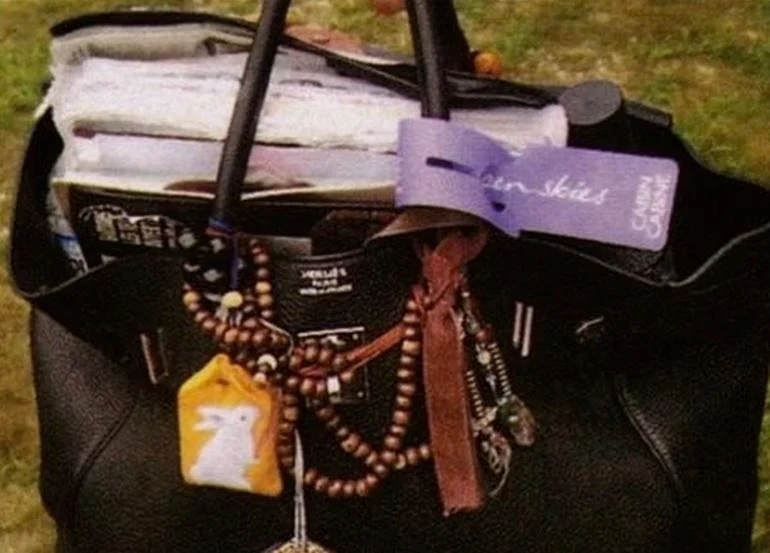
When Birkin received her namesake bag, she used it not as a fragile treasure but as an everyday essential. It was capacious enough for her busy life, roomy enough for scripts, personal effects, and at times even diapers for her children. Its beauty lay not only in the quality of its leather and meticulous construction but in its ability to adapt to the needs of a woman who refused to let fashion dictate how she should live.
Decades later, her original 1985 prototype would become a piece of fashion history. In a recent Sotheby’s sale, it fetched a staggering $10 million, purchased by Japanese billionaire Shinsuke Sakimoto. The bag, worn and marked by a lifetime of use, now occupies a rarefied place in the luxury market, a piece once carried without hesitation now regarded as an artifact.
The Wear and Tear of a Life Well Lived
Jane Birkin never treated her Birkin bag as a fragile status symbol. By her own admission, she overloaded it to the point of physical strain, once telling The Guardian that it had contributed to her tendonitis. The patina it acquired came not from cautious handling but from a life in motion. Badges, stickers, and worry beads adorned its surface, giving it a character as distinctive as its owner’s.
Her view on luxury was refreshingly unpretentious. She believed a bag should be used until it bore the marks of its journey, often remarking that there was “no fun in a bag if it is not kicked around.” In interviews, she joked that she had even suggested Hermès make the Birkin in plastic or cardboard to lighten its weight, a notion that today’s collectors would likely consider sacrilege. For Birkin, it was never about rarity or resale value, but about living with the things she loved.
This philosophy stood in stark contrast to the way the Birkin is now treated by many of its owners. In an era when long waitlists and auction prices define its desirability, Jane Birkin’s approach serves as a reminder that objects, however valuable, gain their true worth through use, not preservation. Her bag was a companion, not a trophy.
A Legacy Beyond Fashion
While Jane Birkin’s style inspired one of the most valuable accessories in the world, her relationship with her handbags extended beyond personal use. Throughout her life, she used her Hermès collection to raise funds for causes she cared about. She once sold a Birkin for $163,000 to benefit the Japanese Red Cross, helping victims of the 2011 earthquake. Other sales funded initiatives to combat hunger in France and support disaster relief abroad.
Her passing at the age of 76 left a void not only in music and cinema but in the spirit of fashion. In a landscape where luxury often equates to exclusivity and spectacle, Birkin’s attitude toward her namesake bag feels almost radical. She valued utility over perfection, generosity over possession, and humanity over image.
Today, while Hermès continues to release limited editions that command astronomical prices, from diamond-studded rose gold “Sac Bijou” Birkins to rare crocodile “Diamond Himalaya” models, the essence of the original remains tied to the woman who carried hers without ceremony. The story of Jane Birkin’s weathered, $10 million bag is not just about fashion. It is about living fully with what we have, leaving behind marks of a life richly, unapologetically lived.