
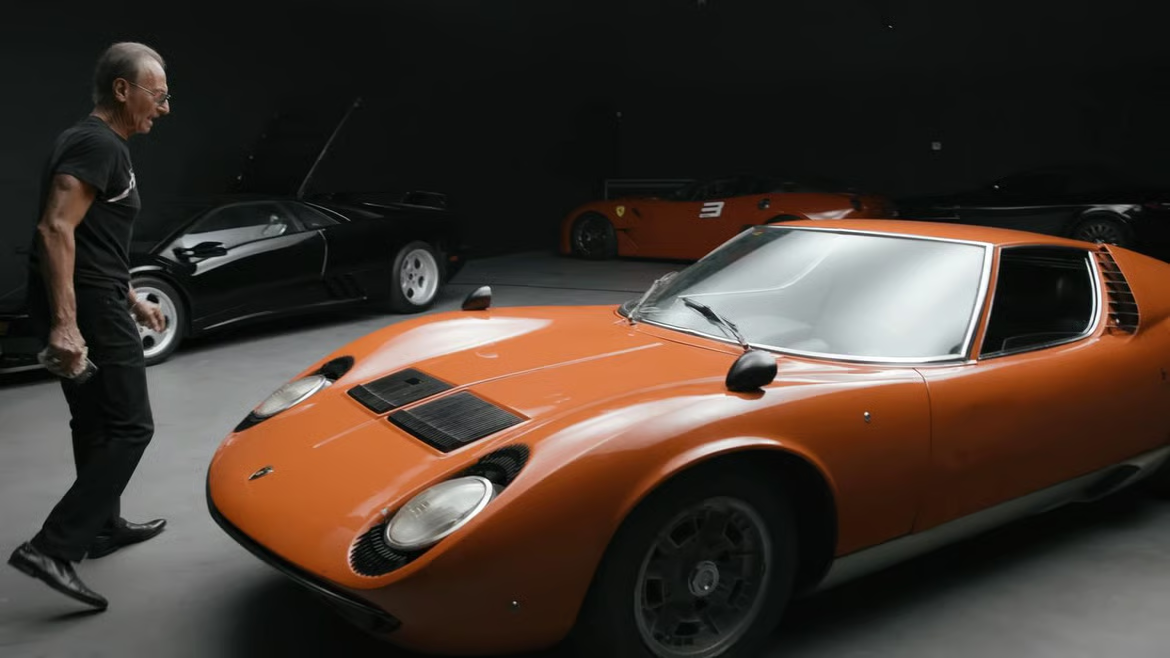

A $950,000, 4.36-meter-long 1971 Lamborghini Miura S with chrome hood mirrors and a 200-mph speedo resurfaces like a ghost from the disco era, shocking Curated founder John Temerian far more than any Ralph Lauren level supercar haul, private jet delivery, or Miami penthouse reveal, because the prize wasn’t a client’s toy. It was his own father’s teenage dream.
The rookie hunt that turned into a family-time-capsule jackpot
Imagine strolling into your first week at a Miami dealership where the air smells like old Connolly leather and new money, and your boss casually expects you to “go find legends.” That was Ross’ brief at Curated, a place that reportedly treats rare Italian metal the way Sotheby’s treats Basquiats. He’d been hounding John Temerian for months to get the gig, so the pressure to deliver wasn’t subtle. One social media rabbit hole later, he stumbles on a 1971 Lamborghini Miura S resting in a California garage, off the road for nearly three decades. Not bad for a new guy trying to make an impression, right?
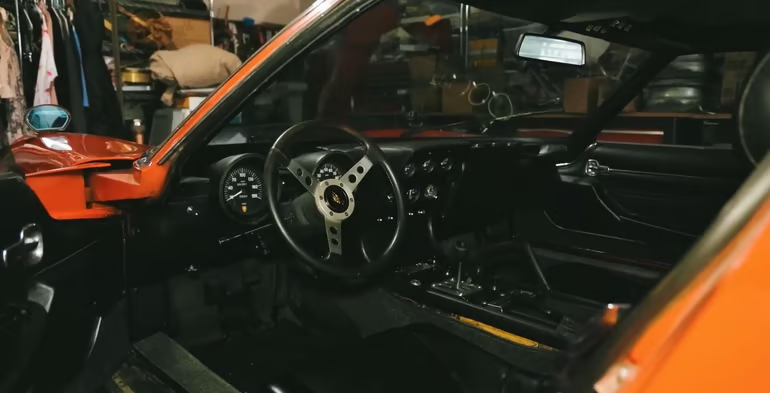
According to the team’s own telling, the Miura appeared like just another barn find unicorn at first, until the spec sheet started whispering secrets. This wasn’t a random P400S with a romantic backstory. It was a red car with chrome hood mirrors, black leather cabin, factory air-conditioning, and North American specification. The 200-mph speedometer alone is a delicious period flex, because U.S. spec Miuras weren’t exactly common in that exact cocktail. Worth around a million dollars today, yes, but the real currency here was the eerily precise matching of details. When a car’s quirks line up this neatly, you don’t just appraise it. You start listening to it.
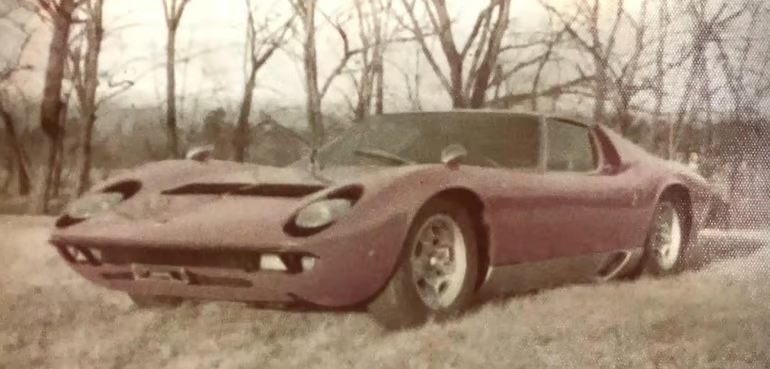
What makes this sweeter is the accidental nature of it all, the kind of one in a million coincidence you’d normally reserve for lottery tickets or lost Van Goghs. Ross wasn’t searching for a Temerian family relic. He was searching for inventory with a pulse. Yet the more Curated dug in, the more John Temerian began to wonder if this could be the very Miura his father owned as a teenager in Massachusetts when the family garage serviced Italian exotics. The odds were absurd, but luxury history loves a plot twist. And that twist was just warming up, because the next step wasn’t a restoration. It was a reveal.
The forensic details that made suspicion turn into certainty
The Lamborghini Miura is already mythology on wheels, and any insider will tell you the S variant is where the story gets properly decadent. You’re looking at Marcello Gandini’s wedge of drama, mid engine V12 theater, and that signature “eyelash” headlight attitude that still turns heads in Monaco traffic. But in this case, the headline wasn’t just the model. It was the micro specs. Red paint with chrome hood mirrors is a combination that’s said to be rare enough to feel like a fingerprint. Add full black leather, factory AC, and a U.S. speedo that reads to 200 mph, and suddenly you’ve got a car that isn’t just special. It is suspiciously specific.
John Temerian’s father, back in the early 1970s, owned a Miura with those exact choices, bought for a few thousand dollars as a 16 year old because, let’s be honest, teenage judgment in the presence of a V12 can be wonderfully deranged. The family garage in Massachusetts wasn’t some modest wrench and oil shop. It was an Italian exotics servicing hub where Lamborghinis and Ferraris were treated like regulars at a neighborhood café. Temerian Sr.’s Miura had a story baked into it, and some stories cling to cars the way patina clings to aluminum. When the Curated team realized the overlap, the question shifted from “Is this valuable?” to “How is this possible?” You can feel the hair on your arms stand up just thinking about it.
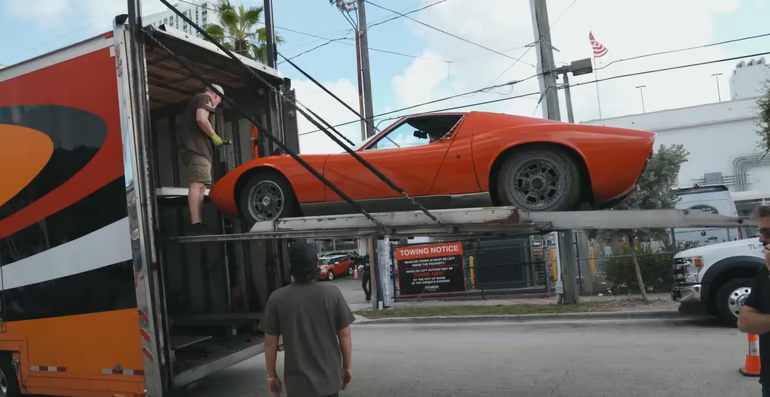
Reportedly, John Temerian decided to go all in on intuition and bought the car without telling his dad. He had it shipped to Miami like a stealth inheritance, then invited his father down as if it were a casual visit. There was no forensic lab, no dramatic VIN scratching montage, just a father walking toward a car with decades of memory parked inside it. He wasn’t hunting for a number. He was hunting for one tiny, almost laughably human detail. And that detail, a modest alarm lock mounted on the side of the hood, was about to outperform any certificate of authenticity money could buy.
The reveal in Miami and the future of a once-lost icon
Scene set this: a Miami hangar meets showroom, the Miura’s low, 1.105 meter tall roofline glowing under soft lights, and a man who hasn’t seen his old car in half a century walking toward it like he’s stepping into his own past. The elder Temerian knew exactly what he needed to see, because his own father had installed a custom alarm lock on the hood decades earlier at the family garage. That’s the kind of old school security mod you do when a V12 Lamborghini is parked among teenagers and temptation. As he approached, you could almost hear the soundtrack shifting from present day reality back into 1970s Massachusetts. Then he saw the lock. And in that quiet click of recognition, the entire story snapped into focus.
Two weeks later, fate doubled down with receipts. He found an old photograph confirming that this Miura, this exact red, chrome mirrored, black leather, factory AC missile, was the one he drove to high school. Luxury stories usually rely on provenance papers and auction house pedigrees, but this one had something richer. It had family memory triangulated by hardware. The teenage owner had sold the car, bought others, and never realized one of them carried a unique signature that would one day swing the truth wide open. Five decades passed, the Miura went quiet, and the world moved on to carbon tubs, active aero, and seven figure hypercars that look like they were designed by aerospace committees. Yet here was a reminder that the most valuable luxury isn’t always the latest. It’s the most personal.
Now the Miura sits back with the Temerians in Miami, not as a museum piece but as a living heirloom. You can almost picture it reentering the Curated orbit, perhaps a sympathetic recommissioning, a preservation grade detailing, maybe a concours appearance where judges lean in to admire the very lock that sealed its identity. Worth nearly a million dollars on paper, yes, but emotionally priceless in ways no auction paddle can measure. And isn’t that the delicious contradiction at the heart of serious collecting, buying history only to discover it was yours all along? The bigger question is what other ghosts are idling quietly in garages, waiting for the right set of eyes to bring them home.