

A Provocative Post Sparks Outrage
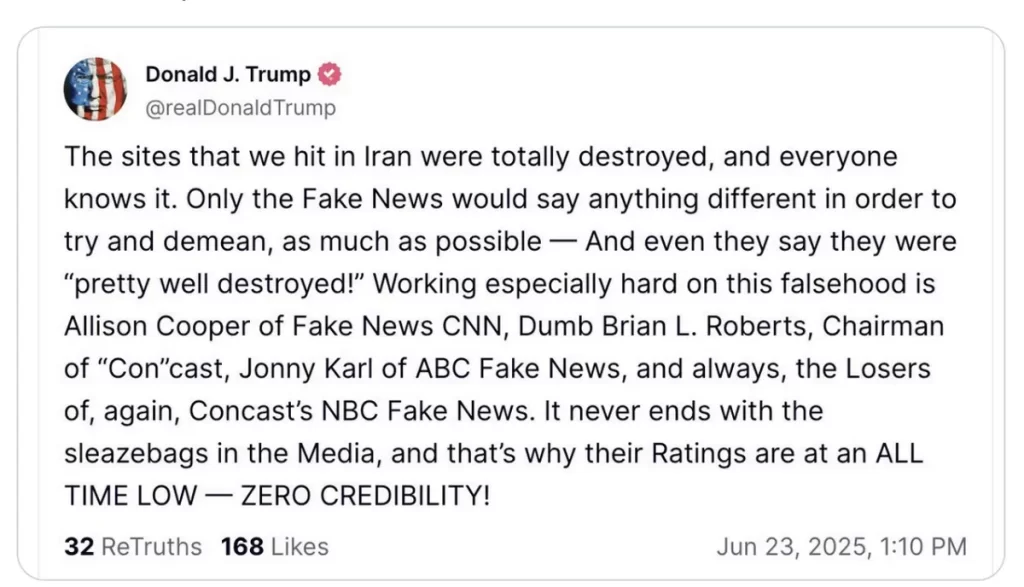
Former President Donald Trump ignited a firestorm on social media after posting a harsh critique of CNN’s coverage of U.S. airstrikes on Iran’s nuclear facilities. On his platform Truth Social, he accused networks like ABC, NBC, and CNN of “demeaning” the military operation. In a low blow that quickly gained attention, he derided Anderson Cooper by calling him “Allison Cooper,” a dig widely criticized as homophobic.
Trump did not stop there. He labeled NBC’s parent company as “Concast” and mocked cable giants in a thread that also praised the strike, stating that the targeted sites were “totally destroyed.” His post suggested a coordinated media effort to downplay the operation, even though many outlets acknowledged the facilities were “pretty well destroyed.” In the same breath, he disparaged Cooper’s gender identity and delivered a sweeping dismissal of “Fake News” that he claims lacks credibility.
Within minutes, critics seized on the insult. Journalist Aaron Rupar shared a screenshot on X, highlighting Trump’s alteration of Cooper’s name. Users quickly voiced their disgust, with one commenting that Trump’s slurs are “who and what he is.” The tone of backlash suggested that many viewed this as another escalation in Trump’s pattern of targeting both LGBTQ personalities and mainstream media.
Social Media Explodes With Condemnation and Defense
The reactions rolled in across platforms as users decried the comment. One user commented that Trump’s barbs only reflect his own character, while another lamented that his words embarrass the nation and deepen political divides. Observers noted that such rhetoric does little more than stoke division and distract from the gravity of the military actions.
But not everyone criticized the post. Some supporters defended Trump as simply joking, claiming that it was “not homophobic” because it was meant as a reference to weakness, not sexuality. Others claimed it was a harmless jab. These defenders framed the post as typical Trump bluntness, dismissing any accusations the remark was offensive or hateful.
The polarized reaction laid bare the deep divisions in American politics. Critics saw the comment as an example of a dangerous escalation of targeting marginalized groups, while his base treated it as more of the same bold commentary from a leader they admire. The moment revealed how Trump’s words continue to serve as a catalyst for national debate over hate, humor, and the power of public figure speech.
A Broader Pattern of Media Attacks and Cultural Divide
Accusations against CNN and Cooper come during a broader campaign by Trump to discredit mainstream journalism, especially when it challenges his narrative. His post centered around national security events—the strikes on Iran—but quickly shifted to personal attack. He lamented low ratings of nonpartisan outlets and used them to validate his claim of media bias, even as experts and analysts continue to scrutinize both the strike itself and the media’s portrayal of it.
His reference to gender and perceived sexuality in addressing Cooper also fits a pattern of past remarks, adding to ongoing concerns from LGBTQ advocates. Observers note that weaponizing identity in political jabs raises stakes in cultural conflicts, especially under a candidate known for making provocative statements. For many, this serves to further marginalize LGBTQ voices and reinforce a damaging portrayal of America’s media landscape.
The impact is tangible. Trump’s post has revived questions over how language, slurs, and social media posts by high-profile figures shape public discourse. As debate swirls around U.S. military actions and the role of the press, this episode reminds Americans that words still wield tremendous influence. Whether criticized or defended, Trump’s latest broadside is fast becoming another flashpoint in the nation’s ongoing battle over identity, power, and truth.