
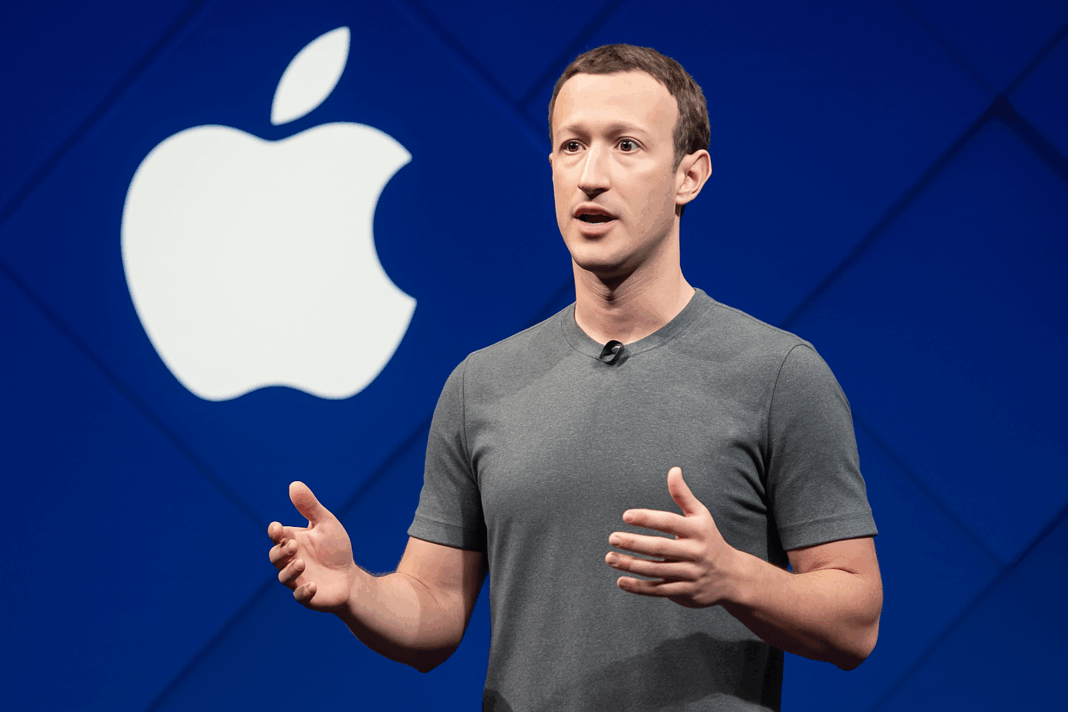

Apple has just lost one of its most critical artificial intelligence engineers to Meta, marking a significant shift in the escalating talent war between tech giants. Ruoming Pang, who led Apple’s foundation models team, has joined Meta’s elite AI division focused on building next-generation superintelligent systems. The move comes just weeks after Pang publicly celebrated his team’s contributions to Apple Intelligence, the company’s recently unveiled suite of AI features.
Pang’s departure is particularly notable given his role at the core of Apple’s AI strategy. As the head of a team of around 100 engineers, he oversaw the development of Apple’s large language models (LLMs), the backbone technology that powers capabilities like natural language understanding and multimodal reasoning. His team was responsible for designing, training, and optimizing these models to run efficiently across Apple devices. With Pang gone, questions are emerging about how Apple will maintain momentum as it races to compete in generative AI.
According to Bloomberg, Pang will now join Meta’s AI group, which is focused on building Artificial General Intelligence (AGI)—AI systems capable of reasoning at or above human levels. His exit adds to growing concerns that Apple is struggling to retain key talent just as the broader industry intensifies its investment in large-scale, frontier AI systems.
Foundation Models and a Growing Divide
Foundation models are the essential infrastructure behind modern generative AI. These large-scale neural networks, trained on vast datasets, serve as general-purpose engines that can be fine-tuned for a variety of applications—chatbots, image generation, code writing, and more. Pang’s team at Apple built these models in-house, including components like AXLearn, a training framework, and optimization tools that allowed for efficient inference on consumer devices.
Just last month, Pang highlighted the team’s work during Apple’s Worldwide Developers Conference (WWDC), where Apple Intelligence was introduced. On LinkedIn, he praised the new generation of LLMs developed internally and thanked his team for their efforts. “It has been a true privilege to work with you all,” he wrote at the time. The tone suggested long-term commitment—his sudden departure signals a sharp turn for Apple’s AI leadership.
Pang joined Apple in 2021 after a 15-year career at Google, where he worked on machine learning infrastructure. His expertise in training large-scale models positioned him as a cornerstone of Apple’s AI ambitions. His decision to leave now, at a moment when Apple is still solidifying its generative AI roadmap, may reflect broader uncertainty inside the company about whether to rely on proprietary models or deepen its partnership with external providers like OpenAI.
Meta’s Talent Offensive Accelerates
Meta, meanwhile, has been executing an aggressive hiring campaign aimed at luring top AI researchers from competitors. CEO Mark Zuckerberg has repeatedly emphasized the company’s commitment to building AGI and has described Meta’s AI efforts as central to its future. Reports indicate that the company is offering multi-million dollar compensation packages to secure leading minds in the field.
In addition to Pang, Meta has recently brought on high-profile figures like former GitHub CEO Nat Friedman and Scale AI CEO Alexandr Wang. These hires suggest Meta is not merely expanding its research teams, but assembling a leadership group capable of setting the pace in foundational AI development. Zuckerberg’s ability to attract Pang—an architect of Apple’s internal AI stack—is the latest indication that Meta sees top-tier talent as essential to winning the next phase of the tech race.
For Apple, the loss comes at a delicate moment. Internally, the company has debated whether to continue developing its own AI models or integrate more deeply with third-party providers like OpenAI. This indecision has reportedly affected morale within Apple’s AI teams. Pang’s exit could mark the beginning of a broader shift, especially if other team members follow.
Implications for Apple and the Industry
Apple’s low-profile approach to AI has increasingly come under scrutiny. While companies like Meta, Google, and OpenAI publicly release research, models, and benchmarks, Apple has kept much of its development behind closed doors. The launch of Apple Intelligence at WWDC marked a shift, but the departure of Pang raises questions about the company’s internal alignment and ability to compete at the frontier of AI research.
By contrast, Meta’s strategy is built on visibility and scale. It has open-sourced its LLaMA family of models and invested in massive compute infrastructure to support AI training. Bringing in Pang not only strengthens its internal capabilities, but also weakens a rival during a pivotal moment of technological transition. With Apple facing mounting pressure to prove its relevance in AI, this loss could delay or complicate its long-term plans.
The broader AI ecosystem is in flux, with top researchers becoming increasingly mobile and strategic hires shaping the trajectory of entire companies. As Apple recalibrates and Meta continues its rapid expansion, the competition to dominate the future of artificial intelligence is clearly intensifying. Pang’s move is more than a personnel change—it’s a signal that the stakes in the AI arms race are only getting higher.