Sebastian Stan on ‘Fjord’: Judgment requires compassion, not certainty
The actor introduced his Cannes Palme d'Or-winning drama at the New York Film Festival, reflecting on the film's themes of cultural conflict and the cost of moral certainty.

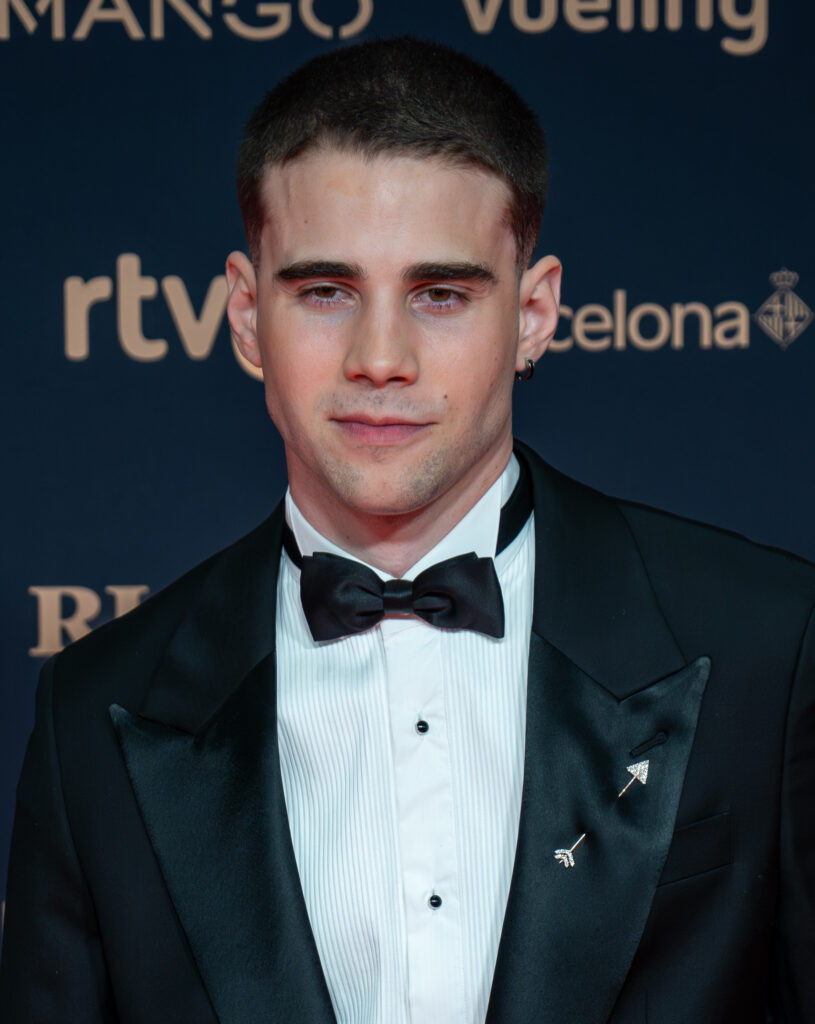
Sebastian Stan used the New York Film Festival premiere of Fjord on Sunday to invite audiences into a film about the dangers of certainty. Introducing the drama at Alice Tully Hall, the actor reflected on the story’s core question: whether judgment can survive doubt, and whether raising the next generation demands more than being right.
“We have to have the courage to recognize our own flaws, no matter what our belief systems are as human beings, and how that might affect our judgment of each other, and also how it pertains to raising the next future generation, our children, to whom we are ultimately in service. We have to remember that there’s more to it than just simply being right, and that doubt still serves a purpose and nuance is inherent to who we are,” Stan told the audience.
The film’s premise
In Fjord, Stan plays Mihai Gheorghiu, a conservative Romanian father who relocates with his wife (Renate Reinsve) and five children to her progressive hometown in Norway. After authorities receive a report of mild bruising on two of the children, Child Protective Services suspects abuse and removes all five from their home. The family’s parents then face intense legal and social scrutiny. The family legal drama, directed by Cristian Mungiu, won the Palme d’Or at Cannes in May—the seventh consecutive for the Neon film label—and opens in theaters October 9.
Director’s inspiration and intent
Mungiu, who participated in a Q&A with Stan after the screening, said the film draws from real-life cases in Scandinavian countries. “I investigated several cases, and I noticed this pattern where families [were] coming from more conservative societies to Scandinavia,” the director explained. “Most of these decisions that people need to make involving children are based on assumptions, and when you base your decisions on assumptions, your own stereotypes about the values of the other can make you unbalanced in one direction.”
He said he hopes the film will encourage “a tolerance for people in the minority, even when [they] don’t agree with their opinion.”
Stan’s transformation and preparation
Stan shaved the top of his head to portray the character, a physical change he found disorienting at first. The actor had to adjust to seeing his new appearance in the mirror, he told E! News. He appreciated director Mungiu’s minimalist approach to production: the filmmaker chose to use no makeup on set.
“My favorite thing actually was, sometimes I actually wish this happened on every movie,” Stan told E! News.
Mungiu elaborated on this choice, telling E! News: “You need to focus on what matters a lot and to use most of your time to be truthful with what you’re trying to express with the actors and try not to be very manipulative with the spectators and to just use their talent as much as you can.”
Stan, who was born in Romania and spent his first eight years there before immigrating to the United States, also worked to sharpen his Romanian for the role. “There was a whole crew of Romanian people around me who probably could tell in two seconds if I didn’t sound Romanian,” he said.
A decade in the making
Stan first encountered Mungiu’s work a decade ago at this same venue, when he attended a screening of Graduation, another drama centered on a Romanian father. After that event, Stan told his mother he wanted to pursue a project with Mungiu in his native language. “I turned to her and said, ‘I need to go back. I need to do a film in Romanian, and I want to work with him,'” he recalled. After the Fjord screening, Stan joked: “I was thinking about my mom out there going, ‘You finally played your grandfather!'”
This article was compiled by the Glamorade editorial desk from the official announcements and reporting listed under Sources.