Guitarricadelafuente on his breakout role in the Oscar-contending ‘La Bola Negra’
The Spanish musician makes a striking acting debut in the gay epic that has become Spain's fourth highest-grossing film ever, finding personal resonance in its story of forbidden love during the Spanish Civil War.
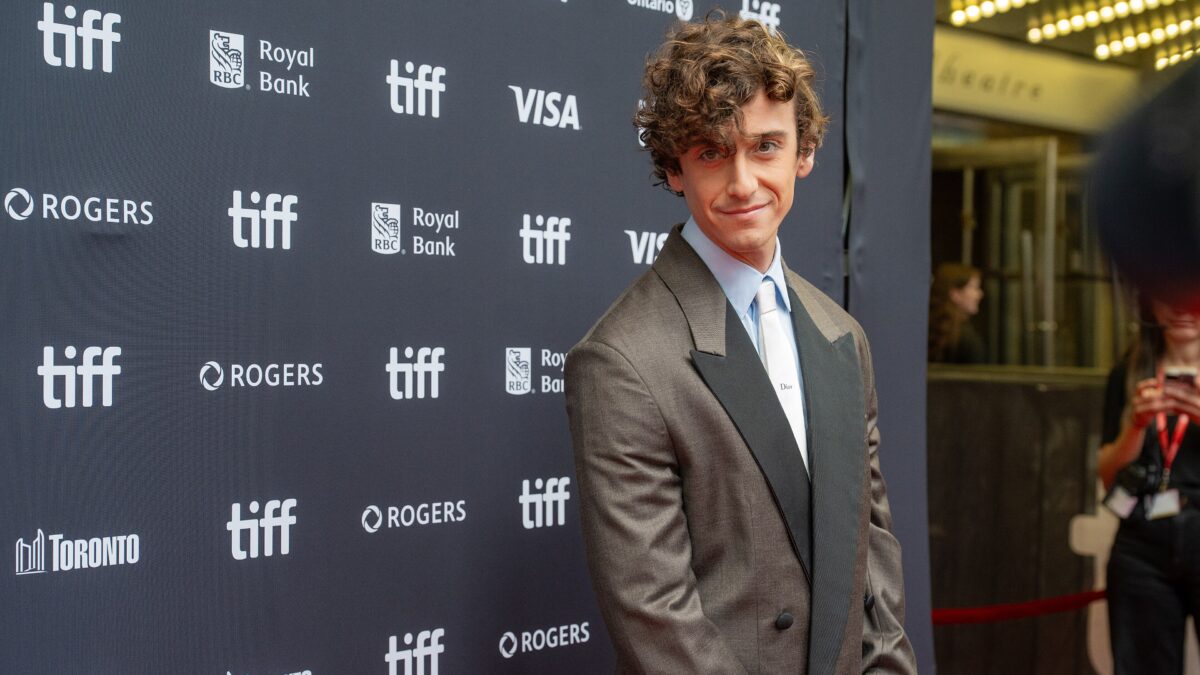
Guitarricadelafuente, the stage name of 29-year-old Álvaro Lafuente Calvo, may be accustomed to performing for tens of thousands of fans on arena concert tours, but he had not experienced an Oscar campaign until now. The Spanish folk artist is in the thick of one as the breakout star of La Bola Negra, the gay epic that premiered to acclaim at Cannes, where its directors Javier Calvo and Javier Ambrossi won the best-director prize, and has since become Spain’s fourth highest-grossing domestic film ever, with more than €29.9 million ($33.5 million) in receipts.
In the film, Guitarricadelafuente plays Sebastián, a village trumpeter who, during the Spanish Civil War, is forced to defect to the Nationalist side after a brutal attack on his community. Assigned to guard Rafael Rodríguez Rapún, a Republican prisoner of war, he finds his repressed sexual identity awakened. The story derives from Alberto Conejero’s play La Piedra Oscura, itself inspired by work connected to Federico García Lorca.
From music to screen
Guitarricadelafuente wanted to act before he wanted to pursue music professionally. Eight years ago, when he began touring and singing in front of audiences, he was very shy, he said in an interview with The Hollywood Reporter. His stage name—combining his surname with a Spanish diminutive meaning “small guitar”—was a way of maintaining distance from the public. “If you saw me like eight years ago, I would defend myself with a guitar — it was kind of a shield, but also like a gun,” he said. Over time, music taught him to feel comfortable with himself and to perform on stage. He sees a parallel between adopting an aspirational identity as a concert performer and the work of acting in a film.
The weight of the material
The topics surrounding the role frightened him initially. The Spanish Civil War, Federico García Lorca, and telling a large-scale queer story—these were subjects that felt risky to tackle in Spain, he explained, even if they had been explored before. What drew him to the script was that it resonated with his own perception of self-discovery: a young gay man finding his place in a world that does not permit it. “Sebastián is somebody that doesn’t have the chance to even allow himself to discover who he is or find his place in the world,” he said.
Growing up, Guitarricadelafuente cited the films of Pedro Almodóvar as his touchstone for queer representation on screen. “So many queer stories, stories about women, very liberating stories at a time where it wasn’t normal to talk about that,” he said. “Those were the first things that I could see on the big screen.”
A cultural moment
The film’s resonance extends far beyond its cast. When Guitarricadelafuente attended a screening in Spain with friends, he witnessed a moment that moved him deeply. “I saw a 16-year-old gay couple holding hands and hugging each other and crying,” he recalled. The experience took him back to his own adolescence, when such a public gesture would have been unthinkable. La Bola Negra has drawn audiences who had not been to a cinema in a decade, he said, transcending its identity as a queer story to become a broader cultural event about love and empathy for untold narratives. “Everybody’s going to see La Bola Negra in Spain, no matter where you come from,” he observed.
The toll of performance
The most difficult scene to film was the execution sequence near the film’s end, an emotionally taxing moment layered with accumulated character baggage and psychological conflict. “It was a very intense scene to shoot, because it was the culmination of all of this emotion and baggage, with this perfect storm happening,” he said. The crew held non-functional 1930s war guns and repeated takes many times over the course of three hours while maintaining the character’s emotional intensity. “You’re being told to kill someone. You’re gonna carry that for the rest of your life. It was very tough to live in,” he reflected. Netflix acquired North American rights to the film, which opens stateside to the second-highest per-screen theatrical average of any non-English language film on record, before expanding over the coming weeks and arriving on the streaming platform on December 2.
This article was compiled by the Glamorade editorial desk from the official announcements and reporting listed under Sources.